





















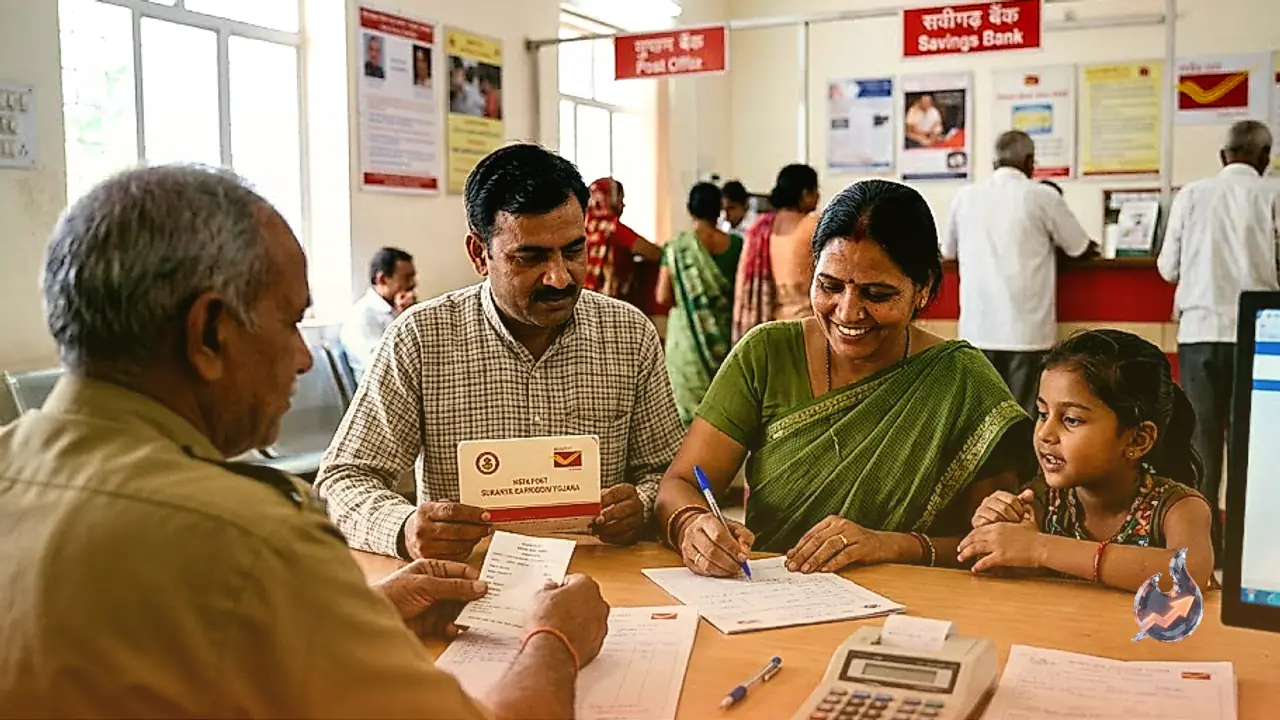

Securing a daughter's financial future does not require parents to possess a massive amount of capital right from the start. By setting aside a modest sum of Rs 1,200 every month into the government-backed Sukanya Samriddhi Yojana, households can steadily accumulate a substantial corpus over time. This disciplined monthly habit translates into an annual contribution of Rs 14,400. Continuing these deposits regularly for a tenure of 15 years leads to a total out-of-pocket investment of Rs 2,16,000. Once this deposit window concludes, parents are not required to contribute any fresh capital for the remaining period, yet the accumulated balance continues to generate interest until the complete 21-year maturity term is reached.
The Power of Compounding and Projected Maturity Figures
When relatively small contributions are given decades to grow uninterrupted, compound interest significantly magnifies the final balance. Assuming an annual interest rate of 8.2 percent remains constant throughout the tenure, a monthly allocation of Rs 1,200 can generate an estimated fund of approximately Rs 6.90 lakh by the end of 21 years. Out of this total estimated maturity value, around Rs 4.74 lakh is generated purely through accumulated interest earnings. This means the interest component alone exceeds double the original capital invested. However, depositors should note that the government periodically revises interest rates on this small savings program, so the exact final payout will reflect the prevailing rates declared over the years.
Detailed Investment Breakdown and Timeline
Reviewing the underlying figures clearly illustrates how modest contributions compound into a meaningful fund over the program's lifecycle
- Monthly Contribution: Rs 1,200 per month
- Total Capital Deposited Over 15 Years: Rs 2,16,000
- Estimated Maturity Amount After 21 Years: Approximately Rs 6,90,000
- Interest Earnings Component: Approximately Rs 4,74,000
These calculations are structured on the foundation of consistent monthly deposits paired with an assumed constant interest rate of 8.2 percent across the 21-year period.
Fifteen Years of Deposits Followed by Six Years of Pure Growth
A distinctive feature of the Sukanya Samriddhi framework is that depositors do not need to make payments for the entire 21-year duration. Under this arrangement, investors make monthly deposits of Rs 1,200 for the initial 15 years only. For the subsequent 6 years, no fresh deposits are required from the family, yet interest keeps compounding on the entire existing balance. This structure highlights the true benefit of patient, long-term wealth building. While setting aside Rs 1,200 a month might seem minor initially, compounding interest on top of past interest drives the balance upward significantly during the inactive contribution years.
Eligibility Norms and Contribution Limits
Parents or legal guardians are permitted to open a Sukanya Samriddhi account for a girl child who is below the age of 10 years. The scheme features accessible financial thresholds designed to accommodate diverse income groups, setting the minimum deposit requirement at Rs 250 per financial year and capping the maximum annual investment at Rs 1.50 lakh. Therefore, an allocation of Rs 1,200 per month, totaling Rs 14,400 annually, remains well within these limits and offers a comfortable starting point for households managing tight monthly budgets.
Withdrawal Guidelines and Higher Education Needs
To safeguard the long-term objective of the fund, the scheme does not permit full premature withdrawals during the active term. Once the daughter attains 18 years of age, partial withdrawals are permitted in accordance with official guidelines specifically to support higher education expenditures. The full maturity proceeds are disbursed upon the completion of the designated 21-year term. By leveraging regular micro-savings, a long investment horizon, and the advantages of compound growth, families can utilize a monthly allocation of just Rs 1,200 to establish an estimated fund of around Rs 6.90 lakh for their daughter's future.