























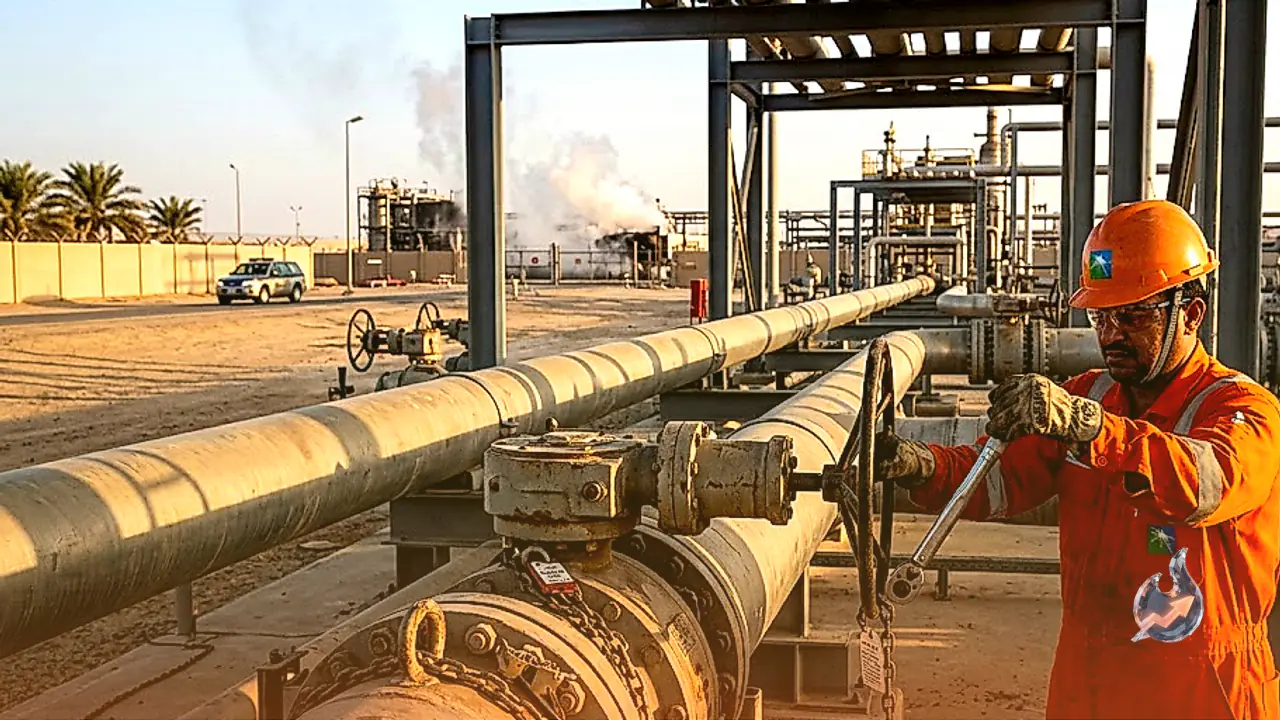

Mounting threats to energy transport networks across the Middle East triggered an aggressive rally across global commodity exchanges on Monday, sparking serious concerns over immediate energy availability. Fresh military strikes targeting Saudi infrastructure and vessels operating in the vicinity of the Strait of Hormuz amplified fears of a severe global supply shock. Consequently, international benchmark Brent crude surged past $107 per barrel, while the American standard, West Texas Intermediate, crossed the $102 mark. Early morning trading saw both benchmarks jump by more than 3%, with Brent touching an intraday peak of $108.23 and WTI reaching as high as $103.20.
In active trading, Brent crude futures advanced by $2.90, or 2.77%, to settle around $107.51 per barrel, while US West Texas Intermediate gained $2.27, representing a 2.27% increase, to trade at $102.32 per barrel. Over the span of the preceding seven days, petroleum prices have accumulated a gain of roughly 9%. This upward march pushed market valuations beyond the pivotal $100 per barrel threshold for the first time since July.
Saudi East-West Pipeline Halts Operations After Drone Incursions
The primary driver accelerating the price hike is deepening anxiety regarding crude shipments originating from the Middle East. Output flow faced a direct blow after Saudi Arabia suspended pumping along a vital transit artery following unmanned aerial vehicle strikes. Authorities halted operations along the critical East-West pipeline as a protective measure after Thursday's drone strikes, offering no official timeline regarding when transmission might resume.
Spanning approximately 1,200 kilometres, this pipeline connects key oil-producing fields in eastern Saudi Arabia directly to terminals on the Red Sea. Crucially, the route serves as an alternative logistical channel designed specifically to let Saudi exports bypass the narrow Strait of Hormuz. With this conduit offline, the flexibility to circumvent regional maritime chokepoints has narrowed significantly.
Vessel Struck by Projectile Near the Strait of Hormuz
Escalating friction near the Strait of Hormuz has added another intense layer of pressure onto Brent pricing. Maritime safety tracking indicated that a commercial vessel transiting the Strait of Hormuz caught fire after being struck by a projectile, forcing onboard crew members to evacuate the ship entirely. Concurrently, Iranian authorities disclosed casualties resulting from an attack on a commercial vessel close to their shoreline.
The Strait of Hormuz remains one of the planet's most indispensable oil transit corridors. Massive volumes of crude dispatched from Persian Gulf producers to destination markets across the globe must navigate through this narrow waterway, making any naval incident an immediate trigger for price volatility.
Houthi Offensive Near Bab el-Mandeb Strains Trade Routes
Adding further complexity to maritime transit, regional dynamics have grown more volatile due to actions linked to Yemen's Houthi group. The faction has intensified its presence and operations around vital marine sectors adjacent to the Bab el-Mandeb Strait, an essential corridor linking the Red Sea with the Gulf of Aden. With both perimeter waterways under simultaneous security threats, shipping operators face heightened transit hazards.
Elevated Import Burden and Currency Strain on India
This steep rise in petroleum values poses acute challenges for India, given its heavy dependence on foreign energy sources. The country purchases over 88% of its total crude oil requirements from overseas suppliers, leaving domestic economic stability heavily exposed to sharp price escalations in overseas spot and futures markets.
Furthermore, the Indian rupee is already contending with substantial downward pressure generated by expensive crude imports and elevated global bond yields. During the previous week, while crude lingered persistently above the $100 benchmark, the Indian currency posted its steepest weekly drop in four months. Higher procurement costs for overseas oil threaten to widen import expenses and prolong currency headwinds.