






















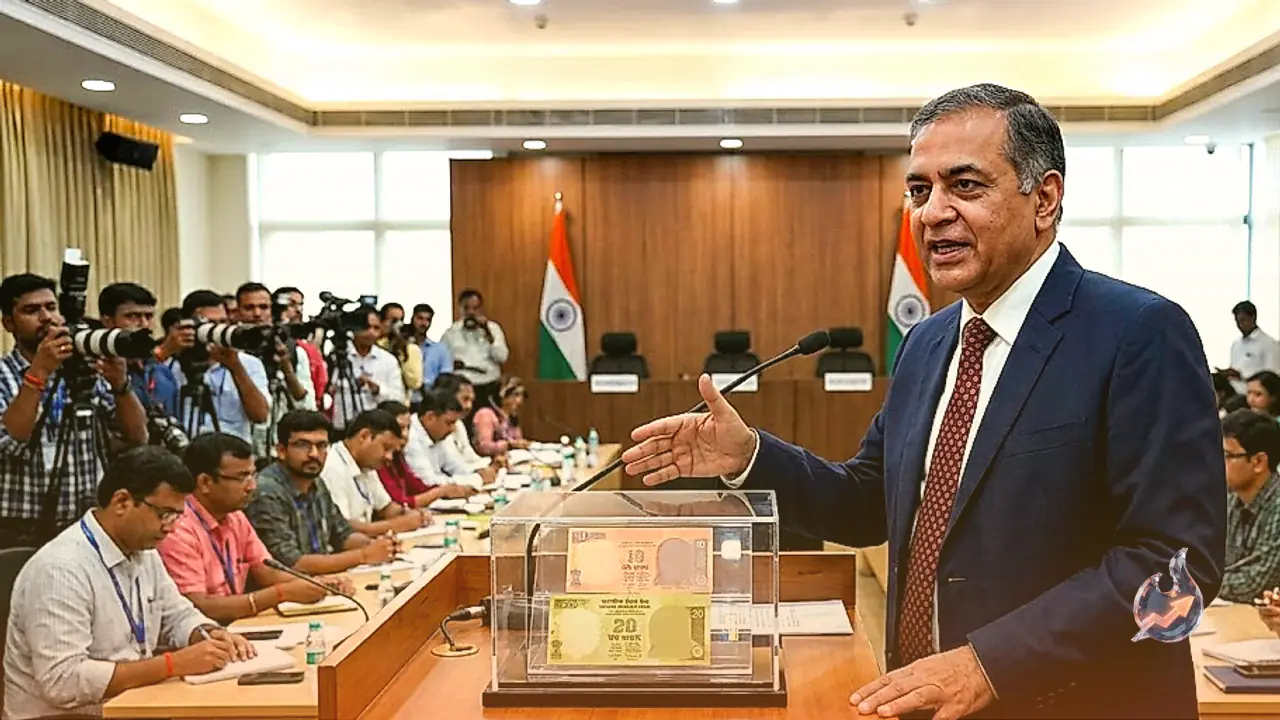

India's currency is set to get a plastic makeover, and the central bank has finally put a date on it. Reserve Bank of India Governor Sanjay Malhotra, briefing reporters after Wednesday's Monetary Policy Committee meeting, revealed that 10 and 20 rupee polymer notes will be rolled out at the start of the next financial year. He also signalled that bigger denominations, the 100 and 500 rupee notes, could eventually get a plastic version too.
Polymer notes targeted for around April 2027
According to Governor Malhotra, the RBI is aiming to launch polymer notes around the beginning of the next financial year, which works out to roughly April 2027. The central bank is preparing to introduce 10 and 20 rupee polymer notes into circulation first. Rather than replacing paper currency outright, the RBI plans to run both formats side by side for now, meaning paper and polymer notes will coexist in the market.
Why polymer makes sense: durability and lower printing costs
Polymer notes are widely regarded as sturdier than paper ones and tend to stay usable in circulation for much longer. That durability translates directly into savings, since the RBI would not need to print fresh notes as frequently, cutting down on printing costs over time. Polymer notes also resist moisture, stay cleaner for longer, and are far less prone to tearing or getting damaged compared with paper currency.
100 and 500 rupee notes could follow
The Governor made it clear that if the rollout of the 10 and 20 rupee polymer notes proves successful, the RBI will move to launch the 100 and 500 rupee notes in plastic as well. No firm date has been announced for the larger denominations yet, since that decision will depend on how the smaller notes perform once they are in circulation.
A second attempt, after a false start in 2009
This is not the RBI's first attempt at polymer currency. The central bank had expressed similar intentions to launch plastic notes back in 2009, but that plan did not succeed at the time. Roughly a decade and a half later, the RBI is making another push in the same direction.
Why 10 and 20 rupee notes were picked for the pilot
The RBI chose to launch the 10 and 20 rupee notes in polymer first because these denominations account for around 25 percent of all notes currently in circulation, even though they make up just 1.4 percent of the total value of currency in circulation. That combination, high volume but low value, made them the ideal candidates for a pilot project designed to test how well polymer currency reaches the general public. Malhotra said that once the 10 and 20 rupee polymer notes are ready, they will be distributed through bank branches and ATMs and will circulate alongside the existing paper notes.