






















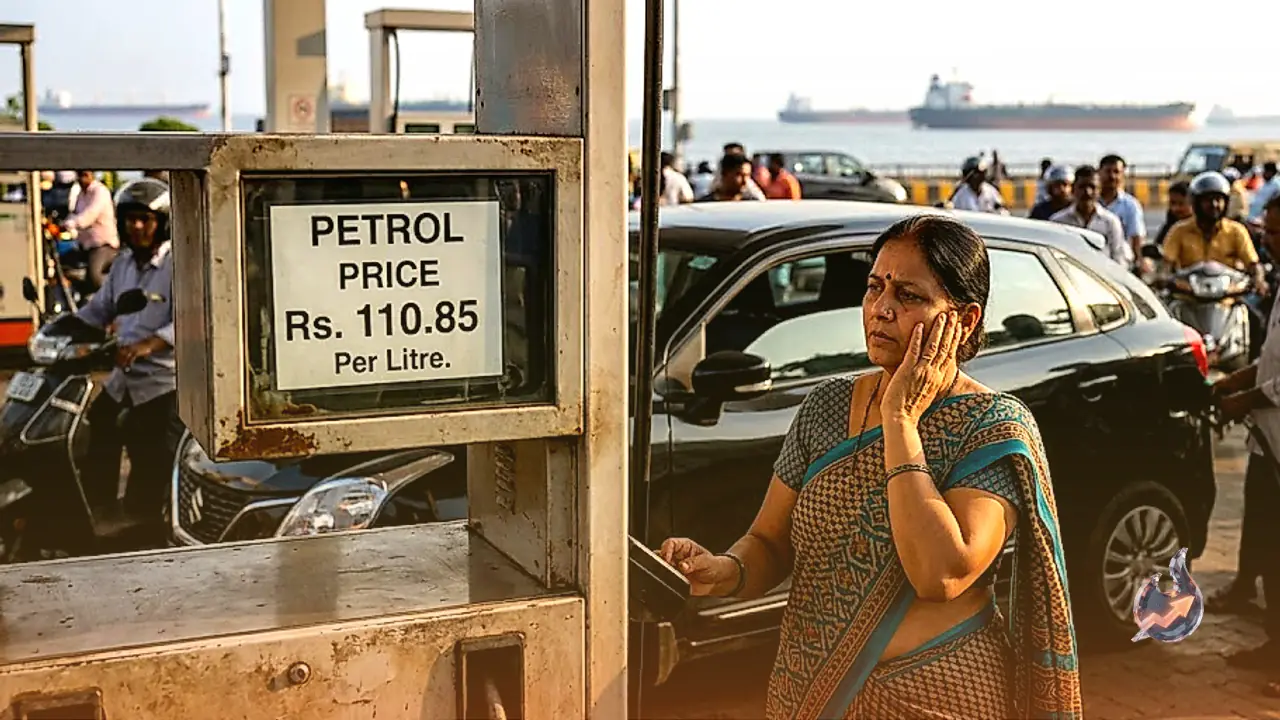

Global energy markets have been plunged into a period of renewed uncertainty as escalating geopolitical tensions in the Middle East disrupt critical maritime trade corridors. While economists are not yet factoring in a comprehensive worldwide economic downturn, an alternative risk is increasingly dominating international projections. Rising crude oil prices are intensifying inflationary pressures across the globe, creating conditions that could force central banking authorities to keep interest rates elevated for a prolonged duration. The immediate catalyst behind this market shock is the conflict between the United States and Iran, which has directly disrupted oil supplies and primary shipping lanes.
The Strait of Hormuz Chokepoint and Maritime Traffic Stoppages
At the epicenter of the emerging disruption lies the Strait of Hormuz, a narrow marine gateway connecting the Persian Gulf with the Gulf of Oman and the wider Arabian Sea. Prior to the outbreak of hostilities, approximately 20.9 million barrels of crude oil and refined petroleum products moved through this maritime channel every day. That flow accounted for nearly one-fifth of total global petroleum consumption. Furthermore, around 89 percent of the crude and condensate traversing the strait was destined for Asian markets, leaving Asian economies uniquely exposed to any physical bottlenecks or security hazards along the route.
Recent maritime shipping statistics highlight the severity of the slowdown in vessel movements. On September 21, a mere two commodity vessels crossed the Strait of Hormuz, down sharply from 10 vessels recorded the previous day. To put this collapse into perspective, the shipping passage handled roughly 125 large commercial ships on a daily basis prior to the escalation in February. Alternative logistical arrangements cannot fully compensate for these lost volumes. While Saudi Arabia and the United Arab Emirates operate terrestrial bypass pipelines, their total takeaway capacity remains far too small to substitute for the vast volumes moved by sea.
Direct Macroeconomic Consequences for India and the $74.8 Billion Import Bill
India ranks among the most vulnerable large economies to disruptions of this nature due to its heavy reliance on foreign energy. The country imports more than 85 percent of its domestic crude oil requirements. During the five-month span from April to August 2026, India's crude oil import bill surged by 48.4 percent year-on-year, reaching $74.8 billion. This sharp financial escalation occurred despite import volumes edging down 0.4 percent to 100.7 million metric tons over the same timeframe. The divergence confirms that surging international commodity prices, rather than increased consumption volumes, accounted for nearly the entire rise in expenditures.
For economic policymakers in New Delhi, the external shock poses a complex trade-off between shielding consumers from price volatility and managing fiscal strains. State-owned oil marketing companies face substantial balance sheet pressure whenever domestic retail pump prices lag behind international procurement costs. Over time, persistent energy cost inflation risks spilling over into broader consumer price indices, complicating monetary policy considerations. If broader retail price pressures take hold, the Reserve Bank of India may find itself confronted with much tougher policy rate choices.
Credit Rating Agencies Maintain Indian Growth Upgrades Amid Festive Optimism
Despite the headwinds posed by expensive crude, major international credit rating institutions have continued to express confidence in India's structural growth momentum. S&P, Fitch, and Moody's each raised their gross domestic product expansion forecasts for India for the fiscal year 2027 in their latest assessments. As a result, India is projected to retain its standing as the fastest-growing major economy worldwide in the coming year. The central risk to this optimistic baseline remains inflation-driven monetary tightening, an obstacle about which market observers have noted that policymakers will cross the bridge when they get there. In the interim, the domestic festive season is expected to provide robust support to consumer spending and commercial trade.
Freight Rates, Logistics, and Secondary Price Transmission Channels
The economic ripple effects of rising crude extend far beyond wholesale energy exchanges. Oil functions as an essential operational input for ground transport, industrial manufacturing, aviation, and chemical production. When baseline crude prices climb, intermediate businesses along the supply chain routinely pass these incremental costs down the line, ultimately driving up end-user prices for goods and commercial services. Diesel fuel plays a critical role in road freight, transport fleets, and agricultural distribution. Extended price spikes in diesel inevitably increase the cost of moving food items and finished consumer merchandise.
Beyond baseline fuel expenses, transit disruptions generate substantial collateral costs across global commerce. Escalating marine freight and insurance rates tend to widen trade deficits while simultaneously influencing foreign currency exchange valuations. Shipments rerouted around maritime chokepoints suffer extensive schedule slippages, adding severe frictions to supply chains that are already operating under stress. Consequently, the crisis is feeding directly into headline and core inflation metrics across diverse geographic regions, with energy costs serving as the initial spark.
Regional Vulnerabilities Across Major Asian Importers
Other major Asian powers are also navigating serious exposure to the waterway's closure. More than one-third of China's baseline crude oil imports typically traverse the Strait of Hormuz. Although China maintains extensive strategic petroleum reserves and draws crude from a diversified global network of suppliers that offers a temporary operational buffer, sustained energy and freight cost spikes threaten its industrial production base. Higher factory operating costs in turn risk impacting manufacturing output, export volumes, and retail consumer pricing structures across the broader Asian region.
Japan remains exceptionally dependent on overseas energy supplies, leaving its domestic economy with very little insulation from sudden price jumps in imported oil and liquefied natural gas. Steeper fuel charges directly affect household utility budgets, factory operating margins, and transportation services, with airlines and logistics enterprises facing surging fuel invoices. South Korea confronts comparable economic vulnerabilities because of its structural dependence on foreign hydrocarbons. Given that the overwhelming majority of Hormuz oil shipments head toward Asian destinations, the region is absorbing the lion's share of the immediate economic shock.
Cost Pressures Across European and North American Markets
Western economies are similarly contending with heightened energy overheads and logistics hurdles. In Europe, Germany's energy-intensive industrial sector requires vast volumes of hydrocarbons to operate, meaning elevated oil and gas prices quickly erode profitability across factories and transport firms. The United Kingdom faces parallel challenges that manifest through elevated vehicle fuel costs and domestic utility bills. For many European enterprises, the maritime crisis imposes steep freight surcharges and lengthened delivery times that place additional constraints on vital component inventories.
The United States occupies a distinctly different position within the global energy landscape as a primary producer of domestic crude oil and natural gas. During the first half of 2025, approximately 0.4 million barrels per day entered the country via Persian Gulf maritime routes, representing roughly 7 percent of total US crude and condensate imports. Nevertheless, American consumers remain tied to internationally benchmarked energy prices. On September 21, regular retail gasoline averaged between $4.47 and $4.48 per gallon across the country.
Across all major global regions, economic growth targets and inflation dynamics are increasingly pulling in conflicting directions. While an outright global recession remains outside the primary consensus scenario for now, elevated oil prices constitute a central concern for fiscal and monetary authorities worldwide. India's import expenditure of nearly $75 billion over just five months underscores the direct external vulnerability faced by developing nations. Ultimate economic outcomes will hinge on the duration of the geopolitical conflict and the speed with which international energy flows can be stabilized in the months ahead.