


















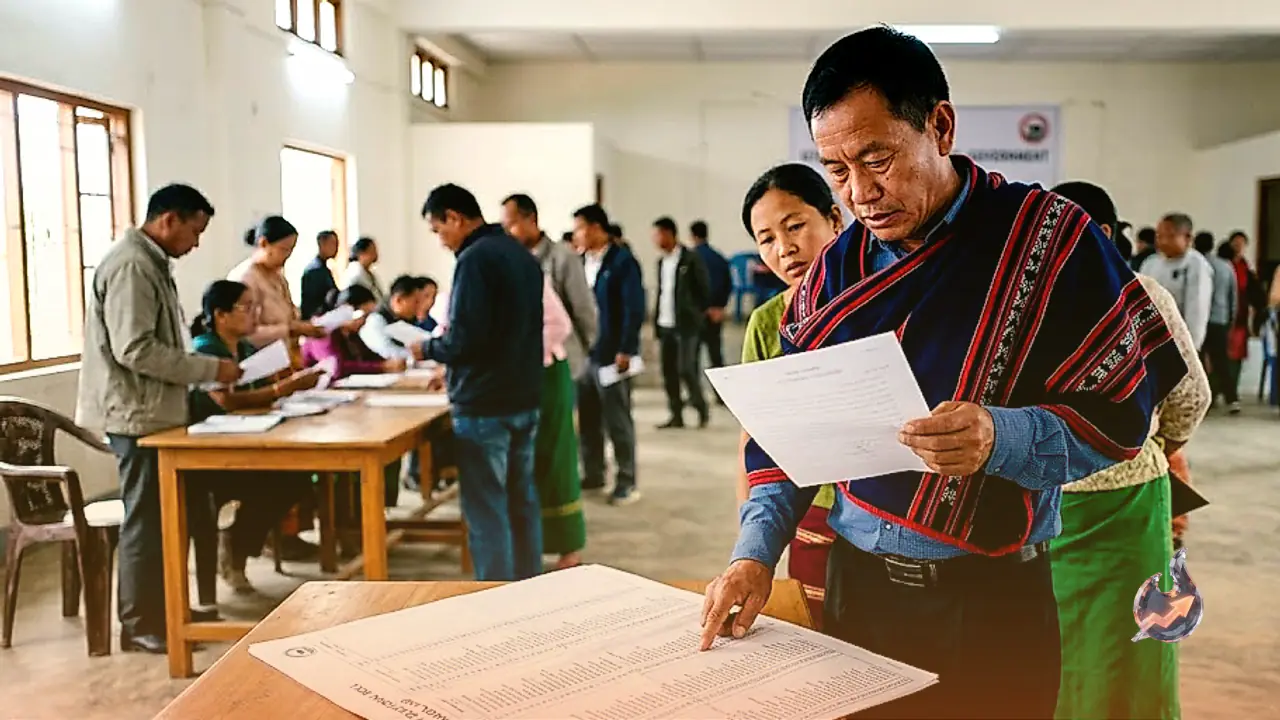

Electoral authorities across Nagaland have undertaken an extensive screening of the voter rolls under the ongoing Special Intensive Revision (SIR), putting roughly five lakh electors on notice over discrepancies in matching their personal details with the baseline 2005 electoral roll. The large-scale verification drive follows the publication of the state's draft roll, which saw the exclusion of approximately 1.59 lakh entries from the prior total of 13.57 lakh registered voters.
Discrepancies and Missing Linkages Affect 36.64 Percent Electors
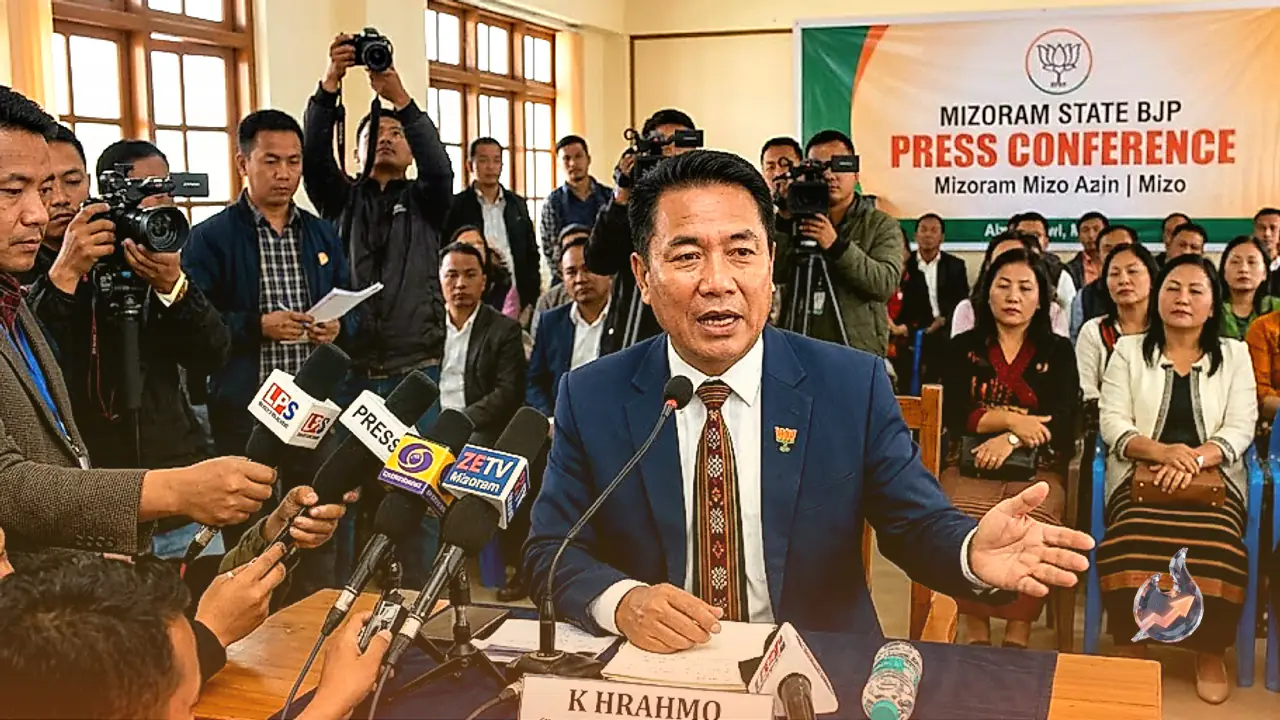
Providing a statistical breakdown of the enumeration findings, Additional Chief Electoral Officer Awa Lorin stated that 9.33 percent of electors fell under the specific "no mapping" category. Furthermore, an additional 27.31 percent of voters exhibited mapping anomalies, taking the cumulative share of electors facing verification questions to 36.64 percent. This substantial figure represents individuals whose entries could not be seamlessly traced back to the historic 2005 roll.
Electoral Registration Officers (EROs) alongside Assistant Electoral Registration Officers (AEROs) will soon dispatch formal notices to electors who failed to establish a direct link with the 2005 roll or could not demonstrate lineage as descendants of an individual registered in that registry. Recipients of these notices must present prescribed documentation before the respective EROs or AEROs. The precise documentation mandate will depend directly on the elector's birth date or year.
Verification Hearings and the November 22 Final Roll Deadline
Awa Lorin emphasised that receiving a notice does not signify immediate disenfranchisement or an outright strike-off from the register. According to the official, "If they are satisfied with your claim and your documents, then your name will continue to appear in the final roll." However, he cautioned that an inability to substantiate claims or furnish legitimate proof would lead to the omission of the elector's name from the final list scheduled for formal release on November 22.
The election administration also made it clear that electors not originally registered in the 2005 electoral roll will not face automatic removal. Affected citizens have the legal leeway to prove ancestral or familial links to someone listed in that baseline roll or, where relevant, submit fresh registration paperwork during the statutory claims and objections phase. To make the process manageable, EROs will conduct physical verification hearings at their offices, district administrative centres, or directly at polling station premises. The entire inquiry process must conclude by November 18.
Claims Window Open Alongside Registration for New Voters
Chief Electoral Officer Bhagyashree Banayat outlined the operational timeline, confirming that the window for claims and objections will operate between September 20 and October 20. Genuine voters whose names were inadvertently dropped from the draft publication can apply for re-inclusion by tendering Form-6 along with the mandated declaration and corroborating papers.
This identical one-month timeframe is equally open for young citizens attaining voting age. Individuals turning 18 by the official qualifying cutoff date of October 1, 2026, can submit enrollment forms during this period. Relevant forms and procedural guidance are accessible through Booth Level Officers (BLOs), regional election administrative centres, and the official Chief Electoral Officer portal. Online filing options have been activated for convenience.
Aadhaar Rules and Breakdown of Excluded Names
Addressing inquiries regarding the submission of identity cards, Bhagyashree Banayat clarified that furnishing an Aadhaar number on the enumeration form remains purely voluntary and does not serve as legal proof of Indian citizenship. She confirmed that no mandatory Aadhaar seeding is taking place within the voter list, leaving the submission of phone numbers and Aadhaar details entirely to the voter's discretion.
The enumeration exercise, conducted from August 16 to September 14, covered 13,57,208 registered names, with 11,99,456 electors (88.38 percent) successfully submitting their paperwork. Out of the 1.59 lakh deleted entries, 29,944 were confirmed as deceased electors, making up 2.13 percent of the register. Another 1,23,749 electors (9.12 percent) were grouped under the absent, permanently shifted, or related categories. Furthermore, 5,059 entries (0.37 percent) were flagged for multiple registrations across distinct locations; these electors will retain enrollment at only a single designated polling station.
District-Wise Uncollected Forms
The absent and relocated category includes people who transferred their franchise to other states or Union Territories, individuals who could not be traced, those failing to submit paperwork by September 14, or residents unwilling to enroll. Across the districts, Dimapur logged the highest volume of uncollectable enumeration forms at 36,629, followed closely by Choumoukedima with 28,626, Kohima at 24,178, and Wokha with 11,500. Additionally, 3,297 electors did not return their issued enumeration forms.