






















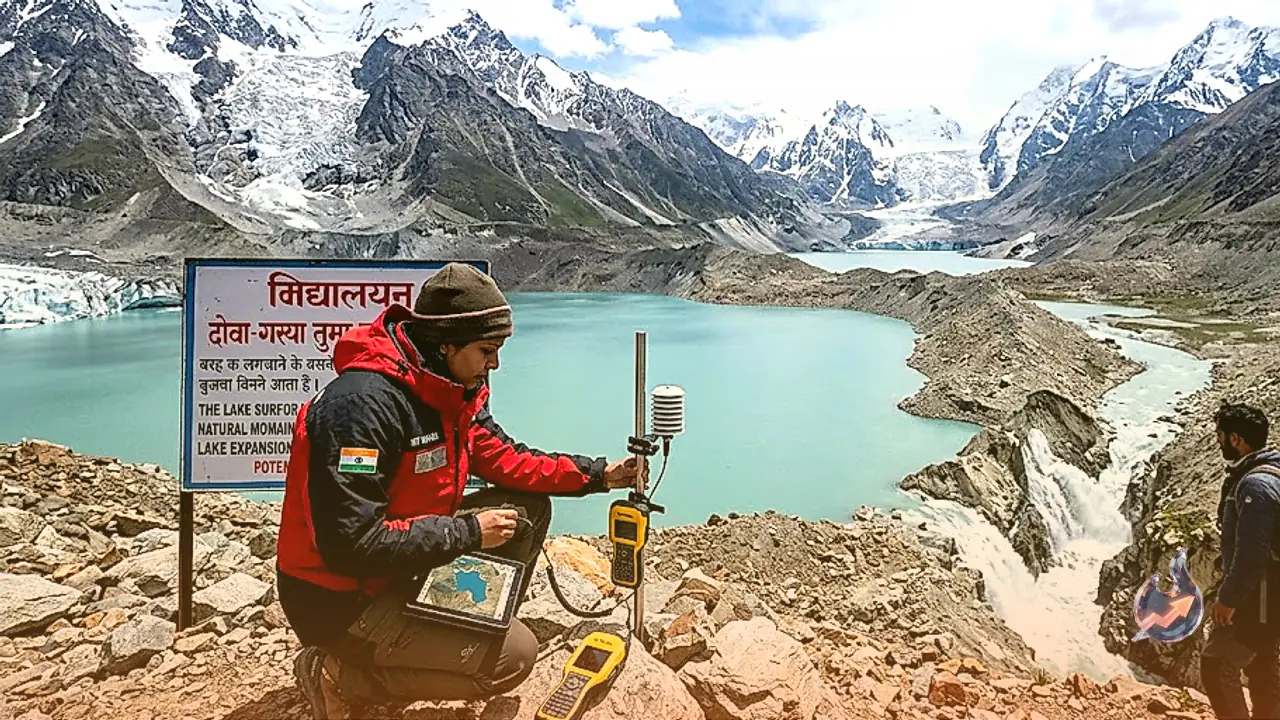

Just one week after a catastrophic glacial lake outburst flood devastated parts of Nepal, leaving more than 1,000 people dead and over 4,000 missing under mountains of mud and debris, scientists at the Indian Institute of Technology Mandi (IIT Mandi) have issued a stark environmental warning. Comprehensive research conducted by the institute shows that multiple glacial lakes across Himachal Pradesh have expanded in surface area by 30 to 60 percent over the last decade. Out of more than 2,000 high-altitude lakes surveyed in the region, researchers classified 9 to 12 lakes as being in a critical condition. Should any of these natural ice-and-moraine dams rupture, the resulting deluge could trigger a disaster on the scale of the recent Himalayan crisis.
Accelerated Glacial Melting and Lake Expansion Dynamics
Associate Professor Dericks P Shukla, who serves as the Founding Chairperson of the School of Civil and Environmental Engineering at IIT Mandi, outlined the alarming transformation occurring across Himalayan water bodies. Rising atmospheric temperatures across high-altitude catchments have dramatically accelerated the melt rate of regional glaciers. As these massive ice formations retreat, meltwater pools inside natural depressions, creating and enlarging glacial lakes. Comparative satellite and field data from the past ten years demonstrate that several major lakes in Himachal Pradesh grew in volume and footprint by 30 to 60 percent. This dramatic expansion in stored water volume directly heightens the risk of Glacial Lake Outburst Floods (GLOFs).
The Role of Tourism, Vehicular Carbon, and Dark Snow Formation
Global climate shifts represent only part of the forces driving rapid glacial degradation in the Himalayas. Local anthropogenic factors and expanding infrastructure have intensified the melt rate. According to Associate Professor Dericks P Shukla, booming tourism across alpine valleys and unrestricted vehicular movement release heavy volumes of airborne pollutants. Carbon soot from diesel engines, fuel combustion residues, and construction dust settle directly onto glacial ice sheets. This accumulation forms a dark, absorptive layer over the pristine snow surface. Rather than reflecting solar radiation back into the atmosphere, the darkened surface absorbs thermal energy at an accelerated rate, dramatically speeding up the physical melting process.
Permafrost Degradation and Sub-Surface Slope Instability
Beyond surface lake expansion, environmental researchers emphasize the critical hazard posed by thawing permafrost. Permafrost consists of sub-surface rock, soil, and gravel bound together by permanent freezing temperatures below zero degrees Celsius. This frozen ground acts as a structural anchor that stabilizes steep mountain slopes. As regional temperatures climb, this deep underground ice layer begins to thaw. The loss of frozen binding material compromises slope integrity, triggering massive rockfalls and landslips. In the devastating Nepal event on 26 August, scientific analysis indicates that permafrost degradation combined with glacial lake breaches to cause widespread hillside failure and massive mudflows.
Unchecked Infrastructure Expansion and Year-Round Environmental Stress
While the construction of highway tunnels and all-weather road corridors has improved transport access across mountain valleys, unmitigated infrastructure expansion has brought severe ecological side effects. The opening of major vehicular tunnels allows continuous tourist and commercial traffic throughout the year. In sensitive ecological zones where human activity previously ceased during harsh winter months, heavy vehicular exhaust and road dust now blanket surrounding glaciers without interruption. This persistent human footprint prevents natural seasonal recovery and accelerates long-term glacial decay.
NDMA Priority List Versus IIT Mandi Comprehensive Findings
From an official disaster preparedness perspective, the National Disaster Management Authority (NDMA) identified four high-risk glacial lakes in Himachal Pradesh requiring urgent monitoring and engineering intervention. These four locations include Ghepang Lake, Vasuki Lake, Kashang Lake, and an unnamed glacial lake near the Baspa River catchment. However, broader investigations carried out by IIT Mandi reveal a wider geographic danger zone. Utilizing dual survey methodologies across more than 2,000 water bodies in Himachal Pradesh, the IIT Mandi team determined that between 9 and 12 lakes have entered a critical structural threshold.
Comparative Risk Assessment for Downstream Communities
The research emphasizes that structural criticality does not translate to identical threat levels for downstream human populations. According to the scientific team, the most immediate danger to civil settlements stems from Ghepang Lake, Yoche, and Kali Kund. These three bodies of water are undergoing rapid physical changes, with their surface areas and water volumes expanding continuously every year. Because established villages and infrastructure lie directly along their downstream drainage paths, any outburst would unleash severe damage. Conversely, while Vasuki Lake is also experiencing surface area expansion, the absence of human settlements for several kilometers downstream significantly reduces the immediate risk to human life.
Anatomy of the Nepal Catastrophe and the Hydropower Tunnel Crisis
The urgency of the Himachal Pradesh study is underscored by the sequence of events that unfolded during the 26 August catastrophe in Nepal. On that day, a massive section of glacier fractured and collapsed into the upper reaches of the Lhende Khola river. The resulting avalanche of ice and rock dammed the river flow, forming an unstable artificial lake. When the impounded water broke through this temporary barrier, a surge of floodwater tore into the Bhote Koshi river, a major tributary originating in China before flowing into Nepal. The torrent inundated downstream valleys, destroying bridges and filling hydroelectric power project tunnels with dense mud. Rescue teams attempting to locate missing workers found tunnels packed so tightly with silt that the conditions resembled toothpaste compressed inside a tube, severely hindering rescue operations and drone exploration.