



















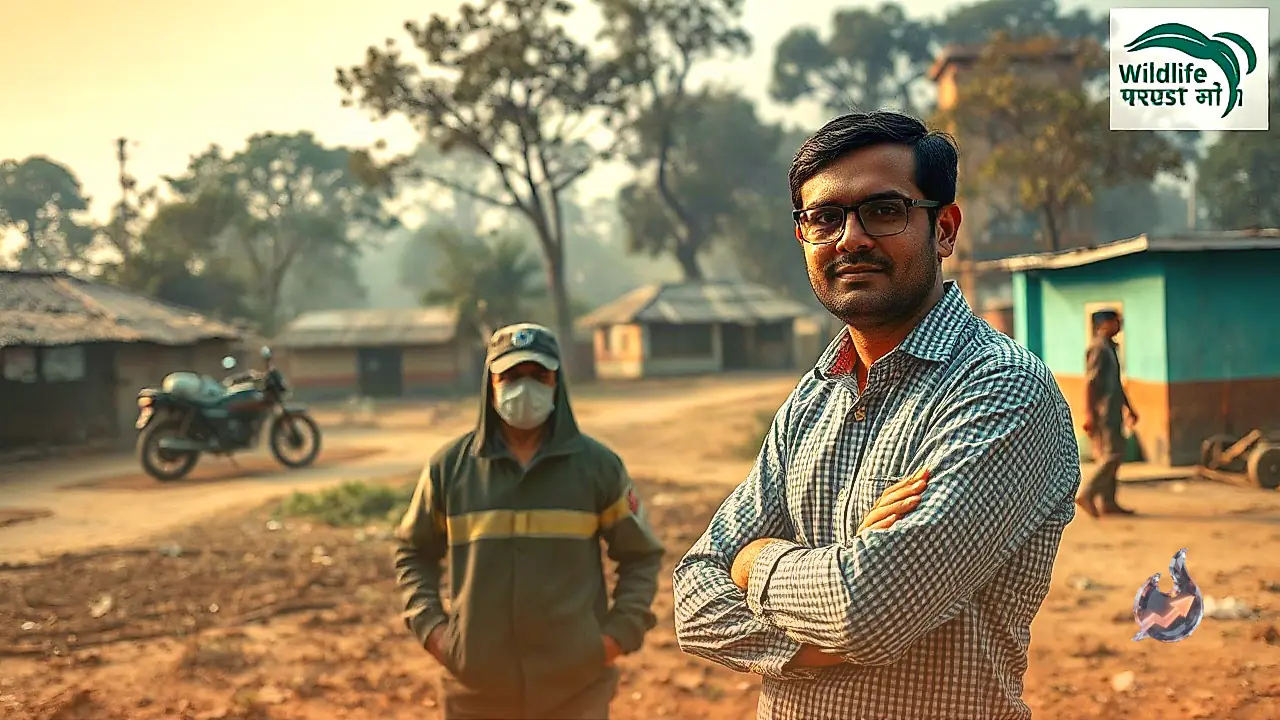

Abhishek Ghoshal, the head of the Wildlife Trust of India, visited Bahraich district to evaluate wildlife conservation measures and implement effective strategies for managing human-wildlife conflict. During his visit, he convened meetings with local forest officials and field staff to issue strategic guidelines. He also shared comprehensive insights into the operational methodologies adopted by the organization to safeguard wildlife and preserve fragile natural ecosystems.
A Quarter-Century Commitment to Wildlife and Ecosystems Since 1998
Detailing the background of the Wildlife Trust of India, Abhishek Ghoshal highlighted that the organization stands as a premier non-governmental institution in the country. Operating continuously since 1998, WTI has dedicated its efforts to protecting India's natural environment and endangered species. Its nationwide initiatives focus on restoring degraded natural habitats, enforcing measures to eliminate illegal poaching, and advocating for long-term ecological sustainability across critical wildlife corridors.
Ground-Level Rescue Operations and Specialized Medical Expertise
Elaborating on the organizational framework, Abhishek Ghoshal emphasized that WTI focuses on active field implementation rather than theoretical plans. The foundation relies on an extensive network comprising wildlife veterinarians, environmental scientists, field experts, and specialized emergency rescue teams. In crisis situations involving injured, distressed, or stray animals, these teams execute prompt rescue operations, provide necessary medical care, and safely rehabilitate the creatures back into their natural forest habitats. Furthermore, the organization offers essential legal and tactical assistance to government agencies to curb illegal wildlife trade.
Reducing Conflict in Sensitive Zones and Empowering Local Communities
Abhishek Ghoshal stressed that WTI functions as a crucial benefactor for forest regions by integrating fringe communities into conservation efforts alongside protecting animal lives. In high-risk territories such as Bahraich, where encounters between humans and wild animals occur frequently, WTI field units engage with local villagers to build awareness. By providing rapid emergency assistance and conflict mitigation support during unexpected encounters, the organization plays a pivotal role in maintaining ecological balance and protecting voiceless wildlife.