



















A high-stakes debate over India's digital communications architecture has unfolded following sharp public criticisms by Elon Musk, the chief executive officer of SpaceX and proprietor of satellite constellation Starlink. Taking to social media platforms, Musk alleged that an entrenched cartel of select domestic industrialists is striving to safeguard an internet monopoly across the country. He argued that these entities are actively attempting to thwart the commercial rollout of Starlink, describing any effort to prevent the satellite venture from operating in India as an injustice against the country's public. The assertion prompted a swift, unambiguous clarification from the Union Ministry of Communications.
Rejecting any allegations of institutional partiality, the government clarified that regulatory and statutory frameworks governing telecommunications operators in India are absolute and uniform for all participants. Any enterprise seeking entry into this heavily regulated domain must strictly satisfy standard foundational criteria. The ministry underscored that every satellite communications (satcom) entity applying for an operating license must comply fully with comprehensive domestic data security benchmarks. Firmly stating that regulatory decisions are applied without bias, the government maintained that no special dispensation or rule dilution could be contemplated for any single global brand or executive.
Starlink Moderates Stance and Pledges Local Data Retention
Faced with firm regulatory insistence from New Delhi, Starlink adopted a markedly conciliatory tone. Lauren Dreyer, the vice president of Starlink business operations, publicly affirmed that the enterprise is eager to collaborate directly with domestic telecom providers rather than confront local infrastructure. Crucially, Dreyer committed that Starlink is fully prepared to maintain all Indian consumer and corporate data within the territorial boundaries of India, thereby addressing the central sovereignty prerequisite laid down by regulatory agencies.
Highlighting Starlink's expanding footprint, Lauren Dreyer noted that the satellite network currently operates across 165 nations worldwide, delivering dependable high-speed connectivity. She emphasized that the enterprise is technically prepared to commence operations in India as well, having already executed memorandums of understanding (MOUs) with major domestic telecom conglomerates including Bharti Airtel and Reliance Jio. According to Dreyer, Starlink has engineered localized operational architectures specifically tailored to meet India's stringent compliance parameters, integrating rigorous multi-tiered controls to guarantee that data belonging to Indian users never leaves domestic jurisdiction.
Regulatory Sovereignty Versus Rhetoric on Social Media
The principle guiding satellite communications policy in India is rooted in jurisdictional sovereignty: an enterprise, regardless of its global valuation or technological prominence, cannot utilize local subscriber data while remaining beholden only to United States legal jurisdictions. The central government's operating doctrine holds that conditions imposed on existing domestic mobile carriers will apply with equal force to Elon Musk's ventures. This regulatory clarity appears to have influenced the company's subsequent posture.
Prior to this diplomatic realignment, Elon Musk had escalated the dispute by targeting the central administration directly on social media. In his public post, Musk questioned why operating licenses were being withheld from Starlink and posed a provocative query asking whether Mukesh Ambani was the ultimate authority in India. The post was immediately amplified by prominent opposition leader Rahul Gandhi, who re-tweeted the comment alongside a message welcoming Musk to India while advising him to exercise a bit of patience. The political exchange transformed what was essentially an administrative spectrum dispute into a broader national political confrontation.
Prime Minister Narendra Modi Warns of Cyber Fraud and Deepfake Hazards
Amid rapid technological disruption, Prime Minister Narendra Modi addressed international delegations at the India Mobile Congress, delivering an urgent call for collective global governance. Modi urged countries across the globe to formulate a binding international framework dedicated to tackling the soaring perils of transnational cyber crime and manipulated synthetic media. The Prime Minister observed that modern society faces a double mandate: it must embrace advancing technological frontiers while simultaneously shielding vulnerable communities from their inherent hazards.
Reflecting on India's digital transformation, Narendra Modi pointed out that mobile telephony has profoundly improved the everyday routine of regular citizens. Handheld devices and digital transfers successfully dismantled entrenched networks of predatory middlemen and effectively plugged institutional leakages in state welfare disbursements. However, this ubiquitous digital access has simultaneously created fertile ground for organized digital crime. Statistical evidence underscores how thousands of citizens have been defrauded through digital scams, with elderly individuals and women bearing a disproportionate brunt of sophisticated online theft, leading to the financial devastation of entire households.
The Escalating Threat of Unregulated Artificial Intelligence
The proliferation of deepfakes and unvetted generative tools has intensified these systemic vulnerabilities. Fabricating hyper-realistic video footage to humiliate individuals or dismantle public reputations has become alarmingly routine. In one stark recent episode, malicious actors harnessed AI tools to forge an explicit, altered video depicting a serving Delhi Police officer purportedly molesting a woman, which quickly went viral across online channels. The episode illustrated the devastating emotional and social toll such targeted digital defamation inflicts on dedicated public servants and their families.
Beyond personal defamation, algorithmic engines have been deployed to generate fabricated legal provisions, attempt judicial deception against the Supreme Court, clone recognizable public figures to advertise deceptive products, and dupe retail investors out of significant capital. Global specialists increasingly caution that unconstrained artificial intelligence can be weaponized to disseminate toxic falsehoods, engineer severe civilian panic, and destabilize civic cohesion on an existential scale. In light of these mounting systemic hazards, citizens are urged to exercise critical discernment and avoid reacting impulsively to sensationalized synthetic videos.
Opposition Demonstrations in New Delhi Paralyze City Transport
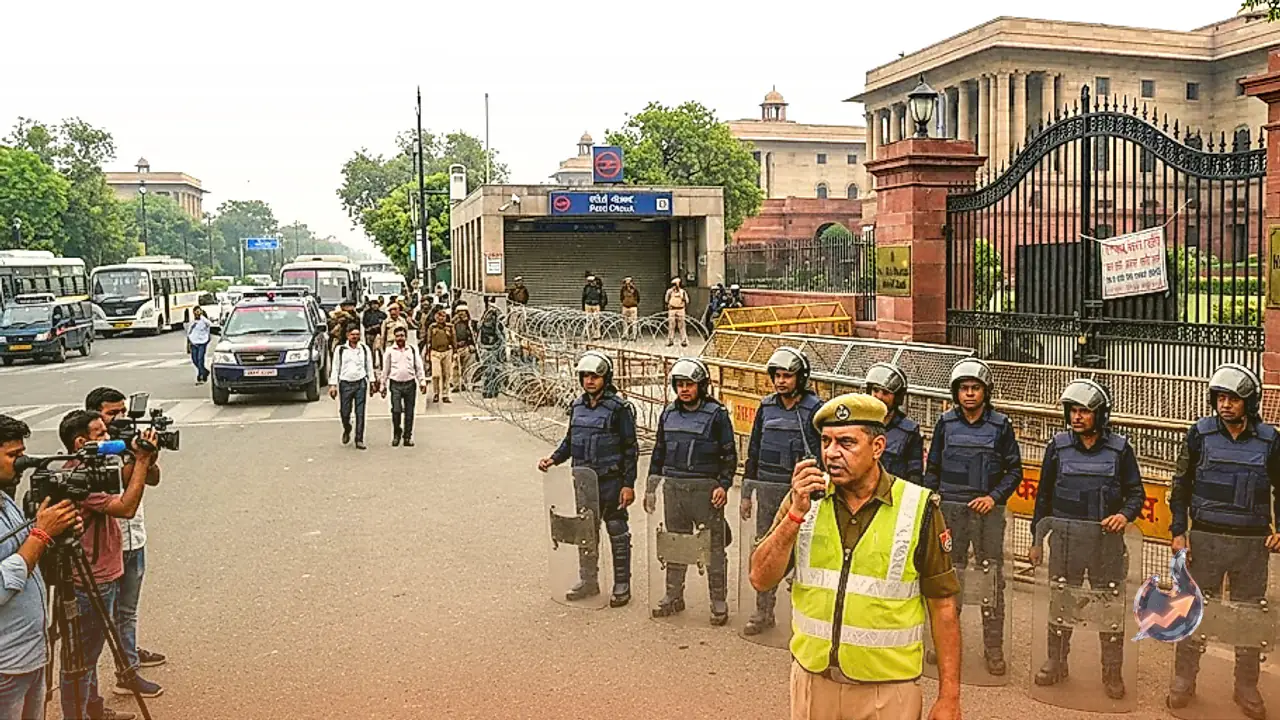
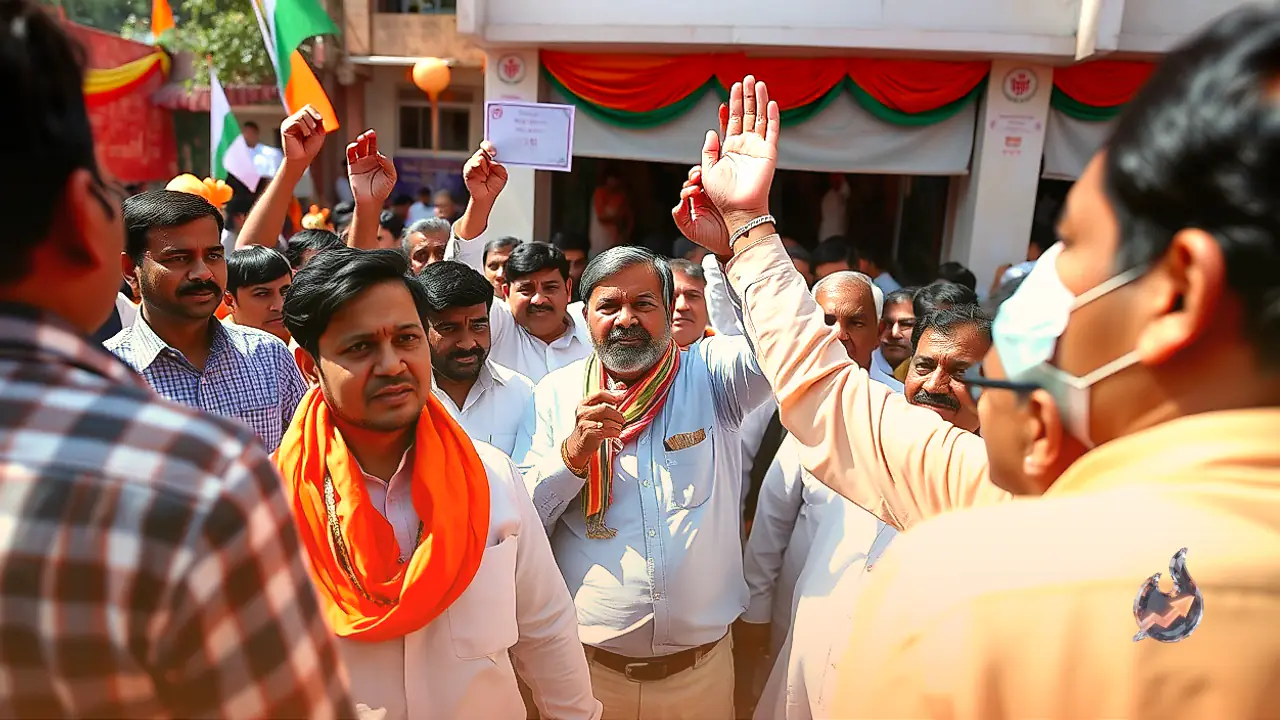
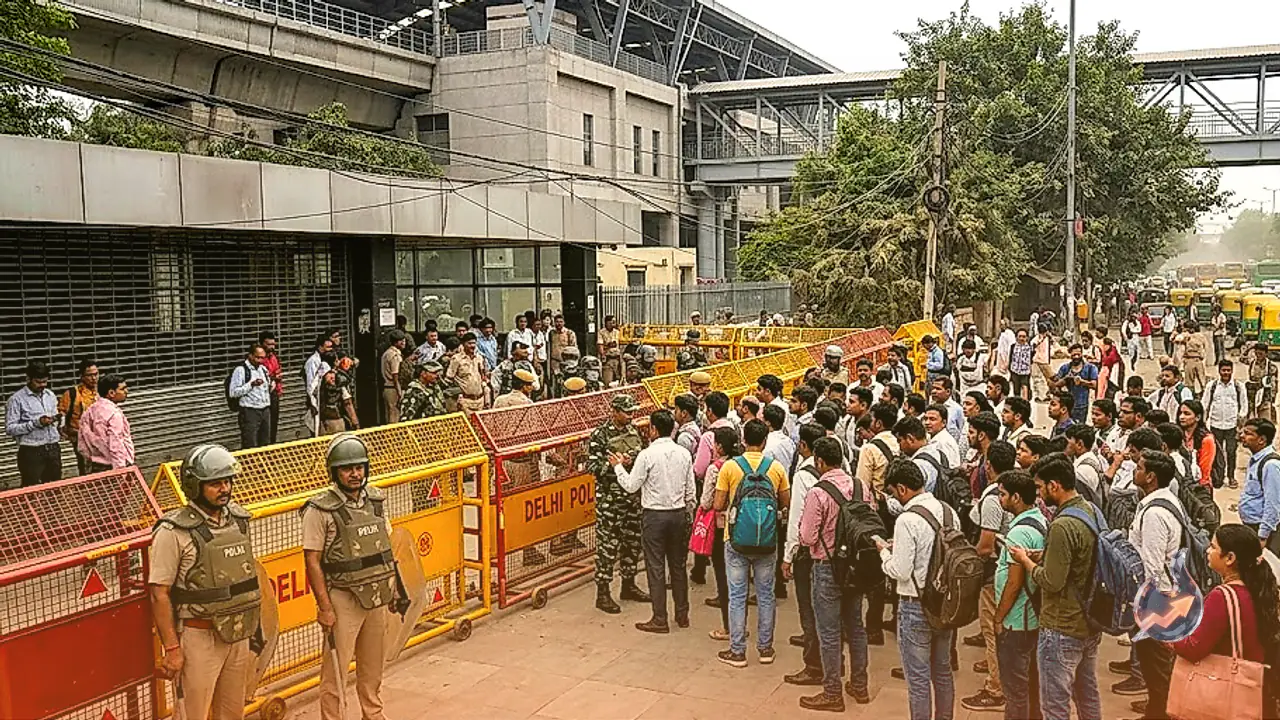
Simultaneously in the national capital, political friction spilled directly onto civic thoroughfares. Following a collective luncheon hosted by Rahul Gandhi for leaders of the INDIA alliance at Connaught Place, parliamentarians boarded buses to stage a demonstration at Rajghat. The gathering included lawmakers representing the Indian National Congress alongside allies from the Rashtriya Janata Dal, Samajwadi Party, Trinamool Congress, and various Left Front constituents. Law enforcement agencies in Delhi handled the unfolding demonstration with calculated restraint, precluding violent escalations.
However, the sudden protest march inflicted immediate disruption on general civic mobility, precipitating immense gridlock throughout central corridors. Commuters and transport vehicles found themselves trapped in unmoving traffic jams spanning more than three hours. The gridlock had acute consequences for long-distance transport, causing over 5,000 passengers to miss their scheduled trains at major railway terminals, turning a political confrontation into widespread public inconvenience.
Protest Tactics and the Ongoing Struggle for Political Visibility
Disruptive street demonstrations and tactical confrontations with law enforcement have constituted an established political playbook over the years. Approximately 15 years ago during land disputes in Bhatta Parsaul near Greater Noida, Rahul Gandhi famously bypassed police checkpoints on a motorcycle to stage an impromptu appearance. Similarly, in 2020 during the Hathras episode, Rahul Gandhi and Priyanka Gandhi Vadra abandoned their vehicle convoy when halted by administrative barricades and advanced on foot, culminating in physical scuffles and subsequent detention.
This recurrent methodology was visible again in 2022 when the Enforcement Directorate initiated formal questioning in connection with the National Herald inquiry. On that occasion, party parliamentarians staged sit-ins at Vijay Chowk and attempted an unauthorized march toward Rashtrapati Bhavan, alleging administrative coercion by central investigating agencies. Street sit-ins, attempts to march on Jantar Mantar, and public blockades represent recurring features of this political strategy. In the current arena, confronting political adversaries involves a broader constellation of ideological factions, digital influencers, and partisan content creators, all engaged in a relentless contest to prove their faction holds the absolute moral high ground.