























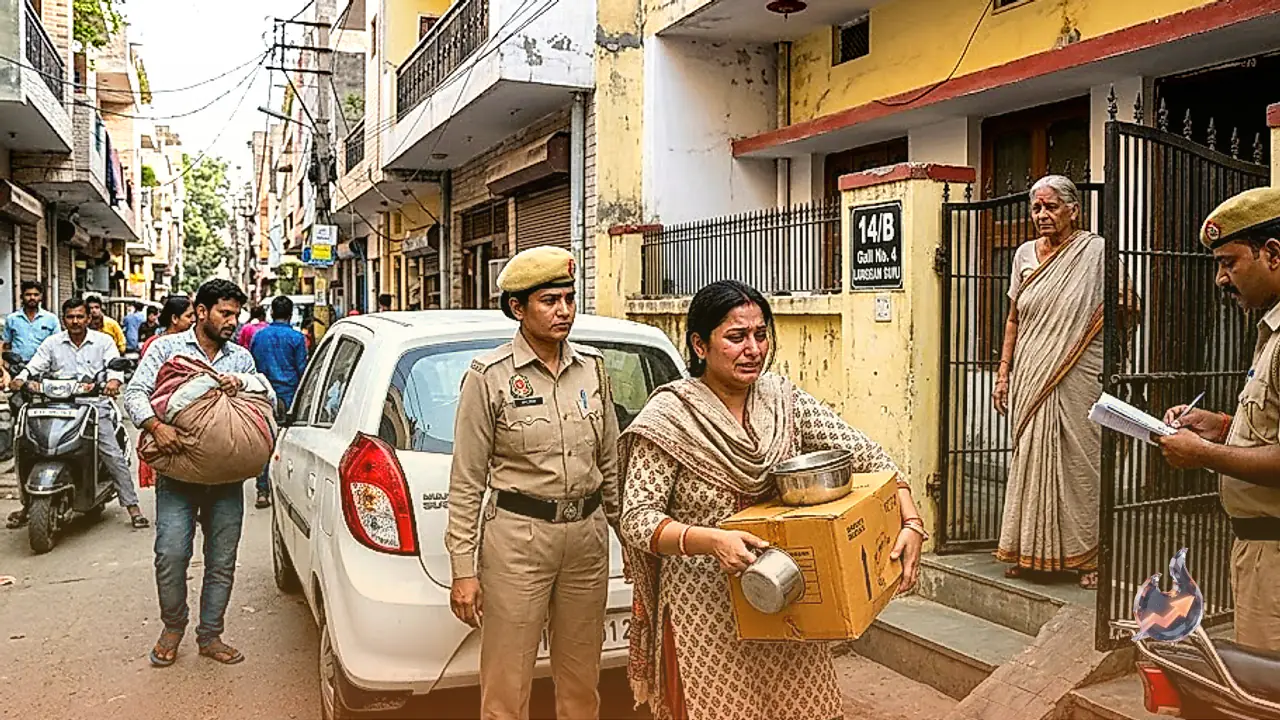

A child cannot claim co-ownership or title over a parent's registered house merely by living there or contributing funds toward repairs and construction. The Delhi High Court firmly laid down this legal position while deciding a longstanding residential property dispute from Karawal Nagar. The court completely turned down the claims of a son and daughter-in-law who sought to drive the mother out of her own home. The court instructed the couple to immediately remove the locks they had placed on the rooms and deliver vacant possession of the premises to the mother, affirming that ownership is determined solely by valid legal titles rather than family relationships or informal spending.
Property Purchased from Savings in 1996
The roots of this legal battle trace back to 1996, when the family patriarch purchased a house in Karawal Nagar in the name of his wife. The mother presented before the court that her late husband was employed and had utilized his personal savings to acquire the property in her name. To substantiate her absolute ownership, she produced vital original documents before the bench. These included a general power of attorney, a sale agreement, and purchase receipts, all bearing the specific date of November 1, 1996. The mother had resided continuously in that property since the date of purchase.
Years later, the son married, and his wife moved into the household. The mother permitted the couple to stay in the premises strictly on account of familial ties and affection, without transferring any legal title or ownership interest to them. In terms of domestic occupation, the mother utilized one room, a kitchen, and a shop on the ground floor. The son and daughter-in-law occupied a second room on the ground floor alongside another room and kitchen situated on the first floor. While the domestic arrangement functioned smoothly initially, tensions soon emerged as the son attempted to stake a legal claim over the real estate.
Harassment, Padlocked Rooms, and Allegations of Forgery
The mother placed on record that the behavior of her son and daughter-in-law progressively worsened into hostility. She accused the couple of frequently picking fights, harassing her, and attempting to force her out of her residence. As the domestic strain peaked, she directed the two to leave the premises. The son and his wife moved out of the home, but prior to leaving, they placed padlocks on the specific rooms they were occupying. By locking the spaces, they effectively deprived the elderly woman of access to her own house, converting a domestic disagreement into a dispute over possession.
In an effort to assert rights over the property, the son produced paperwork asserting that the house had been transferred into his name in exchange for a sum of Rs 1.5 lakh. The mother challenged this transaction as a complete fabrication and forgery. She specifically pointed out that the purported transfer documents were dated January 12, 2003, which fell on a Sunday. She argued that the execution of such conveyance paperwork on a Sunday raised serious doubts regarding their authenticity and legal validity, further exposing the fraudulent nature of the claim.
Unauthorized Bank Withdrawal and Power Connection Clash
The conflict expanded into instances of financial misappropriation and fights over utility services. The mother brought to the court's notice that on July 2, 2013, her son withdrew Rs 50,000 from her deceased husband's bank account without any authorization. Following this unauthorized withdrawal, she lodged a formal police complaint against her son in August 2013.
Around the same time, another confrontation arose when the son submitted an independent application seeking a separate electricity meter installed in the house. Upon discovering this move, the mother submitted a formal written objection to BSES Yamuna Power on October 4, 2013. She informed the distribution utility that she remained the sole lawful owner of the real estate and asserted that the son possessed no legal standing to seek a separate utility connection without her prior knowledge and written consent.
Protracted Litigation and Unsubstantiated Financial Claims
Resisting his mother's position, the son initiated legal proceedings by filing a civil suit to claim rights in the property. However, his lawsuit was dismissed by the court on November 18, 2015. With the rooms still locked, the mother moved the court on January 25, 2016, seeking the retrieval of her property. This prolonged legal contest spanned around a decade before the Delhi High Court delivered its decisive verdict on September 8, 2026.
Before the High Court, the son advanced several arguments claiming joint ownership. He contended that his father's monthly earnings were insufficient to purchase the property single-handedly. He asserted that he was working as an electrician when the land was initially acquired and claimed to have contributed Rs 1.5 lakh toward the transaction. Additionally, he stated that he spent another Rs 60,000 out of pocket during the construction phase of the building. On these grounds, he pleaded that his financial contributions entitled him to be recognized as a co-owner. However, when required to present substantiating evidence, the son could not produce any receipts, bank statements, or paper trail to verify these alleged cash outlays.
Court Ruling: Financial Contributions Do Not Confer Title
The Delhi High Court rejected the son's contentions, reiterating established principles of property jurisprudence. The court held that merely spending money on construction, structural renovations, or household maintenance does not automatically grant a person co-ownership in a piece of real estate.
The bench observed that carrying out construction work does not vest any proprietary right in the absence of an independent legal title or valid statutory instrument that explicitly establishes ownership. The son failed to establish any independent title or deed registered in his name. In stark contrast, the mother placed on record consistent documentation proving title, including the 1996 power of attorney and sale agreement. Consequently, the court ordered the son and daughter-in-law to remove their locks and surrender vacant possession of the premises to the mother without delay.