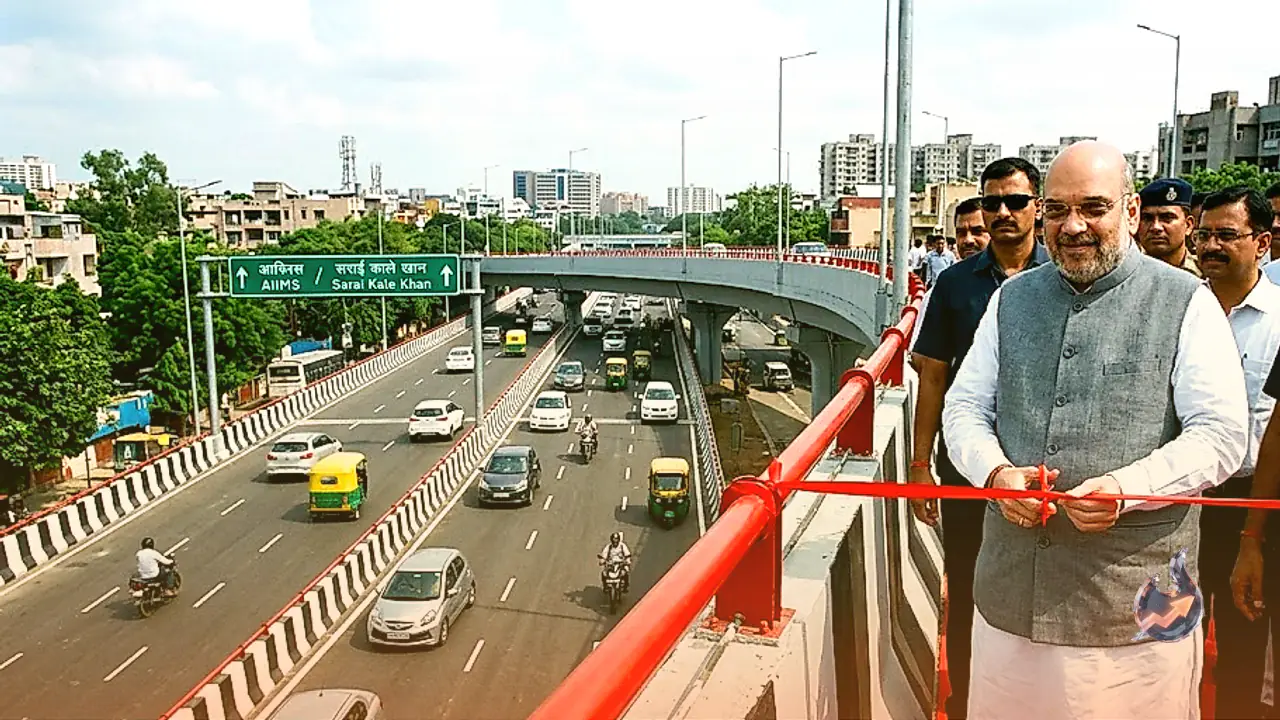























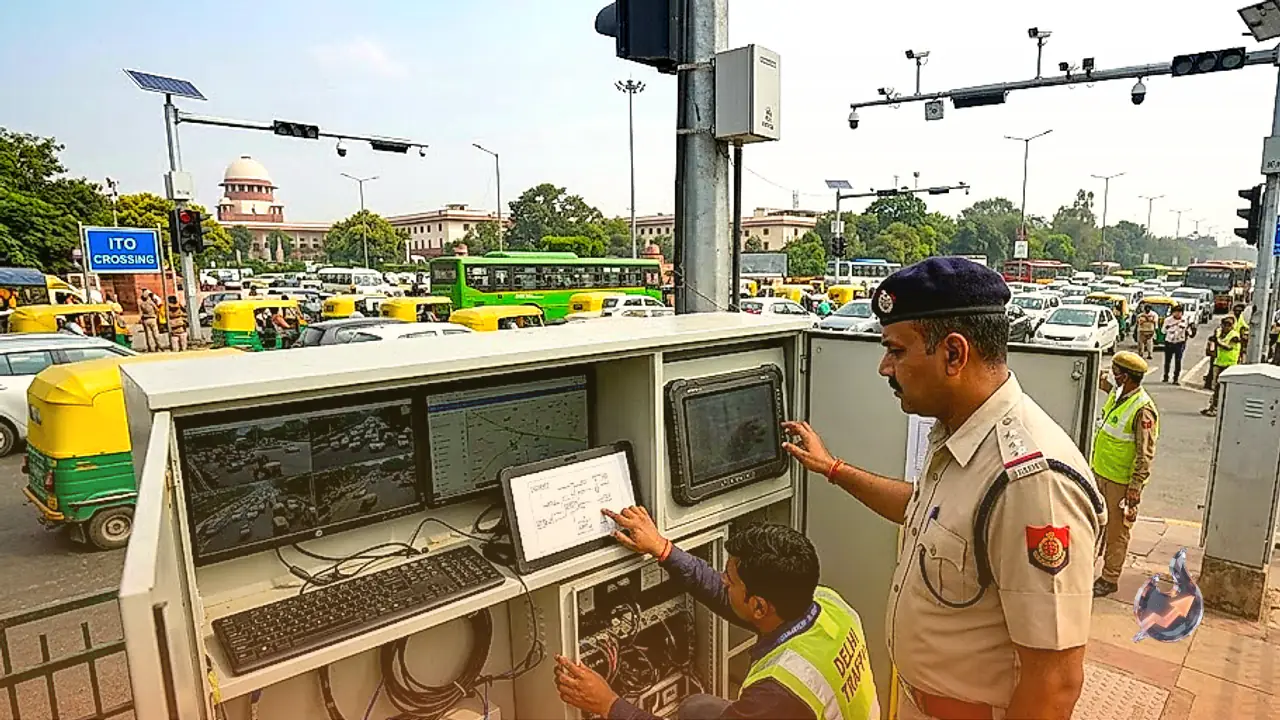

Daily commuting across Delhi involves enduring prolonged bottlenecks, where even a short distance of a few kilometres consumes substantial time and fuel during peak hours. In an effort to tackle these chronic traffic snarls through modern technology, the Cabinet has approved the implementation of an Intelligent Traffic Management System (ITMS) for Delhi with an outlay of ₹1,789.52 crore. The project is designed to integrate automated signalling, 24/7 video surveillance, and traffic rule enforcement into a unified intelligent control network.
The deployment of this high-tech infrastructure will cover 42 critical traffic corridors spanning the capital. Officials plan to execute the rollout across three structured phases within an estimated 24-month timeframe. Following completion, the contract includes an operational and maintenance period of five years to keep the infrastructure running seamlessly. A total of 1,092 traffic signal junctions will be upgraded and linked directly to an adaptive traffic control setup.
Smart Signals Adjust Timing Based on Real-Time Volume
The core capability of the upgraded setup lies in its smart adaptive traffic signals, which move away from conventional fixed-duration timers. Equipped with intelligent sensors, these lights dynamically alter their green and red intervals in direct response to the volume of vehicles detected on each approaching arm. This dynamic adjustment prevents drivers from waiting needlessly at red lights when cross streets are deserted, while clearing congested stretches far more quickly.
In addition, the system streams real-time operational feeds regarding road conditions, vehicular slowdowns, and road crashes directly to the traffic police command units. Armed with instant ground data, traffic controllers can execute prompt diversions and optimize vehicle dispersion long before tailbacks spill over into adjacent arterial networks.
Automated Green Corridors for Priority Emergency Vehicles
For ambulances and other emergency services navigating packed streets, traffic delays often lead to critical setbacks. To solve this, the smart traffic framework features an active priority response module. When an emergency vehicle approaches, the system can automatically synchronize upcoming signals to generate a dedicated green corridor. Giving priority clearance ensures smooth transit through congested corridors, dramatically cutting the transit time required to reach emergency medical facilities.
Automated Enforcement Cameras to Track Violations via AI
Enforcement of traffic regulations will also receive a major technological upgrade, as automated detection systems are slated for installation across approximately 1,029 designated locations. Powered by AI, the setup automatically logs violations such as red-light jumping, stop-line breaches, dangerous overspeeding, and wrong-side driving without requiring on-ground police intervention.
The automated cameras will also identify motorists riding two-wheelers without helmets, drivers failing to wear seat belts, unauthorized curbside parking, and the hazardous use of mobile phones while steering. Furthermore, the intelligent software can cross-reference vehicle registration databases to quickly flag stolen vehicles, blacklisted registrations, and habitual offenders across the network.
Live Roadside Alerts and Integrated Commuter Guidance
Commuters will receive up-to-the-minute updates regarding on-road conditions via dynamic digital message displays mounted along corridors, as well as through linked digital services. These systems will present real-time warnings concerning emerging traffic pile-ups, recommended diversions, open parking slots, and overall carriageway status. The administration can also pipe this data directly into popular navigation service providers, helping drivers alter routes dynamically before entering bottlenecked zones.