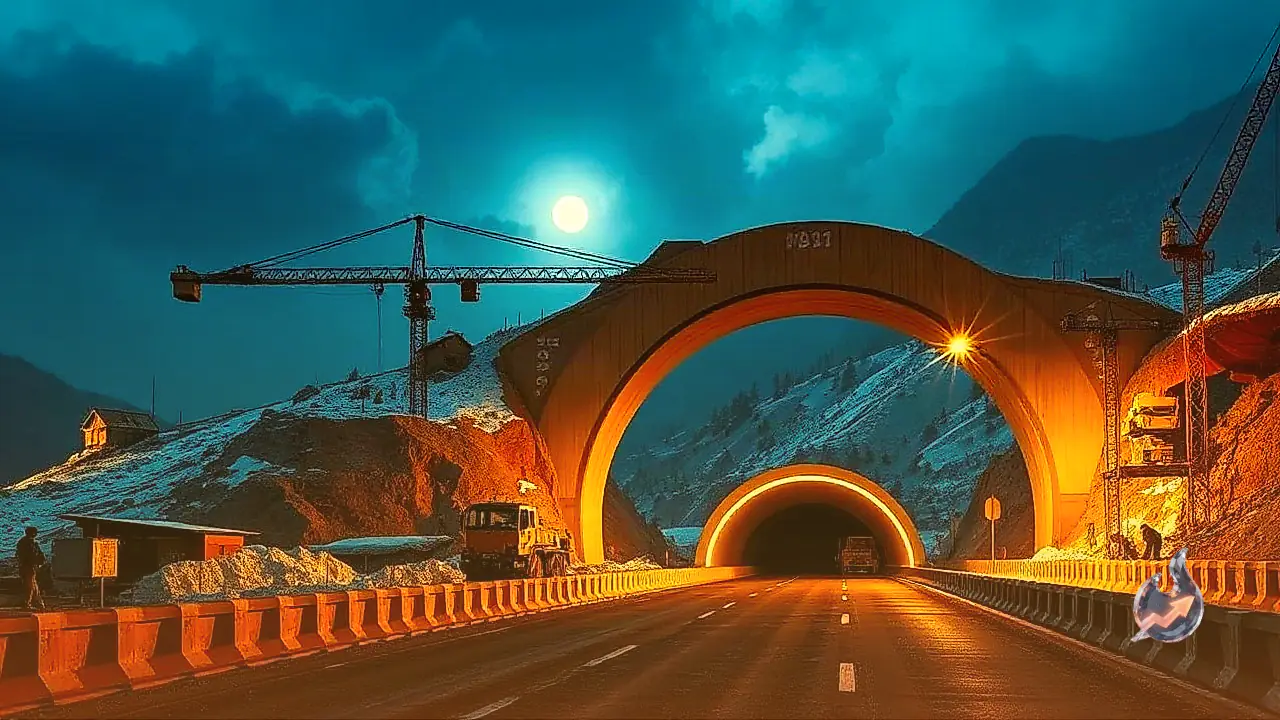





















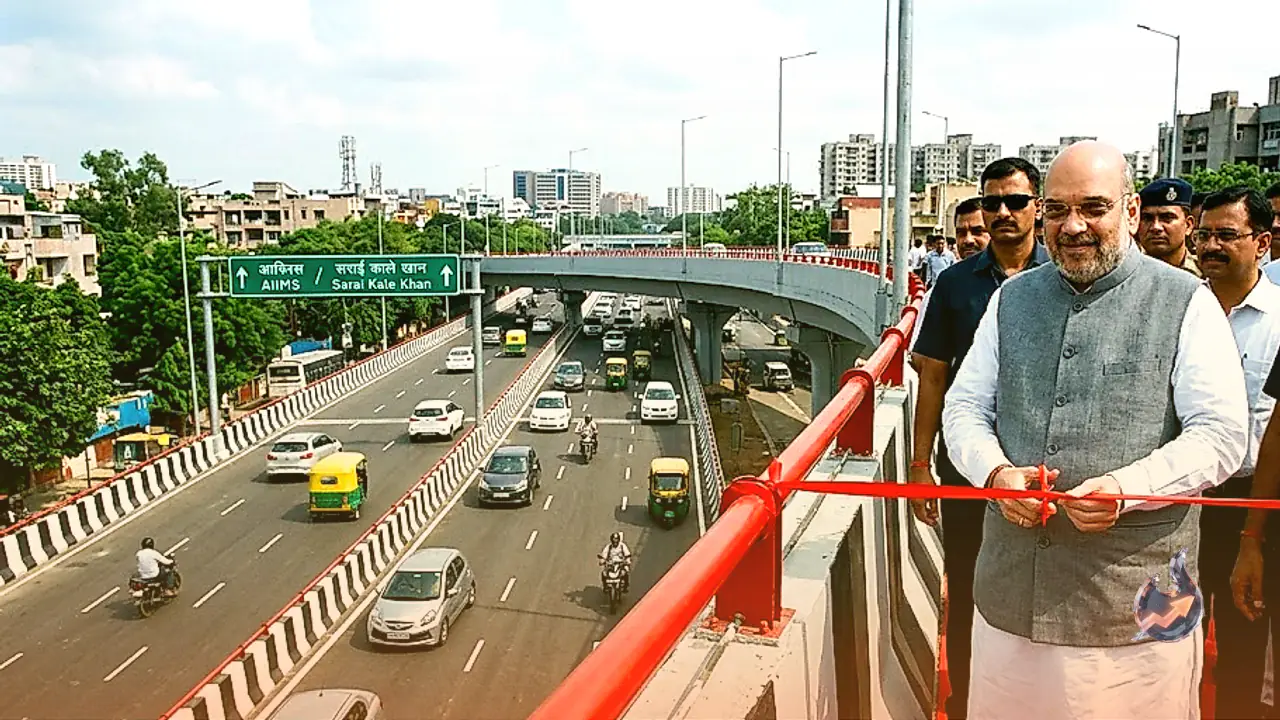

In a major development aimed at easing traffic congestion across the national capital, the Barapullah Phase-3 elevated corridor alongside the Mukarba Chowk underpass has been officially opened to the public. Union Home Minister Amit Shah inaugurated both critical infrastructure facilities on Tuesday, paving the way for seamless transit between East and South Delhi. With this new arterial link operational, commuters can now enjoy an uninterrupted, signal-free corridor stretching roughly 10 kilometers all the way from Mayur Vihar to AIIMS.
Six-Lane Elevated Structure Linking Sarai Kale Khan to Mayur Vihar
The core alignment of the Barapullah Phase-3 elevated corridor bridges the gap between Sarai Kale Khan and Mayur Vihar Phase-1. In terms of linear dimensions, the primary elevated stretch spans 3.5 kilometers, while the cumulative distance reaches approximately 4.9 kilometers once all connecting loops and access ramps are factored in. Engineered as a robust six-lane dual carriageway, the elevated road provides three dedicated lanes in each direction. Designers have also integrated non-motorized transport needs into the master plan, incorporating dedicated pedestrian footpaths and exclusive cycling tracks alongside vehicular lanes.
Saving 20 to 25 Minutes and Eliminating Chokepoints
Motorists traveling from Mayur Vihar Phase-1 and adjoining sectors of Noida toward the medical hub of AIIMS can bypass multiple surface-level traffic intersections. The unhindered corridor is estimated to cut daily transit times by roughly 20 to 25 minutes during morning and evening rush hours. Commuters heading toward commercial and educational destinations such as INA Market and IIT Delhi will also experience smoother vehicular dispersal, as through traffic is lifted off congested surface roads.
Clearing Hurdles After an 11-Year Construction Timeline
The infrastructure venture faced prolonged delays, having been under construction for approximately 11 years. PWD Minister Parvesh Verma noted that following the formation of the government, an on-site inspection was carried out to assess the pending milestones and identify structural bottlenecks. The project had remained stalled primarily due to outstanding no-objection certificates (NOCs) and pending statutory clearances across multiple agencies. Once these regulatory hurdles were systematically resolved, construction accelerated to bring the long-pending link to fruition.
Broader Network Boost Across Key Delhi Arteries
The commissioning of the Barapullah Phase-3 elevated corridor in conjunction with the Mukarba Chowk underpass enhances connectivity across vital residential and commercial nodes of Delhi. Chief Minister Rekha Gupta commended the coordinated efforts of departmental authorities, engineers, and ground staff in driving the project across the finish line. For thousands of everyday road users, the newly commissioned infrastructure promises lower vehicular emissions, reduced fuel consumption, and significant relief from bottlenecks along central thoroughfares.