



















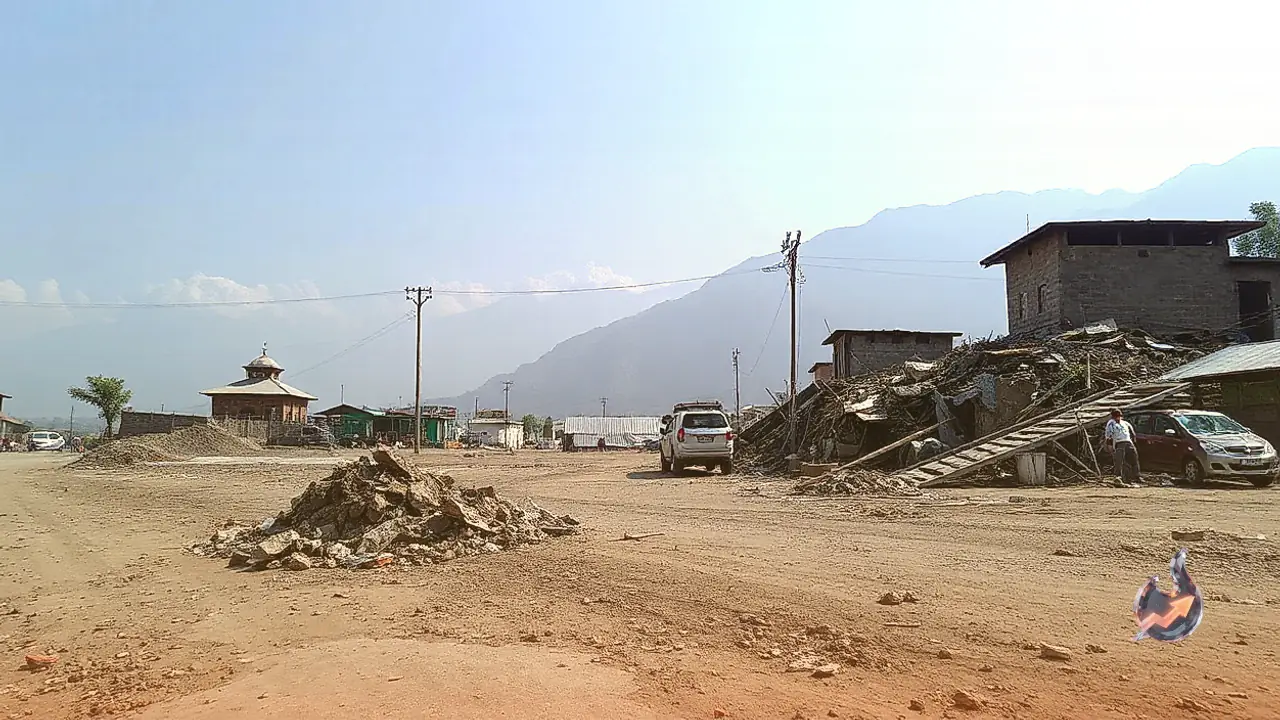

Seismic activity was recorded across two distant parts of the country within a span of just a few hours. Following late-night tremors in the northern mountainous territory of Jammu and Kashmir, the ground shook once again in the northeastern border state of Arunachal Pradesh, prompting brief panic among local residents. Fortunately, official assessments confirm that neither seismic event caused any casualties or damage to property, though startled citizens in both areas rushed outdoors as a precautionary step.
Morning Tremor Strikes Arunachal Pradesh's Kurung Kumey
Residents in Arunachal Pradesh's Kurung Kumey district experienced sudden ground vibrations on the morning of Tuesday, 3 November. According to precise data released by the National Centre for Seismology (NCS), the earthquake was logged at exactly 6:43:16 AM. Instruments calculated the magnitude at 3.0 on the Richter scale. Seismologists confirmed that the epicenter was situated at a relatively shallow focal depth of roughly 10 kilometers beneath the earth's crust. Because the intensity remained on the lower side of the scale, the event passed without inflicting structural harm or destruction across the district.
Late-Night Earthquake Rattles Kishtwar in Jammu and Kashmir
Hours before the northeastern event, a separate earthquake struck Kishtwar in Jammu and Kashmir. The tremor occurred on Monday night at 10:56 PM, jolting residents right before midnight. Scientific measurements registered this event at magnitude 3.1 on the Richter scale. The nighttime rattling sent anxious families fleeing out of their houses into open clearings to safeguard themselves against possible structural collapse. Regional authorities subsequently verified that no injuries, loss of life, or damage to residential infrastructure took place during the event.
Geological Forces Driving Recurrent Tremors Across Indian Borders
Extensive tracts across India fall into high-risk seismic territory, with the Himalayan arc and the northeastern states bearing the brunt of recurring underground activity. This persistent vulnerability stems directly from plate tectonics: the Indian tectonic plate is steadily pushing northwards into the massive Eurasian plate. As these landmasses grind against one another, enormous tectonic strain and underground energy accumulate deep within the earth's crust. When this subterranean stress suddenly releases, shockwaves travel outward to create measurable earthquakes. Because Jammu and Kashmir sits directly along the active Himalayan seismic belt and Arunachal Pradesh spans critical fault lines in the northeast, both territories consistently register tremors over time.