




















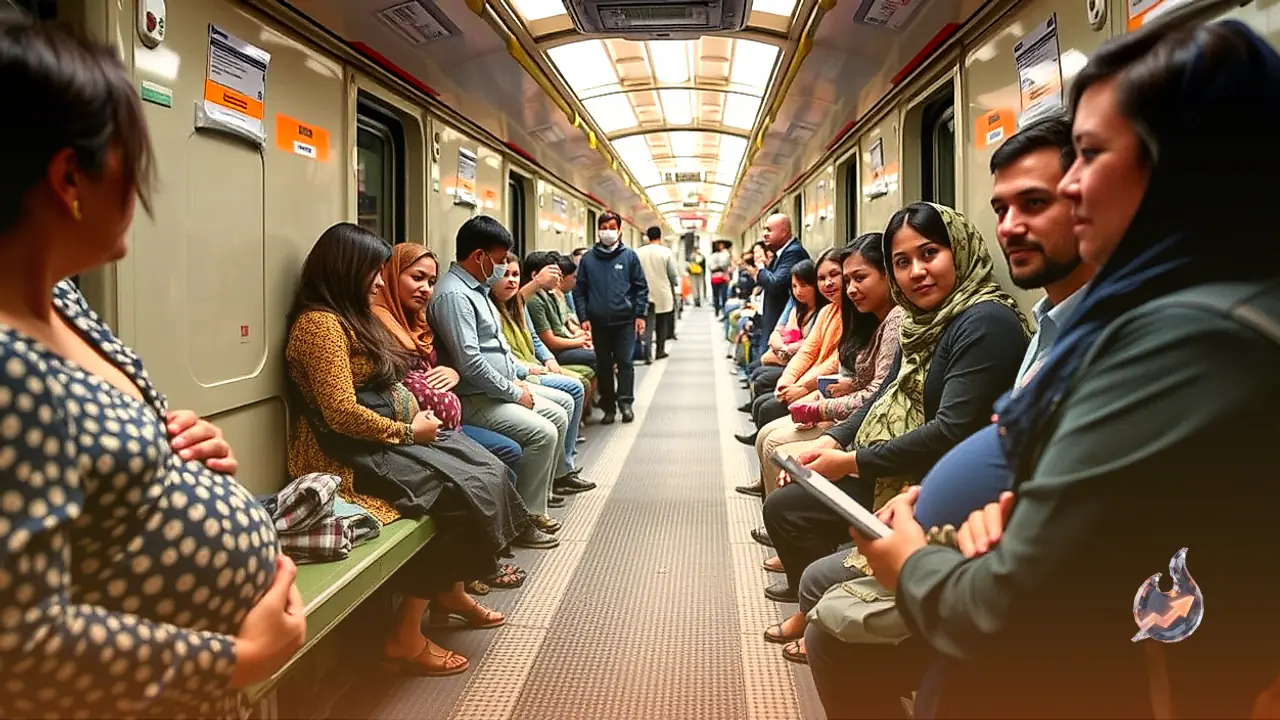

Climbing up to middle or upper berths during an Indian train journey can be both physically demanding and unsafe for expectant mothers. For years, securing a lower berth has remained a matter of convenience and vital safety for pregnant women, yet the digital reservation architecture lacked an option to request this specific seating online. Anyone seeking this accommodation had to physically visit a passenger reservation counter at a railway station and submit a valid medical certificate issued by a registered doctor. A policy shift initiated by the Railway Board has now removed this hurdle, permitting pregnant women to access lower berths across digital platforms alongside physical ticketing counters.
Integration into the Combined Lower Berth Quota
According to an order issued by the Railway Board on 28 September, pregnant women will now be accommodated within the existing combined lower berth quota. Previously, this specific quota was strictly limited to senior citizens and female travellers aged 45 years and above who travel alone. By expanding this eligibility umbrella, the rail administration aims to ensure that women in advanced stages of pregnancy are not pushed into inconvenient upper berths simply because they booked their tickets through an app or website rather than standing in a queue at an offline reservation center.
To execute the board's decision, instructions have been dispatched to key operational and technological units within the rail network. The Centre for Railway Information Systems (CRIS) and the Indian Railway Catering and Tourism Corporation (IRCTC) are tasked with altering the digital reservation software. Passengers must note, however, that the appearance of this feature on web portals and mobile applications requires technical code updates across the central ticketing engine. Until CRIS and IRCTC finish configuring their systems, the online option will remain temporarily unavailable to the public.
Removal of Medical Slips at Booking and In-Journey Checks
A significant procedural relief introduced under the new directive is the removal of doctor certificate submissions during the booking process. Historically, female passengers or their representatives had to provide written confirmation from a registered medical practitioner at station windows before staff could assign a lower berth. Under the newly approved mechanism, passengers are spared this preliminary verification step when reserving their berths, drastically simplifying the booking process.
This waiver at the booking stage does not eliminate verification during actual travel. The Railway Board made it clear that ticket examination staff retain the authority to inspect relevant medical documentation during the journey. If a passenger who has reserved a lower berth under this special entitlement cannot present authentic proof of pregnancy upon being asked by an on-duty ticket collector, the passenger can be penalised under Section 138 of the Railways Act, 1989. Rail travellers are therefore advised to carry legitimate medical papers throughout their journey to avoid penalties.
Allocation Figures Across Different Coach Classes
The combined lower berth quota operates under established seat limits across various passenger compartments in Indian trains. Seats under this quota are distributed strictly on an availability basis, and in many instances, qualifying senior citizens and female passengers aged 45 or older are assigned lower berths automatically even without manual selection. Under the expanded framework, pregnant women will share in the following coach-wise allocations
- Sleeper Class: Approximately 6 to 7 lower berths per coach are earmarked for the combined quota.
- AC 3 Tier: Around 4 to 5 lower berths per coach are set aside for eligible travellers.
- AC 2 Tier: Roughly 3 to 4 lower berths per coach fall under this designated allocation.
These reserved numbers help distribute physical comfort to those who require it most without drastically cutting into general allocation pools. Pregnant passengers will gain access to these specific allocations once software modifications are completed.
Provisions for Passengers with Disabilities
In addition to accommodations for senior citizens and women, the railways manage distinct seating reservations for passengers with disabilities (Divyangjan). Mail and express services allocate four berths per coach in Sleeper Class as well as 3AC and 3E classes, with two of those berths strictly designated as lower berths to assist with mobility. Furthermore, in Reserved Second Sitting and AC Chair Car services, four dedicated seats are permanently reserved for disabled travellers to ensure equitable and safe transit across the broader network.
Judicial Scrutiny and Future Rollout
The timing of this administrative decision coincides with judicial examination before the Delhi High Court, where a Public Interest Litigation sought to make lower berth booking accessible online for pregnant women. The legal challenge highlighted the inconsistency of operating a modernised digital booking portal while still requiring expectant mothers to make physical trips to booking counters merely to obtain suitable seating. While the Railway Board's 28 September directive establishes the regulatory foundation for this reform, its practical availability now rests on how quickly CRIS and IRCTC complete system deployment.