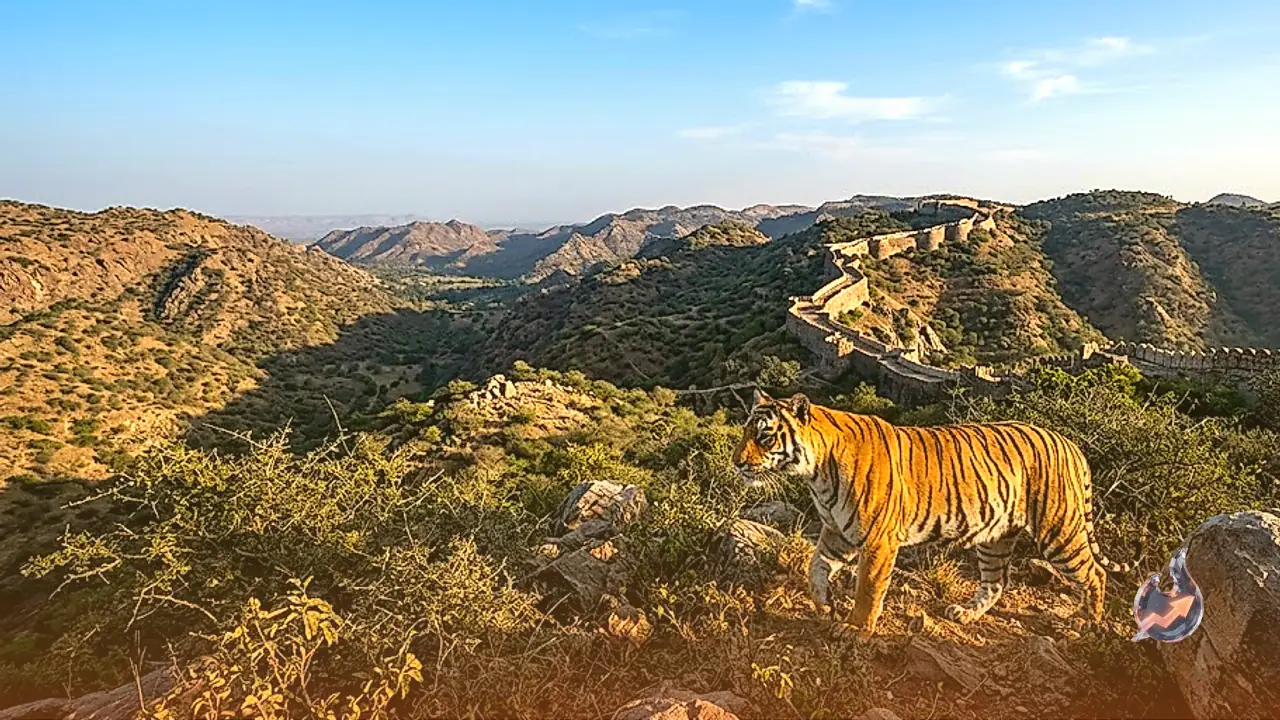























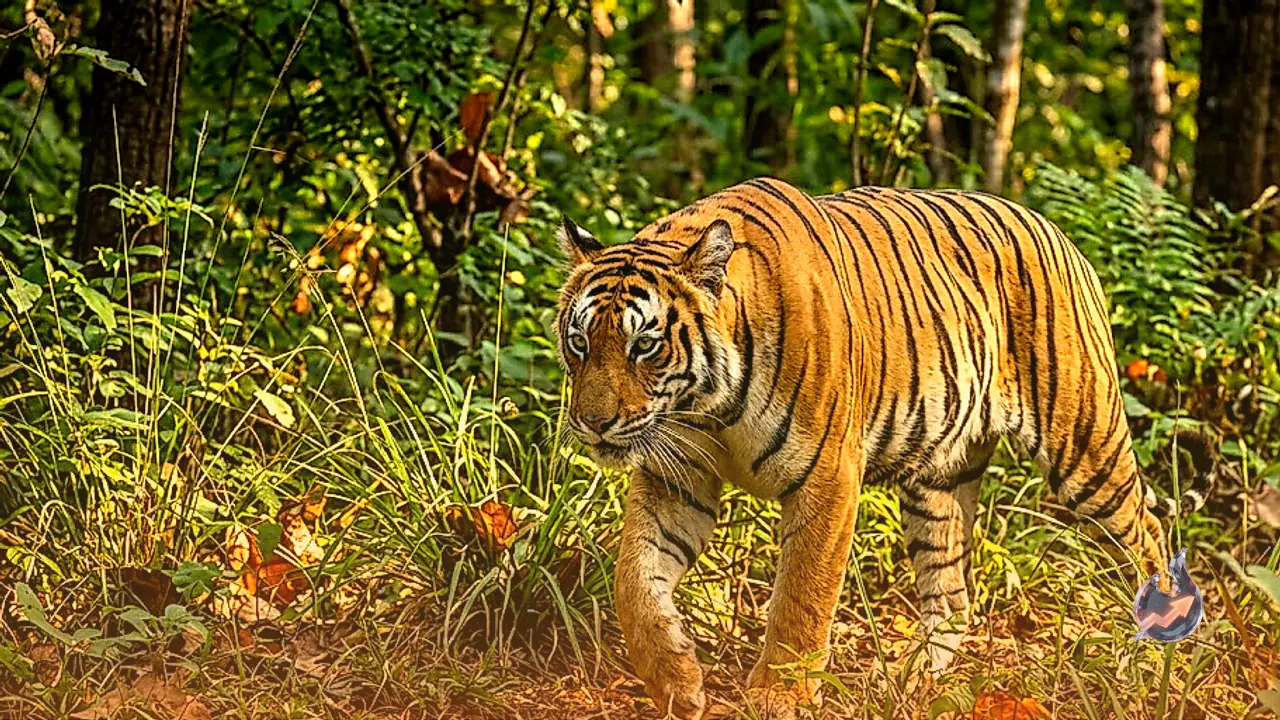

Every year on July 29, the global community observes International Tiger Day 2026. The core objective of this day extends far beyond a simple annual commemoration; it aims to foster widespread awareness regarding the conservation of apex predators and the preservation of crucial forest habitats worldwide. In India, the tiger represents much more than a magnificent wild species, serving as a national animal, a symbol of cultural heritage, and a cornerstone of ecological pride. Currently, India shelters over 70 percent of the world's total wild tiger population. The regal posture, astonishing physical capabilities, and distinct behavioral traits of the Royal Bengal Tiger render it one of the most compelling creatures in the animal kingdom. On this occasion, a detailed examination of ten fundamental biological and ecological facts offers deeper insight into the life of India's national animal.
Unique Stripe Identity and Dermal Pigmentation
No two Royal Bengal Tigers in the world share the exact same configuration of yellow and black stripes. Similar to how human fingerprints remain distinct to each individual, every tiger possesses an exclusive stripe pattern. Wildlife researchers and forest department personnel rely heavily on these distinct stripe configurations to accurately identify and monitor individual tigers across nature reserves. Furthermore, these striking markings are not restricted to the animal's outer fur. If a tiger's fur were to be removed, the precise black stripe pattern would remain permanently visible directly on its skin, illustrating deep-seated biological pigmentation.
Aquatic Adaptations and Long-Distance Swimming
While most members of the feline family, Felidae, actively avoid water bodies, the Royal Bengal Tiger exhibits a strong affinity for aquatic environments. As the largest species within the cat family, these tigers regularly submerge themselves in rivers and lakes to cool down during hot climate conditions. Beyond basic immersion, they are exceptionally skilled swimmers. When tracking prey or traversing territorial boundaries, Royal Bengal Tigers can effortlessly swim across rivers spanning 5 to 6 kilometers in width, demonstrating extraordinary muscular stamina.
Acoustic Reach and Territorial Vocalization
When an adult Royal Bengal Tiger emits a full-throttle roar, the sound wave travels across considerable distances, reaching up to 3 kilometers or approximately 1.8 miles. In the dense acoustic environment of a forest, this powerful vocalization serves two distinct functions. It acts as an authoritative warning to potential competitors while simultaneously establishing and asserting the tiger's territorial dominance across its habitat.
Nocturnal Vision and Reflective Eye Anatomy
Royal Bengal Tigers primarily undertake hunting activities during dusk and night hours. This nocturnal preference is driven by superior visual acuity in dark environments, where their sight is 6 times more acute than that of human beings. Their eyes feature a specialized anatomical layer behind the retina that reflects light back through the photoreceptors. This biological adaptation maximizes light absorption in low-light conditions, causing their eyes to produce a distinct glow when exposed to light sources at night.
Physical Mass, Velocity, and Leaping Power
An adult male Royal Bengal Tiger can attain a body weight ranging between 200 and 300 kilograms. Despite carrying such substantial physical mass, these predators can achieve top running speeds of up to 60 kilometers per hour in short bursts. Their hind leg muscles possess immense strength, enabling them to execute horizontal leaps covering distances of 20 to 30 feet in a single bound, combining momentum and power during predation.
Solitary Lifestyle and Vast Territorial Ranges
Tigers maintain a strictly solitary existence rather than living in social prides, with the sole exception being female tigers raising dependent offspring. An adult male tiger commands a broad home range extending between 60 and 100 square kilometers. To demarcate these extensive territorial boundaries, tigers utilize scent marking through urine spraying alongside physical claw carvings etched deep into the bark of prominent trees.
Initial Blindness in Newborn Cubs
At birth, tiger cubs are born completely sightless. During the first 1 to 2 weeks of their lives, cubs remain entirely blind, relying exclusively on their mother's scent, touch, and milk for survival. Because newborn cubs are unable to detect approaching dangers, shielding these vulnerable offspring from opportunistic forest predators represents one of the most critical challenges faced by mother tigers during the early nursing phase.
Hunting Strategy and Low Success Ratios
Contrary to popular cinematic depictions that portray apex predators capturing prey effortlessly, real-world hunting demands immense tactical patience. Statistical observations indicate that a Royal Bengal Tiger succeeds in capturing prey in only 1 or 2 out of every 10 hunting attempts. Despite a low success rate, their stealth tactics, calculated positioning, and persistent endurance ensure their status as master hunters of the forest ecosystem.
Conservation Milestones: Project Tiger and Ecosystem Balance
During the mid-twentieth century, widespread poaching and habitat fragmentation caused tiger populations in India to decline precipitously. To counteract this environmental crisis, the landmark initiative known as Project Tiger was launched in the year 1973. Through the dedicated efforts of frontline forest guards and rigorous conservation policies, India achieved a historic recovery in tiger numbers, establishing a global benchmark for wildlife preservation. As apex predators, Royal Bengal Tigers are critical guardians of ecological equilibrium. Protecting tigers ensures the preservation of entire forest landscapes, safeguarding river systems, vegetation, and coexisting wildlife species.