













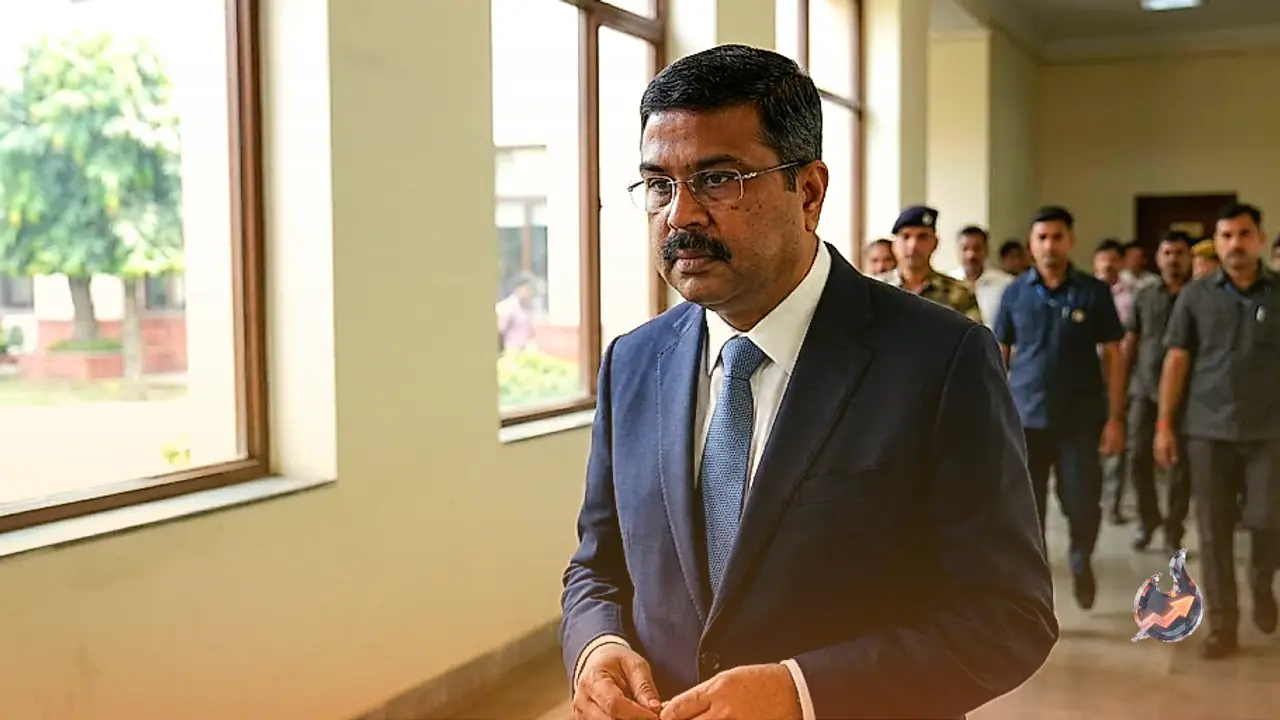

The central political stage in India is currently dominated by the ongoing controversy surrounding the NEET-UG examinations, a highly competitive medical entrance test, bringing Union Education Minister Dharmendra Pradhan into the direct line of fire. Across the country, widespread protests have erupted, led by frustrated students and various opposition parties who are demanding strict accountability for alleged irregularities and systemic failures in the examination process. Consequently, there is a growing, unified chorus calling for Pradhan's immediate resignation from his position in the Union Cabinet. Despite the mounting pressure, the intense public scrutiny, and the relentless political attacks from opposition leaders, the central government has stood firmly behind him. As of now, the administration has shown absolutely no indications or given any signs that the senior Bharatiya Janata Party (BJP) leader will be asked to step down from his critical ministerial post. As this unprecedented crisis continues to unfold in Parliament and on the streets of major cities, there is renewed public interest in understanding the man at the center of the storm and exploring his origins, his steady political ascent, his educational qualifications, and his vast administrative experience.
Early Life in Talcher and a Political Family Background
Dharmendra Pradhan's roots lie deeply embedded in the rich political landscape of Odisha. He was born on June 26, 1969, in the coal-rich town of Talcher in Odisha. Politics and public service were a staple in his household from a very young age. His father, Dr. Debendra Pradhan, was a highly respected and prominent political figure who successfully served as a Union Minister of State during the tenure of the Atal Bihari Vajpayee government. Growing up in a household that was deeply and constantly involved in both national and regional politics, the younger Pradhan was naturally exposed to the daily intricacies of public life, policy discussions, and grassroots governance, paving a clear and natural path for his future endeavors in public service.
Education at Utkal University and Entry into Politics
Before making his enduring mark in the political arena, Pradhan focused intensely on building a solid academic foundation. He completed his initial primary and secondary schooling within his home state of Odisha. Following his early education, he enrolled at the prestigious Utkal University to pursue higher academic studies. There, he successfully earned a Master of Arts (M.A.) degree in Anthropology. It was during these highly formative university years that Pradhan found his true calling in student politics. He began taking an active interest in organizing his peers and addressing student grievances, officially starting his political journey by joining the Akhil Bharatiya Vidyarthi Parishad (ABVP). This early, hands-on involvement in grassroots student movements laid an incredibly strong foundation for his subsequent rise within the ranks of the mainstream political party.
Family Life and Recent Social Media Attention
On the personal front, Dharmendra Pradhan has traditionally maintained a relatively quiet and private family life, though recent events have unavoidably thrust them into the public eye. He tied the knot with Mridula Thakur Pradhan on December 9, 1998. The couple has two children together, a son named Nishant Pradhan and a daughter named Naimisha Pradhan. Recently, as the political heat around the education ministry intensified to unprecedented levels, his family also experienced the direct ripple effects of the controversy. His daughter, Naimisha, made prominent headlines and became a major topic of discussion across various social media platforms when she chose to completely deactivate her social media account amid the ongoing, heated political debates surrounding her father's role.
Electoral Journey: From the State Assembly to Sambalpur
Transitioning smoothly from student leadership to mainstream electoral politics, Pradhan steadily and impressively climbed the political ladder. After proving his organizing mettle in the ABVP, he took on increasingly significant responsibilities within the Bharatiya Janata Yuva Morcha (BJYM), eventually rising to the prestigious position of its National President. His first major electoral victory came at the dawn of the new millennium in the year 2000, when he was successfully elected as a member of the Odisha Legislative Assembly. Four years later, in 2004, he successfully transitioned to national politics by winning a highly contested seat in the Lok Sabha. Over the ensuing years, he continued to be a vital asset for his party, serving a crucial tenure as a member of the Rajya Sabha. Today, after firmly establishing himself as a formidable national figure who originally emerged from Odisha's local politics, he actively represents the Sambalpur Lok Sabha constituency as a Member of Parliament.
A Record of Key Portfolios: From Petroleum to Education
Within the central government framework, Pradhan has consistently been entrusted with some of the most critical and resource-intensive ministries, reflecting his solid standing as a senior, capable, and dependable leader. Long before he took charge of the country's vast academic future, he was responsible for steering India's complex energy sector as the Minister of Petroleum and Natural Gas. His extensive administrative portfolio also includes a significant and impactful stint as the Minister of Steel, as well as serving as the Minister of Skill Development and Entrepreneurship. In July 2021, he was officially appointed to his current, high-profile role as the Minister of Education, a demanding position that requires carefully balancing the immense aspirations of millions of Indian students with the urgent structural reforms needed in the nation's educational apparatus.
The NEET-UG Controversy and Mounting Pressure
The current, deafening clamor for his resignation is entirely rooted in the unprecedented allegations of irregularities associated with the NEET-UG medical entrance exams. The massive controversy has sparked aggressive, nationwide student movements and has strongly unified opposition parties, who fiercely argue that the sheer scale of the systemic failures requires immediate moral accountability at the highest level of government, specifically the resignation of the Education Minister. The highly contentious issue has completely dominated parliamentary sessions and widespread social media discourse. In direct response to these relentless attacks, Dharmendra Pradhan has publicly and staunchly defended his position as well as the government's proactive approach. He has firmly stated on record that the administration is working diligently and transparently to find a fair, lasting resolution to the students' problems, while simultaneously accusing the opposition leaders of unnecessarily and unfairly politicizing a highly sensitive educational issue purely for their own electoral gains.