























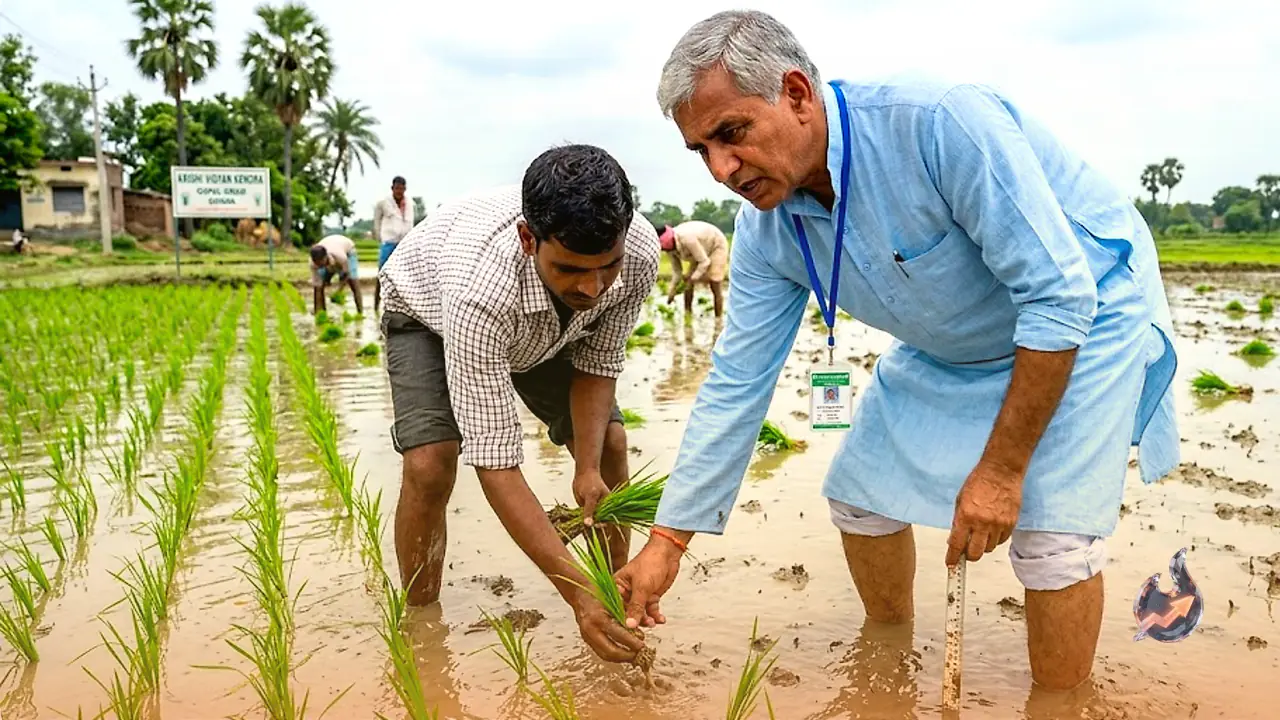

As the kharif season gets underway in Gonda district, farmers are busy preparing for one of the most critical tasks of the year: transplanting paddy. Agriculture experts say this step is as delicate as it is essential. Get the timing and method right, and the crop grows strong with higher yields. But even a small slip at this stage can undo weeks of hard work in the field. That is why experts are urging farmers to keep a few basic points in mind before they begin transplanting.
Field preparation comes first
Dr. Harpal Singh, an agriculture expert at the Krishi Vigyan Kendra in Gopal Gram, explains that deep ploughing and proper levelling of the field must happen before transplanting begins. Only a level field can hold water evenly across its surface. In an uneven field, water pools in some patches while other spots stay dry, and that directly affects how well the plants grow. Preparing the field thoroughly, he says, is essentially laying the foundation for the entire crop.
Getting the water level right
According to Dr. Harpal Singh, maintaining the correct amount of water in the field at the time of transplanting is crucial. The field should neither be flooded with excess water nor allowed to dry out completely. Too much water can weaken the roots of young plants, while too little water stops them from taking root properly. Both extremes can damage the paddy crop, so striking the right balance is essential.
Why timing the transplant matters
Dr. Harpal Singh says the most important factor is pulling seedlings out of the nursery and transplanting them at exactly the right time. His rule of thumb: whatever number of months a particular paddy variety takes to mature, transplanting should happen that same number of weeks after the nursery is sown. For instance, if a variety takes 3 months to mature, it should be transplanted roughly 3 weeks after the nursery bed is prepared. This ensures the seedlings take root quickly, grow faster, and ultimately produce a higher yield.
Choosing the right seedlings
Farmers should always pick healthy, green seedlings for transplanting, Dr. Harpal Singh advises. Weak or yellowing seedlings hurt the entire crop because they neither grow properly nor yield well later. That makes it important to check the health of seedlings carefully while selecting them from the nursery.
Care does not stop after transplanting
Dr. Harpal Singh points out that the work is not over once transplanting is done. Farmers need to keep managing water levels correctly and control weeds from time to time, since weeds can rob paddy plants of nutrients. If farmers pay attention to these small but crucial steps, he says, their paddy crop will grow stronger, face a lower risk of disease, and ultimately deliver a noticeably better yield.