





















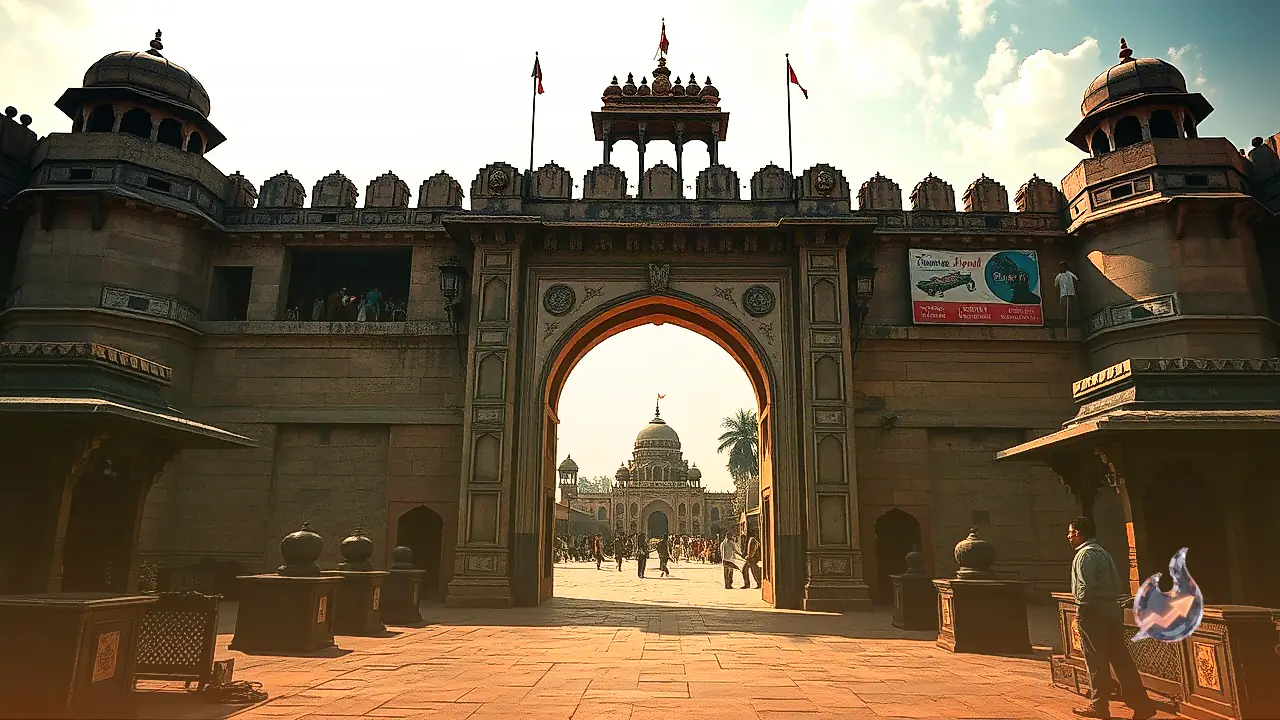

Located in Hyderabad, the world-renowned Golconda Fort is celebrated not only for its sprawling battlements and impressive architectural design but also for the deep historical weight carried by its eight formidable gates. Erected during the 16th century under the Qutb Shahi dynasty, these primary entryways formed the bedrock of the fortress's military defenses. Beyond providing defensive security against invading forces, the gates served as active witnesses to the flourishing trade networks, cultural exchange, religious traditions, and political developments that defined the Deccan region for centuries.
Fateh Darwaza: Standing Witness to the Mughal Siege of 1687
Among the eight portals, Fateh Darwaza holds a preeminent place due to its crucial military location and historical importance. The gate earned its name following a dramatic turning point in South Asian history. In 1687, the army of Mughal Emperor Aurangzeb laid a grueling eight-month siege around the fortress. After months of intense resistance, Mughal troops finally breached the citadel through this exact gate. Marking their ultimate takeover of Golconda, the conquerors designated the entryway as Fateh Darwaza, or the Victory Gate, which remains a landmark of medieval siege warfare.
Moti Darwaza and Jamali Darwaza: Commercial Hubs and Royal Connections
During the Qutb Shahi era, Golconda gained global fame not only for its famed diamond mines but also as a premier trading center for pearls. Moti Darwaza functioned as the primary artery for this lucrative commerce, accommodating merchant caravans traveling from distant lands and sustaining the kingdom's wealth.
In contrast, Jamali Darwaza highlights the personal and cultural legacy of the ruling house. Historical records indicate that this gate was named in honor of Jamali Begum, the daughter of Sultan Muhammad Qutb Shah, reflecting how royal heritage was interwoven into the fort's architectural design.
Banjara Darwaza and Patancheru Darwaza: Trade Routes and Logistics
Banjara Darwaza opened toward the settlements and traditional trade paths utilized by the Banjara community. Merchant caravans carrying grain, salt, and vital food supplies entered the fortress grounds through this gate to sustain both the civilian populace and the garrison stationed inside.
Meanwhile, Patancheru Darwaza, positioned in the north-western sector of the fort, aligned toward Patancheru, a major commercial and administrative hub of the era. This strategic exit facilitated smooth transit for civilians traveling to outlying territories and provided a swift deployment route for military troops during emergencies.
Makki, Bodali, and Bahmani Darwaza: Spiritual Links and Dynastic Continuity
Facing west toward the holy site of the Kaaba in Mecca, Makki Darwaza represented the religious orientation of the Qutb Shahi Sultanate while symbolizing maritime commerce routes connecting to western countries.
Embodying the spiritual traditions of the Deccan, Bodali Darwaza is closely tied to the legacy of the renowned Sufi saint Hazrat Bood Ali Shah, showcasing the fort's connection to regional faith. Lastly, Bahmani Darwaza preserves the memory of the Bahmani Sultanate, which ruled the region prior to the Qutb Shahi dynasty, serving as a reminder of Golconda's earlier architectural evolution.