






















Sugarcane growers face significant crop damage during the rainy season due to the rapid outbreak of Pokkah Boeng, a destructive fungal infection. While chemical pesticides are widely available, proper surveillance, field sanitation, and mechanical control methods can effectively check the spread of this disease in its early stages without incurring heavy expenses. Timely identification and hygienic disposal of infected plant parts remain essential to preserving overall yield.
Identifying the Symptoms of Pokkah Boeng Disease
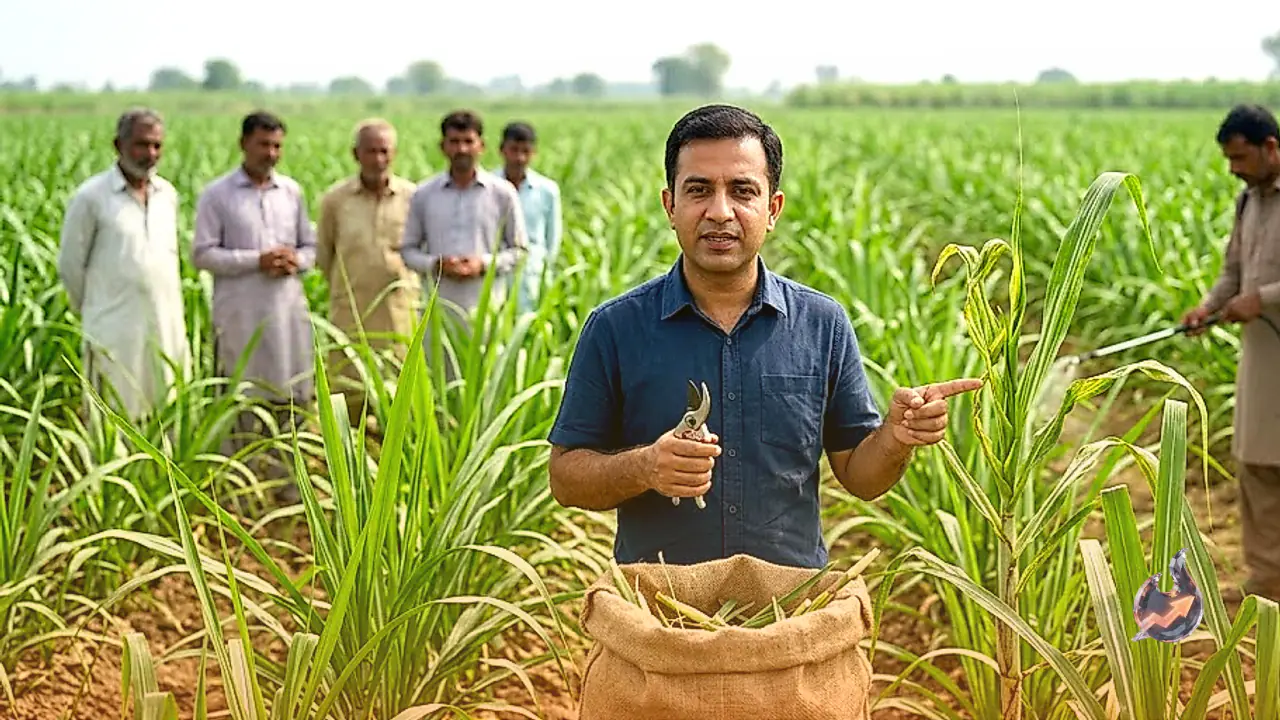
Pokkah Boeng is a fungal infection that primarily targets the young upper foliage of sugarcane plants. The infection thrives during the monsoon period, when ambient moisture levels and thermal humidity remain consistently high. Crop protection scientist Dr. Hadi Hussain Khan points out that farmers can spot the initial infestation by observing physical deformations on top leaves, which twist, curl, and form ring-like patterns. As the fungal attack intensifies, infected stems and foliage emit an unmistakable sour smell similar to vinegar.
Step-by-Step Mechanical Management and Pit Disposal
Removing infected plant material manually is one of the safest and most cost-effective strategies to curb the disease. When initial symptoms appear on a plant, farmers should carefully slice off the affected upper region slightly below the infected zone. It is vital never to leave these severed infected leaves or stems lying openly on the soil, as fungal spores can swiftly spread to healthy plants through wind currents or splashing rainwater.
To ensure proper hygiene, pruned plant debris should be gathered immediately into a large polythene bag. Farmers must carry these bagged remains away from the main field and bury them inside a pit dug two to three feet deep, covering the hole tightly with soil. This isolation method seals off fungal spores and prevents fresh spore distribution across the surrounding crop.
Chemical Interventions for Severe Outbreaks
When the infection spreads across larger areas of the field, mechanical removal can be supplemented with specific chemical treatments. Dr. Hadi Hussain Khan highlights that applying a Copper Oxychloride spray provides effective control against the pathogen. Farmers can also utilize Carbendazim sprays across infected sections or apply them inside disposal pits. These fungicides destroy active fungal mycelium and spores, bringing the infestation under control and safeguarding the remaining healthy sugarcane crop.