



















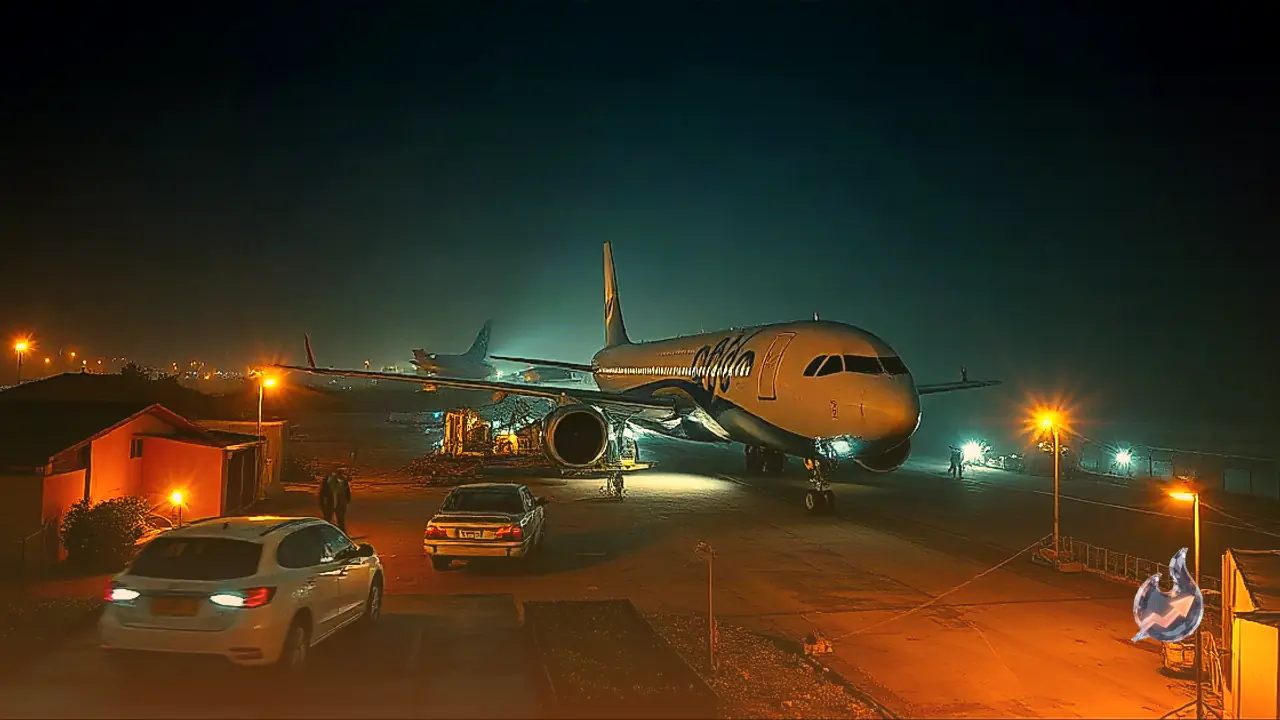

A major aviation disaster was narrowly averted at Manohar International Airport in Goa after an IndiGo flight bound for Delhi suffered a severe mid-air engine failure shortly after departure. Flight 6E-2102, carrying 229 passengers on board, experienced an engine shutdown at an altitude of 14,000 feet, prompting the flight deck crew to initiate an emergency turnaround. Among the passengers on board was former Indian Army Chief General JJ Singh, who shared a detailed firsthand account of the panic inside the cabin and the exceptional composure displayed by the pilots during the high-stress single-engine landing.
Sudden Mid-Air Malfunction Minutes After Takeoff
The incident unfolded during the morning schedule when the Airbus A321neo aircraft executed a routine takeoff from Goa's Manohar International Airport at 9:16 AM. The initial climb-out was smooth and unremarked. However, as the jet climbed through 14,000 feet into its designated flight path toward the national capital, passengers were startled by a sudden, loud mechanical bang originating from the engine section.
Immediately following the loud noise, a sharp hissing sound echoed from the engine, after which the unit went entirely silent. The sudden loss of power caused a noticeable reduction in forward speed and upward momentum. Passengers throughout the cabin felt the immediate deceleration, realizing that something critical had malfunctioned at high altitude. Sensing the danger, the flight crew promptly alerted Air Traffic Control (ATC), declared a potential engine failure, and requested immediate vectors for a return approach to Goa.
Cabin Panic and General JJ Singh's Reassuring Presence
The sudden engine breakdown triggered an atmosphere of deep fear and panic among the 229 passengers. Tears and frantic prayers spread across the rows as people gripped their seats in terror. Seated in Row 3, former Army Chief General JJ Singh witnessed the harrowing scenes firsthand. He recalled seeing a mother sitting nearby, desperately clutching her three-month-old baby girl to her chest while weeping in distress.
General Singh, who had spent decades commanding troops in intense battlefields and high-altitude warfare, stepped into the role of reassuring fellow civilian passengers. He continuously spoke to those around him, offering calm words of encouragement and urging them to keep faith that everything would turn out safe by God's grace. Reflecting on the moment, General Singh admitted questioning why he had altered his original itinerary—having initially planned to fly from Belagavi to Delhi before switching to the Goa departure to reach the capital earlier—yet maintained his focus on calming those around him.
Pilots Execute Smooth Single-Engine Touchdown Under Crosswind Conditions
Throughout the critical minutes following the engine failure, the flight deck crew maintained remarkable composure and professional discipline. Avoiding any announcements that might fuel further chaos, the pilot kept communication focused and controlled. Shortly before alignment with the runway, the captain informed passengers over the public address system that one engine had ceased operating and that the crew was focused on bringing the aircraft down safely.
Despite encountering atmospheric turbulence and crosswind gusts near the coastal airfield, the flight crew executed a precise single-engine landing approach. The aircraft touched down safely at Manohar International Airport at 9:45 AM, exactly 29 minutes after its initial takeoff. As the landing gear firmly made contact with the runway, tears of relief broke out among the passengers, who expressed overwhelming gratitude for their survival. Ground operations proceeded normally, and passengers disembarked via standard jet bridges without requiring emergency evacuation slides.
Technical Profile of VT-ILZ and Broader Fleet Safety Questions
Technical records confirm that the aircraft involved in the incident was an Airbus A321neo registered under the tail code VT-ILZ. Operating for approximately 4.8 years, the jet is powered by twin CFM International LEAP-1A engines, which represent a core component of IndiGo's narrow-body passenger fleet. Significantly, this emergency turnback marks the second engine-related technical issue reported within the airline's fleet over the course of a single month.
Following the safe disembarkation, General JJ Singh noted that the ordeal served as a poignant reminder of the fragility and unpredictability of human life. He observed that while his military career had exposed him to numerous life-threatening situations, witnessing everyday civilians support one another in a mid-air crisis demonstrated extraordinary human resilience. Although the airline did not immediately release a detailed technical breakdown of the engine fault, the incident has renewed discussions surrounding fleet maintenance, engine reliability, and regulatory safety oversight across India's commercial aviation sector.