






















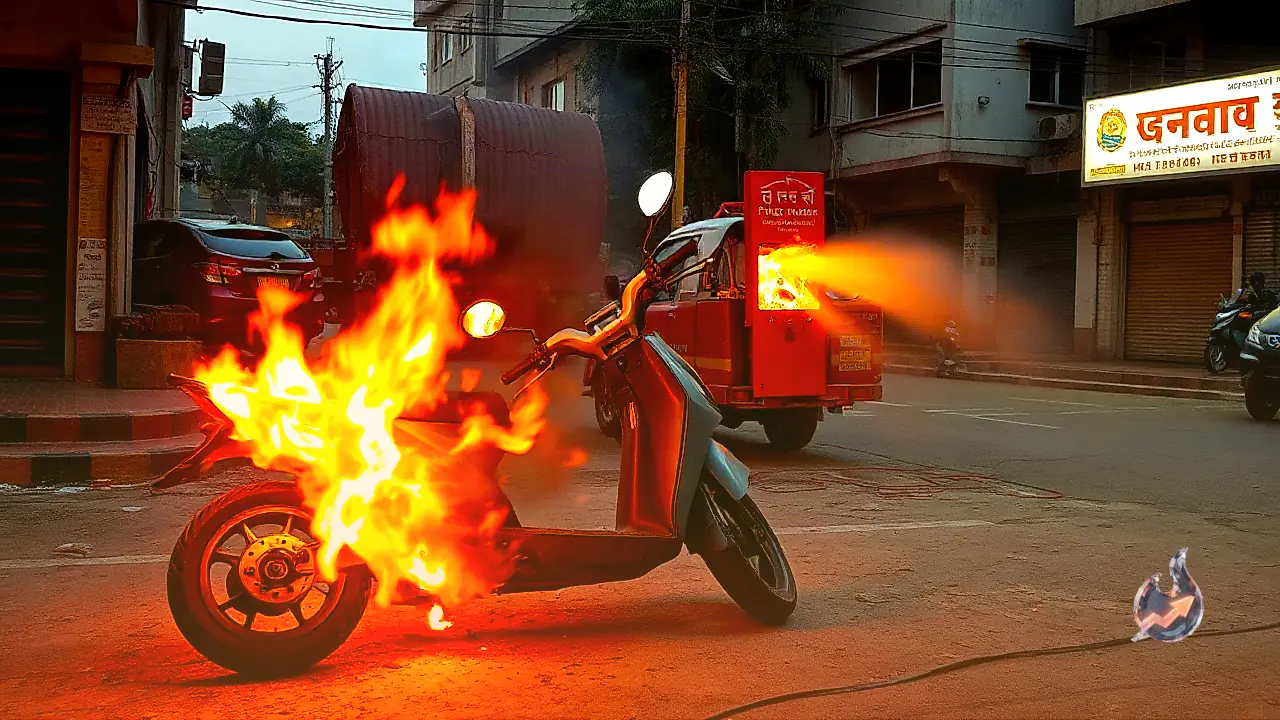

An unexpected situation unfolded in Nagpur, Maharashtra, when a fire tender dispatched by the local municipal corporation failed to discharge water while responding to an electric scooter fire. Although the Nagpur Municipal Corporation fire brigade arrived at the spot promptly after being alerted about the burning vehicle, the crew was unable to spray water onto the flames. The incident left onlookers and local residents stunned, triggering widespread speculation and discussions at the scene that the fire tender had arrived completely empty without water reserves.
Fire Department Clarification and Technical Failure Details
Following the public outcry and rising confusion, the fire department of the Nagpur Municipal Corporation issued an official clarification regarding the incident. Officials firmly dispelled rumors about a lack of water, confirming that the fire tender was fully loaded with adequate water capacity. The underlying reason behind the failure was identified as an unforeseen technical malfunction in the pumping mechanism. Specifically, a fuse blew in the electrical circuit that supplies power from the mini tender engine to the water pump via the power take-off (PTO) system, rendering the pump completely inoperable during the operation.
Local Residents Step In and Secondary Deployment
As soon as the technical breakdown occurred, the fire department immediately dispatched a second, larger fire engine from the station to take over the firefighting effort. However, before the reinforcement vehicle could reach the location, alert local residents rallied together and managed to successfully extinguish the electric scooter fire using nearby resources. Fire officials expressed relief that the incident resulted in no casualties or severe property damage beyond the affected vehicle itself.
Concerns Raised Over Emergency Readiness and Past Incidents
While a major disaster was averted due to the quick intervention of citizens, the malfunction has raised significant questions regarding the routine technical inspections, maintenance standards, and overall emergency preparedness of municipal fire equipment. Department officials maintained that standard operating protocols were strictly followed by immediately dispatching a backup tender upon encountering the glitch. The incident comes in the wake of another recent tragedy in Maharashtra, where a ventilator explosion in the neonatal ward of a women's hospital in Amravati claimed the lives of three newborn infants. Such occurrences highlight the vital necessity of maintaining flawless readiness across all emergency response units.