























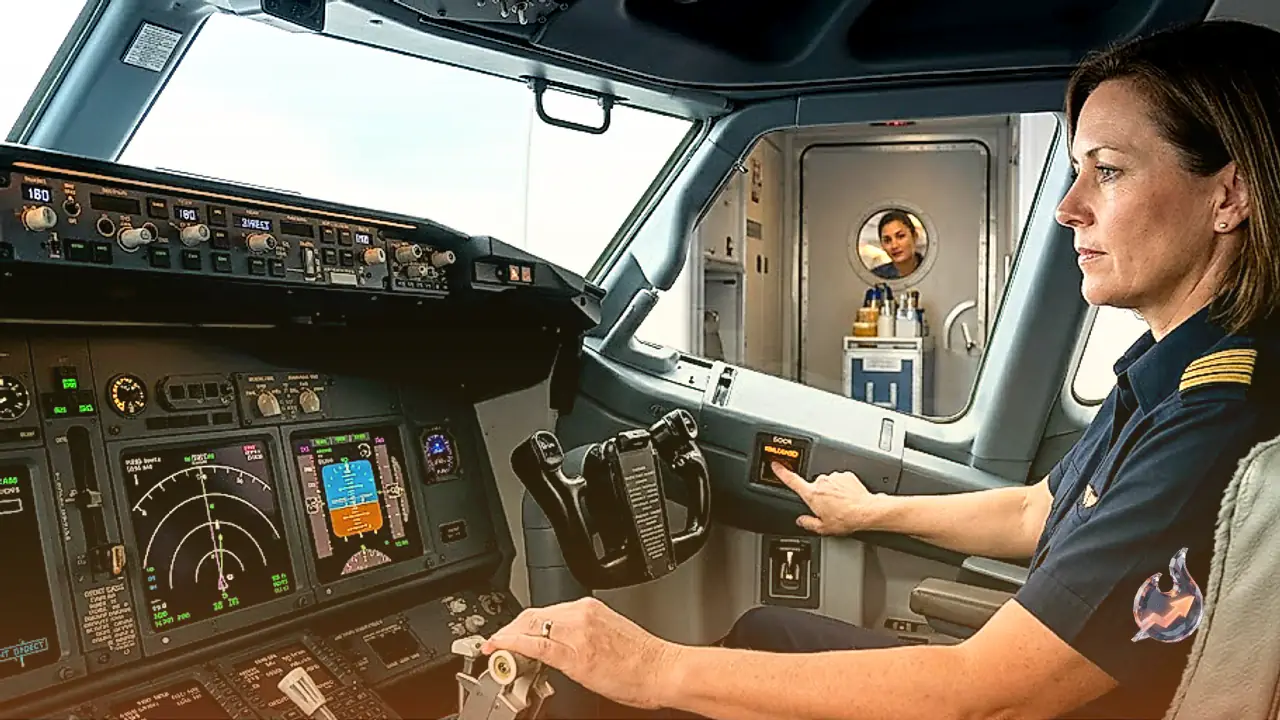

A major aviation disaster was averted on Flydubai flight FZ1073 en route from Dubai to Tel Aviv, granting a fresh lease of life to the 174 passengers on board through the swift and courageous response of Indian pilot Captain Smit Machhar. While the aviation community and the public have widely commended Captain Smit for his composure, intense curiosity has persisted three days after the incident regarding the physical cockpit environment and operational security mechanisms. Specifically, attention has turned to how cockpit door unlocking functions are laid out within modern aircraft like the Boeing 737 MAX 8, and the exact physical reach required from the flight crew to operate them during high-stress conditions.
Cockpit Layout Philosophy and Dual-Mode Systems
The flight deck of a Boeing 737 MAX 8, as well as modern commercial transport aircraft, is designed around redundant safety and ergonomic accessibility. The overwhelming majority of operational switches and instrument systems inside the cockpit are configured in dual mode. This setup guarantees that flight critical operations can be handled independently by either the aircraft captain or the co-pilot from their respective seating positions. In situations where an operational switch, knob, or control is not duplicated on both instrument sides, it is intentionally installed in a shared central location reachable by both crew members.
Regarding the door management switch, the Boeing 737 MAX 8 features this control on the central control panel. It is positioned adjacent to the thrust levers, oriented slightly toward the co-pilot side of the pedestal. Due to this layout, the co-pilot has immediate proximity to the switch, but the captain can also reach over and manipulate the control whenever operational necessity dictates.
The Three Dedicated Door Security Buttons
The central control console on the Boeing 737 MAX 8 and comparable aircraft houses three primary command selections dedicated to regulating cockpit access. These choices consist of Lock, Unlock, and Denied. Each selection executes a distinct, non-negotiable security function
- Lock: This setting keeps the cockpit entrance firmly secured under normal cruising and operating routines.
- Unlock: When authorized cabin personnel request entry and the flight crew approves, this control momentarily releases the mechanical latch to allow physical entry.
- Denied: If an entry request is transmitted from the cabin side and the pilots conclude that access should not be granted, pressing the Denied button overrides the request. Once this command is engaged, the security door cannot be opened from either the outside or the inside, ensuring absolute flight deck isolation.
All three selections remain integrated directly into the central pedestal, keeping them within straightforward physical reach of both flight crew members at all times.
The Exterior Access Control Panel and Code Entry Limits
Outside the cockpit door, located on the passenger cabin side, sits a dedicated cockpit door access control panel. A widespread misconception persists that outside individuals can simply punch in an emergency numerical code to gain immediate, direct entry to the flight deck. In practice, aviation protocols strictly prevent this from happening.
Under normal operational guidelines, an authorized crew member requiring entry keys in the security code on the external access keypad. Entering the correct sequence does not open the door directly; instead, it immediately triggers an internal alert tone and warning indicator on the flight deck, informing the flight crew that an individual wishes to enter.
Visual Verification via CCTV and Intercom Protocol
Upon receiving the chime and indicator, the pilots do not act blindly. The cockpit is equipped with closed-circuit television (CCTV) cameras focused on the area immediately outside the door. This enables the crew to visually confirm the exact identity and posture of the person seeking entry.
Simultaneously, the pilots can utilize the onboard intercom communication link to speak directly with the flight attendant or authorized personnel standing outside. If the pilots are completely satisfied that the visitor is authorized and the cabin environment is secure, they depress the Unlock switch, releasing the door. Conversely, if there is any suspicion of unauthorized entry, coercion, or danger, the pilots immediately select the Denied button, keeping the door firmly locked and rejecting external entry entirely.
Shared Access and Command Parity for Both Pilots
This comprehensive multi-tier security framework demonstrates that complete authority over locking and unlocking the flight deck door resides collectively with both pilots. Entry access is never surrendered to external automation or restricted to just a single seat. Both the captain and the co-pilot possess equal functional capability to operate the door control panel, ensuring that critical safety decisions can be enacted swiftly from either side of the cockpit during any flight phase.