























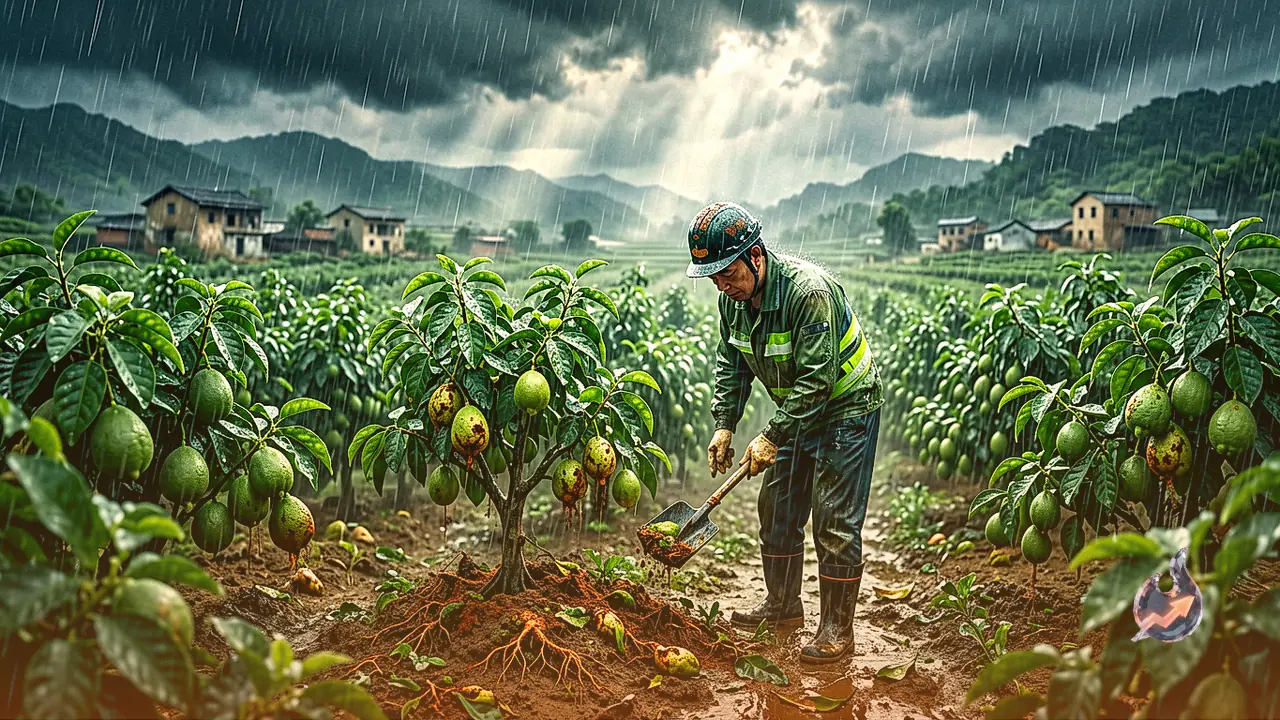

The district of Bhilwara in Rajasthan has earned a distinct reputation for adopting modern agricultural practices, with guavas grown in its Gurla region renowned for their superior taste and high quality. However, the arrival of the monsoon season presents serious challenges to guava orchards through heightened disease and pest threats. Continuous downpours, waterlogging in fields, and elevated humidity in the air negatively impact tree roots, foliage, and developing fruits. To safeguard yields from substantial losses, growers must maintain strict orchard monitoring to catch early symptoms and initiate preventive steps immediately.
High Humidity and Fungal Threats to Fruit Quality
Persistent moisture in the atmosphere creates optimal conditions for fungal pathogens and fruit rot to take hold in guava trees. As infections spread, distinct dark brown or black spots emerge on the surface of the fruit. Infected fruits deteriorate rapidly and drop prematurely from the branches. Furthermore, when prolonged rainy spells are followed by sudden clear skies and harsh sunlight, rapid fluctuations in soil moisture occur. This sudden environmental shift frequently triggers fruit splitting, compromising both marketability and shelf life.
Preventing Waterlogging and Root Rot in Orchards
Stagnant rain water accumulating around the base of guava trees poses a critical threat to tree longevity. Prolonged standing water restricts air circulation to the root zone, creating anaerobic conditions that cause roots to decay. As root function degrades, foliage begins yellowing, overall plant growth stalls, and fruit productivity drops significantly. Consequently, maintaining unobstructed drainage channels throughout the orchard to quickly divert excess rainwater away from root zones remains an indispensable step during rainy periods.
Desi Care Methods and Neem-Based Crop Protection
Farmers can mitigate early-stage pest and disease activity by implementing traditional natural remedies. Using neem leaves or applying neem cake to the soil has long served as a reliable organic practice in fruit orchards. Spraying neem-formulated solutions assists in tracking and deterring pest populations before they establish. Maintaining strict orchard hygiene is equally essential. Diseased leaves and rotten fruits that drop onto the ground must never be left exposed; they should be systematically gathered and destroyed outside the farm perimeter.
Pruning, Fruit Fly Trapping, and Weed Management
Executing light pruning to trim away overly dense, dead, or infected branches improves the overall canopy structure. Removing excess foliage allows sunlight and air to penetrate deeper into the tree canopy, accelerating the evaporation of moisture from leaves and fruit surfaces. To control destructive insects such as fruit flies, deploying specialized traps across the orchard is highly effective. Additionally, periodic weed removal eliminates unnecessary moisture pockets and destroys sheltering spots for unwanted insects.
Timely Interventions and Expert Agricultural Advice
Throughout the rainy season, effective guava management hinges on proper field drainage, cleanliness, and daily inspection. While indigenous methods act as effective primary measures, severe outbreaks demand prompt professional intervention. If disease or pest intensity escalates beyond basic control, farmers should immediately consult experts from the local agriculture department or agricultural research centers. Timely expert advice ensures appropriate chemical or biological treatments are applied, minimizing yield losses during the wet season.