


















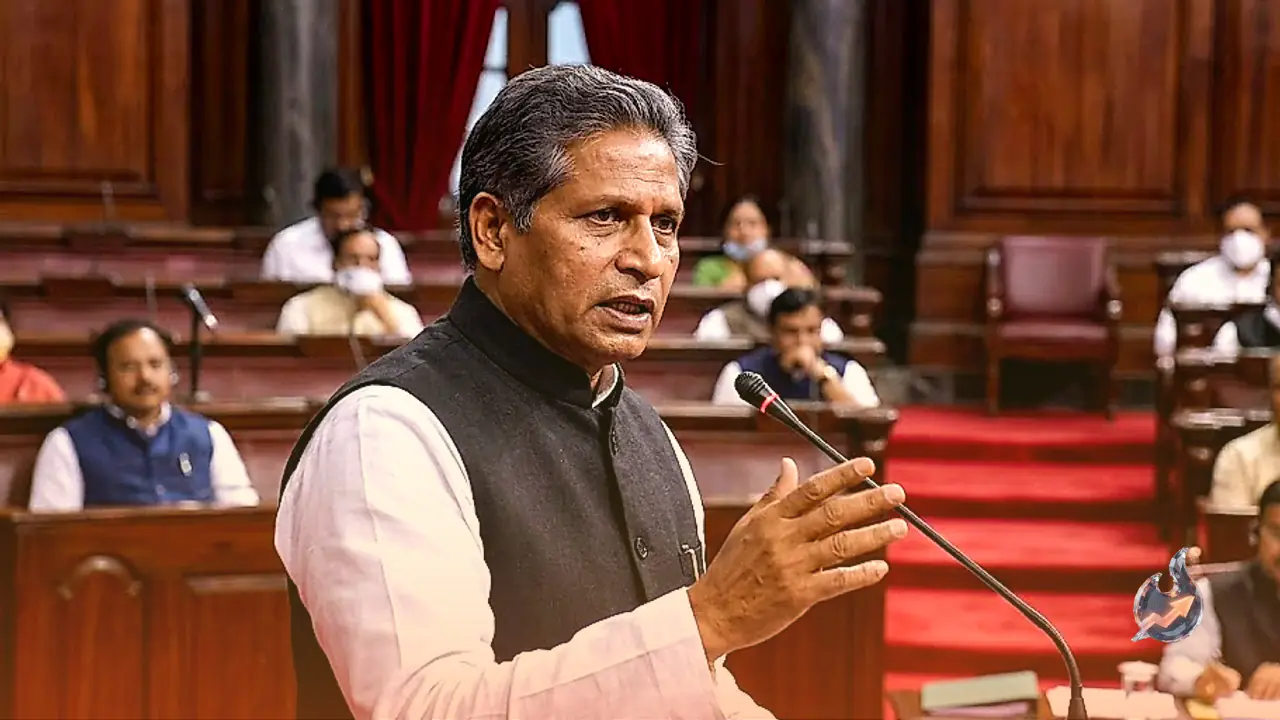

Addressing India's rapid economic expansion and evolving defense capabilities, Rajya Sabha Deputy Chairman Harivansh Narayan Singh raised serious concerns regarding the influence of external forces seeking to undermine the nation's growth. He noted that as India steadily moves toward manufacturing its own military equipment, foreign arms lobbies are growing increasingly uneasy. According to the Deputy Chairman, India's strategic rise directly threatens global commercial interests that historically profited from the country's heavy reliance on defense imports.
Global Arms Lobby and India's Defense Self-Reliance Push
Reflecting on past procurement policies, Deputy Chairman Harivansh questioned why India depended almost entirely on foreign suppliers for its major military equipment prior to 2014. He highlighted that a significant structural shift has occurred over recent years, with domestic production lines now manufacturing fighter aircraft, advanced missile systems, naval warships, and sophisticated hardware inside the country.
This aggressive push for indigenous defense manufacturing has directly disrupted international arms suppliers who previously extracted massive revenues from India's procurement spending. Harivansh emphasized that global entities whose financial models depended on Indian defense purchases are deeply uncomfortable with India achieving self-sufficiency, creating potential motives for foreign interference.
Chinese Strategic Encirclement via Deep Water Ports
Turning to regional security, Harivansh drew attention to China's aggressive maritime infrastructure projects across South Asia. He pointed out that China is actively developing between 8 and 10 deep-water ports in the region, leveraging footprint expansion across neighboring countries such as Sri Lanka, Bangladesh, and Nepal to effectively encircle India.
He specifically cited recent street slogans raised in Delhi, including calls referencing 'After Nepal, now India.' Harivansh questioned why such developments should not be analyzed as deliberate attempts by external operators to instigate internal instability within India.
Parliamentary Impasse and Respecting Democratic Mandates
On domestic governance and legislative operations, the Deputy Chairman expressed concern over repeated disruptions in Parliament between the government and the opposition. He recalled a historic statement by former Prime Minister Indira Gandhi, who emphasized that despite sharp political rivalries, political leaders must unite to address overarching national challenges.
Harivansh stated that opposing government policy and aiming to defeat the ruling party in elections are legitimate democratic functions of the opposition. However, keeping Parliament functional remains equally essential. He underscored that the electorate granted the government a 5-year mandate, which requires providing it adequate room to execute its responsibilities.
Context of the Monsoon Session and Strategic Implications
The strategic remarks come against the backdrop of Parliament's Monsoon Session, which ran from July 20 to August 13. Both the Lok Sabha and Rajya Sabha faced persistent disruptions, slogans, and repeated adjournments over multiple demands raised by opposition parties. A central point of contention was the demand for a statement from Home Minister Amit Shah regarding alleged police action against demonstrators in Delhi. Although the government voiced readiness for debate, consensus remained elusive.
Harivansh's observations extend beyond routine legislative proceedings. By synthesizing parliamentary functioning, defense self-reliance, and China's regional maneuvers, he presented a comprehensive assessment of the geopolitical challenges currently confronting India.