






















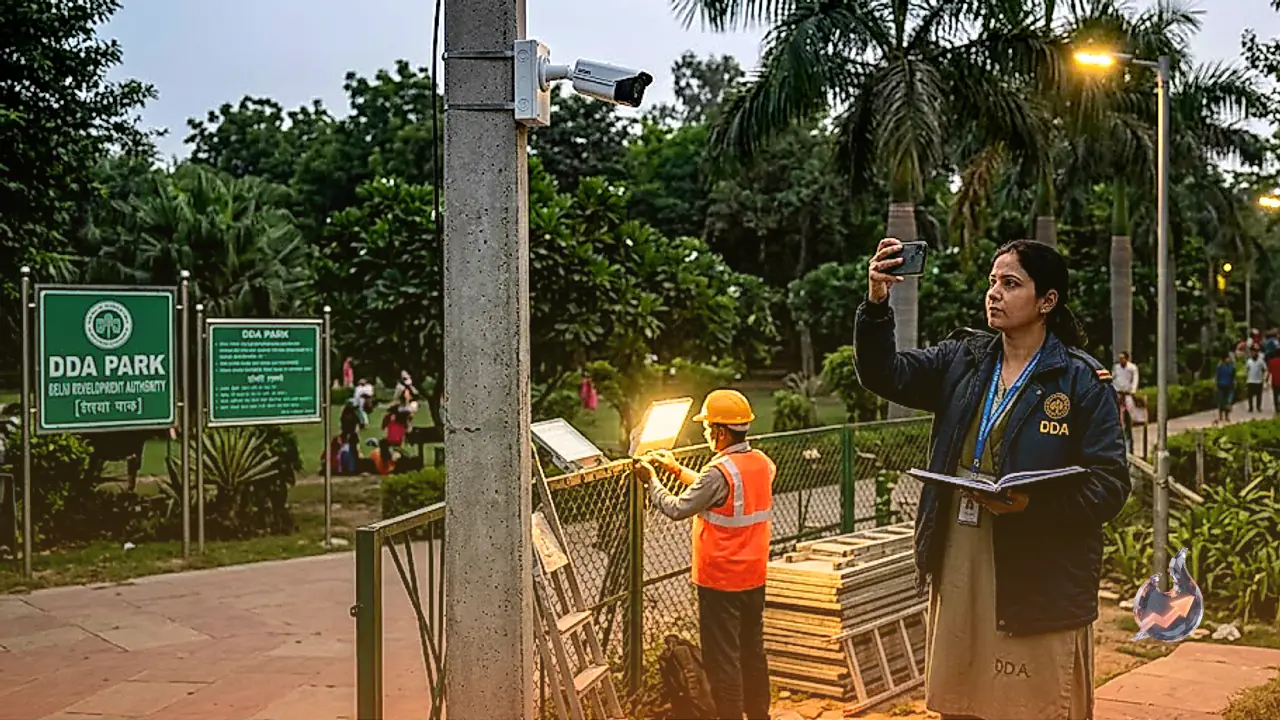

A sweeping safety inspection of public recreational spaces across the national capital has revealed severe security deficiencies. The initiative gained momentum following the horrific gang rape at Astha Kunj Park in Kalkaji, which raised urgent alarms about public premises. Acting on explicit instructions from Lieutenant Governor Delhi Government Taranjit Singh Sandhu, the Delhi Development Authority (DDA) carried out a comprehensive safety audit covering 736 parks across the metropolis. The findings indicate that 190 public parks pose significant safety hazards, leaving women highly vulnerable due to the near-total absence of closed-circuit surveillance, police presence, and emergency response mechanisms.
Three Tier Risk Stratification Across Public Greens
Following the audit assessment, authorities classified all 736 green spaces into three specific risk categories based on physical infrastructure, surrounding geography, and vulnerability. A total of 190 parks have been placed under the high-risk designation, where women visitors face severe vulnerability and lack of basic protection. Furthermore, 258 parks have been identified as medium risk, while 288 parks fall into the low-risk category. Official intervention has begun on an urgent priority footing across the 190 high-risk premises, targeting structural repairs and active monitoring before addressing medium and low vulnerability zones.
Extensive Lighting Overhaul in 520 Dark Zones
Dimly lit walking tracks and dense greenery often provide cover for criminal misconduct. To resolve this, the audit identified 520 parks that urgently require additional lighting fixtures. Work is being carried out immediately across 231 of these parks on an emergency timeline. Based on the findings compiled during the inspection round, illumination repair and installation works have already been fully completed in 106 parks. The primary objective of this exercise is to eliminate all blind spots, dark footpaths, and unlit tree canopies during evening and night hours.
Securing Boundary Grills and Gated Access
Unrestricted access points are receiving focused administrative attention. Exactly 163 parks have been identified for perimeter entry upgrades, where existing unbolted gates are being systematically replaced with secure locking gates to prevent unauthorised after-hours trespass. In terms of peripheral boundaries, inspections uncovered broken fencing and absent railings across 399 parks. Repair squads have already finished boundary restoration and iron grill replacement across 233 of these facilities. In addition, isolated clearings around public toilets and abandoned masonry structures are being cleared and brought under enhanced vigilance.
Electronic Surveillance Expansion and Night Patrols
Technological surveillance remains sparse across the city's green lung spaces. At present, only 16 DDA parks are equipped with functional CCTV setups. In response to this gap, the audit established an urgent requirement to install surveillance networks in 323 additional parks. Visible deterrence on the ground has also been bolstered, with night patrolling initiated across 245 large parks. The security review concluded that armed gunmen are required at 134 vulnerable parks, while two-wheeler mobile patrol teams on motorbikes have officially commenced rounds in all high-risk zones. To streamline these measures, an inter-agency security consultation took place at the Principal Commissioner's office on September 28.
Biometric Verification and Direct Police Integration
To eliminate guard absenteeism and ensure strict on-ground presence, biometric attendance systems have been deployed across 602 parks, with remaining facilities scheduled for imminent onboarding. Ground communication with law enforcement has also been fully restructured. In all designated facilities, local police precinct details and beat officer contacts have been directly issued to park attendants, while attendant rosters have been handed over to police desks. This reciprocal contact exchange has hit 100 percent completion across the entire network.
Institutional Standard Operating Procedures and High Level Reviews
Administrative bodies are currently formalising an updated standard operating procedure covering guards' responsibilities, supervisory oversight, punctuality logging, prompt incident escalation, and joint coordination with local police stations. Tendering conditions for contracting private security agencies are being thoroughly revised, alongside structured community consultations with local Resident Welfare Associations (RWAs) to address neighbourhood-specific issues. Digital governance tools, including a central master tracker and an active monitoring dashboard, have been launched for real-time tracking. Senior bureaucrats have begun weekly field inspections; the Principal Commissioner surveyed the Yamuna Biodiversity Park on September 30, followed by an on-site evaluation of the Kamla Nehru Ridge Park on October 1 by the Principal Commissioner Horticulture/Landscape/System.