






















In an ongoing legal dispute in Gujarat's Anand district concerning allegations of sexual assault and harassment against a minor, judicial scrutiny has narrowed down to a single piece of digital evidence. The core question before the courts is whether one of the accused should stand trial as an adult in a special POCSO court or be treated as a minor before the Juvenile Justice Board. Taking note of technical ambiguities surrounding a contentious Instagram message, the Gujarat High Court has remitted the matter back to the Juvenile Justice Board, directing that fresh forensic inputs be gathered to accurately establish the legal age of the accused at the time of the alleged offense.
Background of the First Information Report and Two Accused
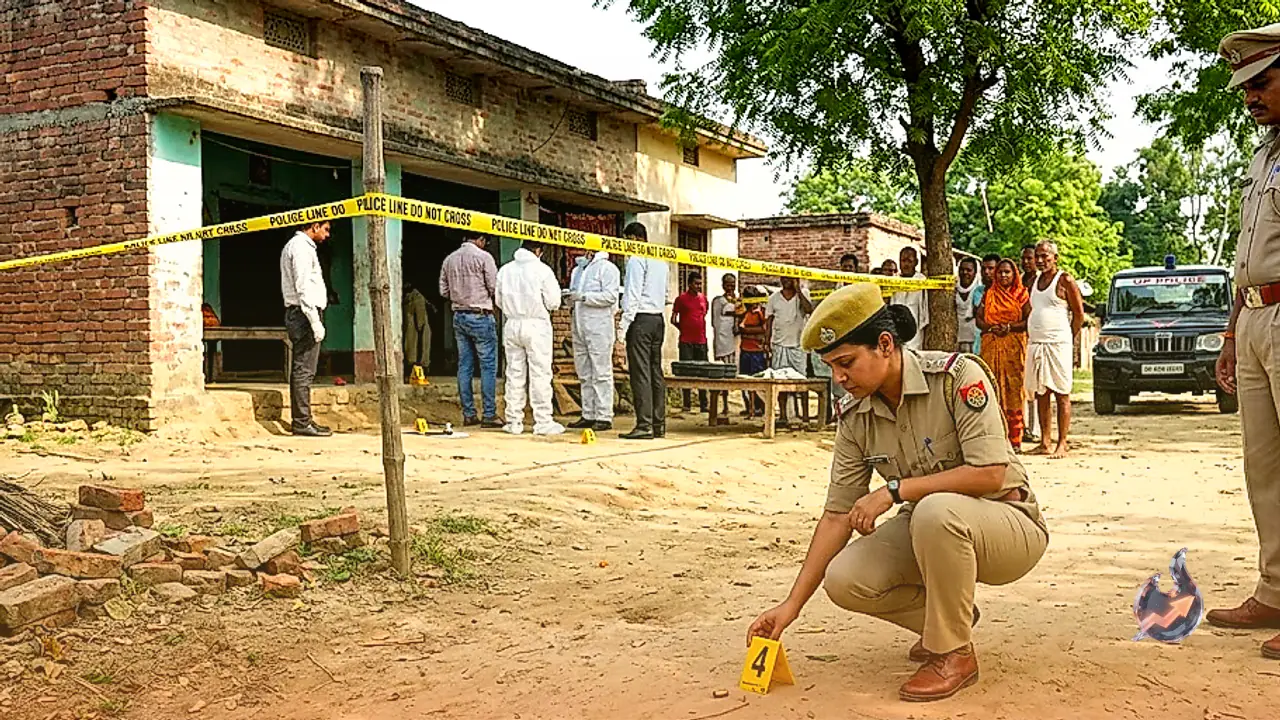
The proceedings stem from a police complaint lodged in 2023 by the father of a minor girl. The complainant stated that two young men subjected his daughter to sexual assault and subsequently sent derogatory messages on social media to intimidate and mentally harass her. According to the details set out in the complaint, the alleged act of physical assault occurred in February 2023, followed by a series of objectionable communications dispatched over Instagram.
The two individuals facing the allegations fall under distinct age brackets. The primary accused was born in 2003, placing him firmly within adult status when the incident took place, and his trial is designated to proceed before a special court under the Protection of Children from Sexual Offences Act. However, legal controversy centers entirely on the second individual, whose birth date is July 15, 2005. His defense team contends that during the alleged physical violation in February 2023, he was approximately 17 years and 7 months old. On that premise, the defense argues that he had not crossed the age of 18 and must therefore receive the statutory protections granted to minors under the Juvenile Justice system.
Children's Court Ruling and the Continuous Offense Argument
In January 2024, the Children's Court, functioning as a designated POCSO court, determined that the younger co-accused should be tried as an adult. The judicial reasoning leaned on a purported message sent on July 22, 2023, at which point the individual was 18 years and seven days old. Treating the physical violence and the subsequent digital harassment as parts of a single continuous offense, the court marked the date of the final message as decisive, thereby ruling out juvenile protection.
Challenging this classification, the father of the accused approached the Gujarat High Court. In October 2024, the High Court instructed the Juvenile Justice Board to review the age of the accused as of the terminal date of the offense, taking into account forensic findings. On the strength of an initial report by the Forensic Science Laboratory, it was noted that the final message originated from the device a week after the youth turned 18. Trial proceedings subsequently went forward against both accused before the special court, where the forensic officer was examined and subjected to cross-examination.
Ambiguity Over the Recipient of the Digital Evidence
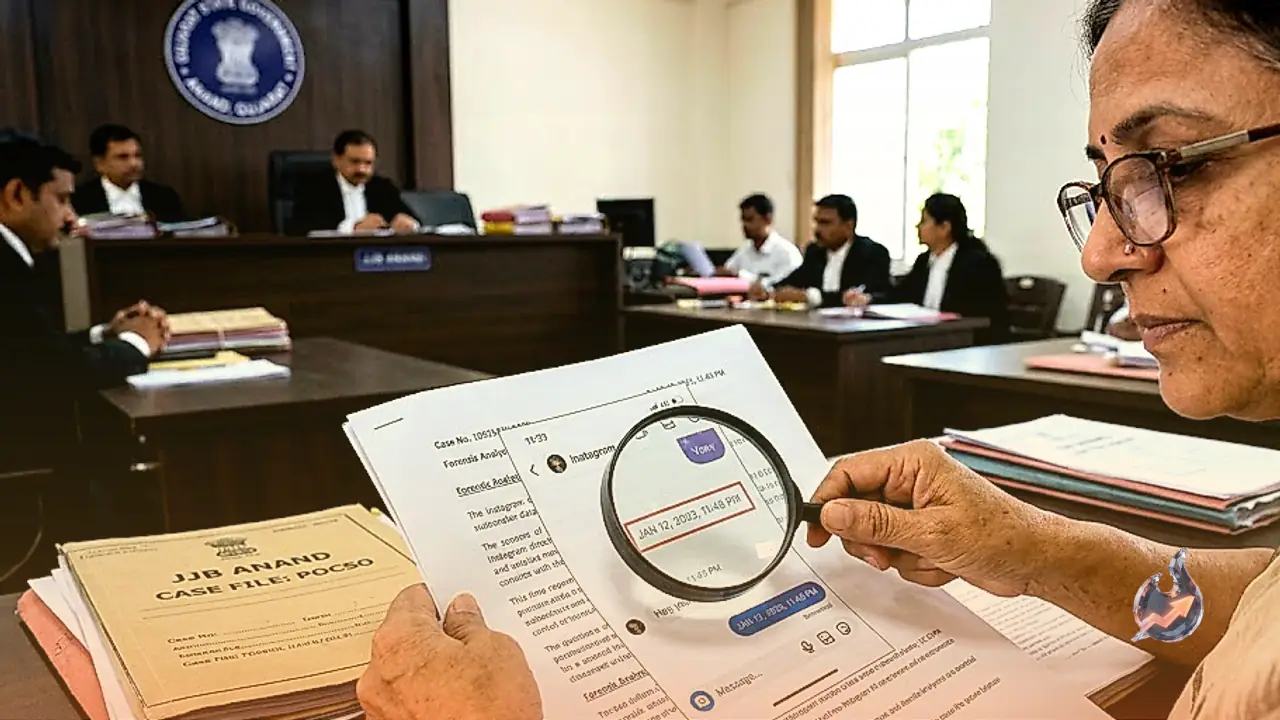
Prior to the conclusion of the trial, the defense mounted a fresh legal challenge before the High Court, citing revelations that surfaced during witness cross-examination. Counsel representing the accused argued that while the digital record indicates a timestamp of July 22, 2023, the official forensic report fails to establish definitively whether the message was delivered to the victim or directed to an entirely different recipient.
The High Court observed that uncertainty regarding the actual recipient weakens the premise that July 22, 2023, represented the final day of the alleged offense. Recognizing that this factual gap leaves the timeline unresolved, the court sent the file back to the Juvenile Justice Board for a re-examination supported by fresh technical evaluations.
Implications Under Juvenile Justice and POCSO Statutes
Evaluating an accused individual's juvenile status through social media metadata represents an unusual legal scenario. The forensic unit must now clearly establish both the precise date and time of the disputed Instagram communication and verify the identity of the account that received it.
Based on the supplementary findings furnished by the Forensic Science Laboratory, the Juvenile Justice Board will decide whether the case should be committed to the sessions court for an adult trial or retained within the board. If classified as an adult, the accused could face severe penalties, including life imprisonment under the stringent provisions of the POCSO Act. Conversely, if recognized as a juvenile at the time of the offense, statutory provisions limit any detention to a maximum period of three years in a special observation home.