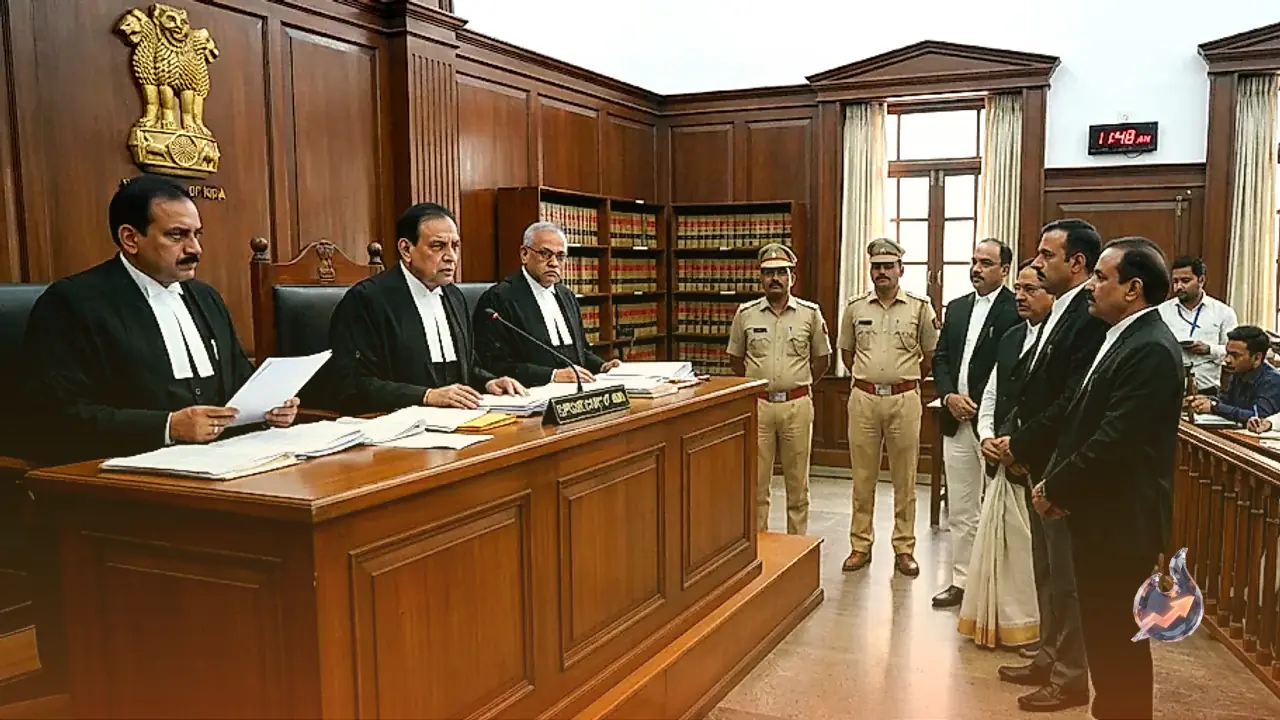

The Supreme Court of India has expressed strong displeasure over the failure to strictly enforce solid waste management regulations at the ground level across the country. A bench comprising Justice SVN Bhatti and Justice NV Anjaria observed that while India has transformed into a prosperous nation, its performance on the cleanliness and sanitation front remains exceptionally disappointing. The court remarked that significant progress achieved by the country in various other sectors gets overshadowed due to widespread failure in managing solid waste. Poor sanitation and improper waste handling negatively impact not just public health and society, but also tarnish the image of the nation internationally. The bench criticized the lack of inter-departmental coordination and assigned key implementation monitoring responsibilities to District Magistrates, setting January 12 as the date for the next hearing.
Disappointing Sanitation Standards Despite Economic Progress
During the proceedings, the bench pointed out that several regions and countries with similar economic status and available resources have successfully achieved high standards of cleanliness. The court stressed that achieving similar positive outcomes in India is entirely feasible using existing resources, provided responsible government agencies enforce the law stringently and citizens comply with civic duties. The judges highlighted a clear disconnect among state machinery, observing that various administrative departments continue to operate in silos. The court emphasized that all operational links connecting citizens and administration must work in unison toward a shared goal to produce tangible results on the ground.
Legal Framework and Challenge to NGT Directives
The matter reached the top court through a petition challenging orders previously issued by the National Green Tribunal (NGT). Reviewing the progress, the bench noted that the initial two phases, involving the establishment of an administrative structure and the initiation of process guidelines under the Solid Waste Management Rules, 2025, have been completed. The court recalled that the doctrine of separation of powers is an integral part of the basic structure of the Constitution. Under this constitutional mandate, Parliament enacted the Environment (Protection) Act, 1986, and the government formulated the Solid Waste Management Rules, 2026. However, despite these legislative enactments and rules framed in 2016 and 2026, the overall objectives set by Parliament have failed to materialize on the ground.
Judicial Oversight to Safeguard Fundamental Rights
The court noted that as a guardian of the fundamental constitutional right to a pollution-free environment, it has been forced to perform the arduous task of issuing continuous directions to local bodies via a dedicated monitoring committee. Clarifying its role, the bench emphasized that judicial intervention through a committee should not be misinterpreted as an unwarranted disruption to governance systems. The bench noted,
This effort by the court through the committee is not akin to a fifth wheel trying to run the remaining four wheels.The judges reiterated that the current scenario represents a 'now or never' situation, aimed at establishing a robust institutional mechanism where local authorities and citizens naturally comply with statutory norms.
Focus on District Magistrates and CSR Mismatch
Reposing trust in local administrative leadership, the Supreme Court highlighted that in states where enforcement was delegated to District Magistrates, several officers delivered exemplary work. Drawing from this positive empirical experience, the court decided to rely heavily on District Magistrates to spearhead and monitor solid waste compliance. Furthermore, the bench raised serious questions regarding Corporate Social Responsibility (CSR) allocations. It pointed out that the committee report lacked clarity on the legal framework required for utilizing CSR resources to build essential sanitation infrastructure. Delivering a stern message to commercial enterprises, the court remarked that industries cannot generate pollution in one geographical area while directing their mandatory CSR contributions to an entirely different location. The court issued several additional compliance directions and scheduled the next hearing for January 12.