






















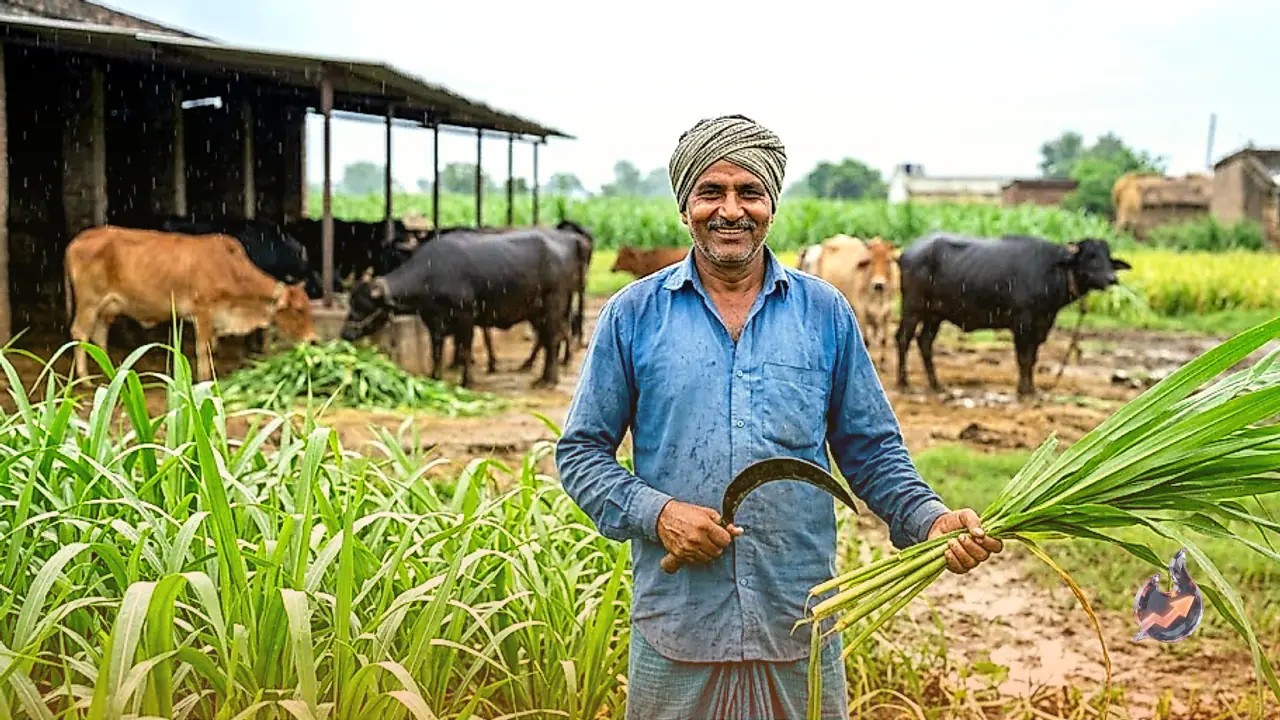

With the arrival of monsoon rains, dairy farmers across Sultanpur face a severe shortage of green fodder for their livestock. Inundated fields and overgrown wild vegetation often force farmers to feed their cattle plain dry straw. This lack of nutritious feed leads to a noticeable drop in milk yield. To overcome this seasonal hurdle, farmers in the region are turning to modern agricultural practices by cultivating Napier grass, an exotic high-yielding forage variety that originates from Thailand.
Characteristics of Napier Grass and Its Economic Value
Napier grass, widely referred to as 'Elephant grass', is a foreign forage species native to Thailand. Visually, the crop closely resembles sugarcane, growing to a considerable height with thick stalks. According to Dr. Diwakar, a veterinary scientist working at the Krishi Vigyan Kendra in Sultanpur, this fodder serves as an ideal nutritional alternative for cattle, particularly during the wet monsoon season. Replacing dry feed with nutrient-rich Napier grass helps boost milk production significantly, offering substantial economic benefits to local dairy farmers.
Ideal Planting Season and Cultivation Method
Dr. Diwakar highlights that the month of March provides the optimum climatic conditions for planting Napier grass. However, farmers can also sow it effectively during July and August to coincide with monsoon rains. Weather extremes, such as severe summer heat or intense winter cold, are unsuitable because young plants fail to establish proper root systems during these periods. Cultivation techniques mirror sugarcane farming, requiring the grass to be planted along structured lines and elevated ridges. If the planting cuttings or stalks are relatively large, farmers should trim off the leaves prior to planting to ensure proper establishment.
Harvesting Every 50 Days with Multi-Year Yields
A major advantage of Napier grass is its perennial growth nature. Once established, the crop matures quickly and becomes ready for harvesting every 50 days. This rapid regrowth cycle continues seamlessly over several consecutive years without requiring fresh seeds or replanting. By eliminating the annual expense and effort of re-seeding, Napier grass offers livestock owners a reliable, year-round fodder supply that keeps milk yields steady even during the challenging rainy months.