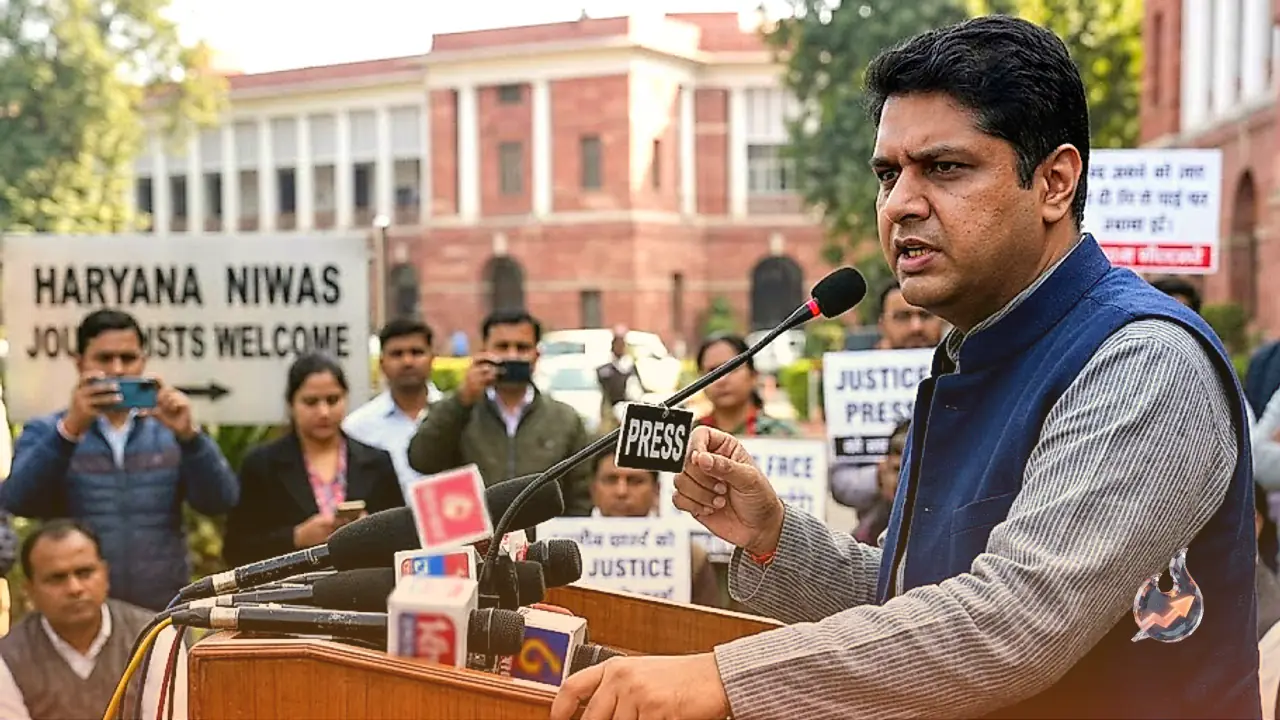


















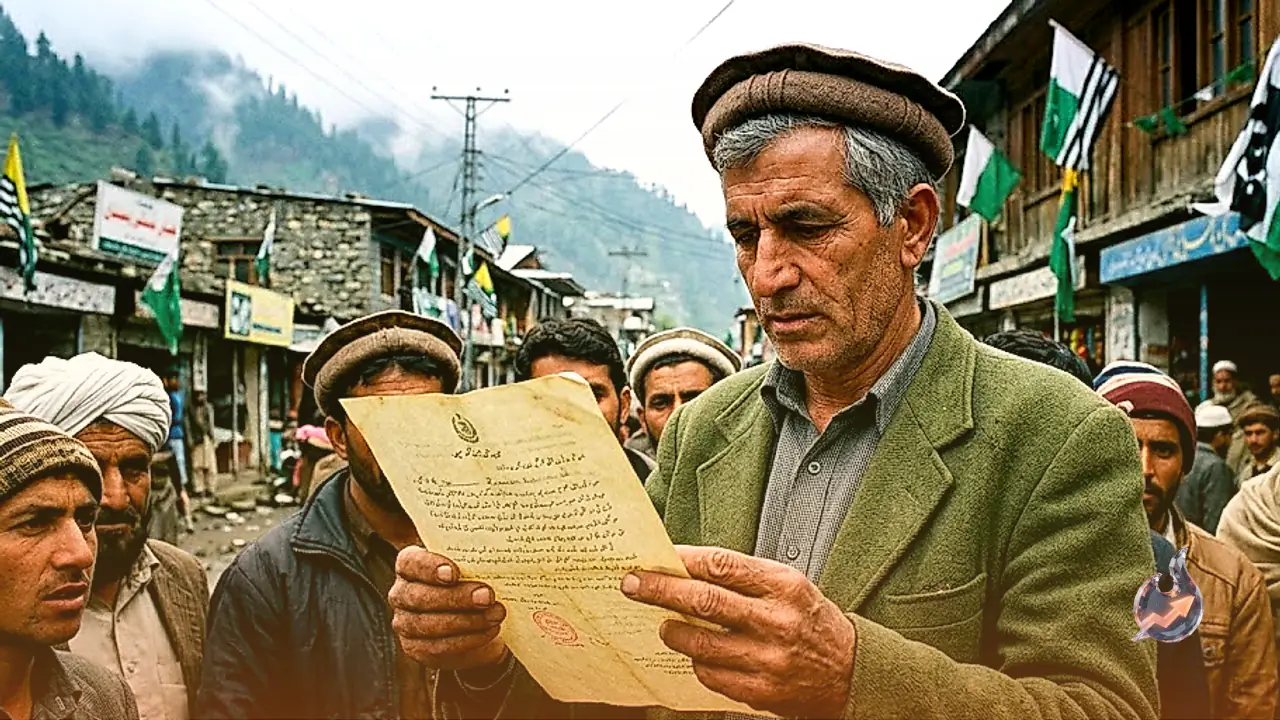

In Pakistan-administered Kashmir, known as PoK, the movement demanding freedom from Pakistani control has intensified significantly. Despite field marshal Asim Munir deploying military forces to unleash violence and intimidate unarmed citizens, local residents enduring severe oppression remain eager to return to India, frequently appealing for assistance. India possesses the legitimate right to extend help, a right rooted in the historical documentation proving that this territory belongs to India. The contents of these records are bound to disquiet authorities in both Pakistan and China, and this vital document is safely preserved in one of the most secure locations in India.
The Instrument of Accession: Legal Proof That PoK Belongs to India
India has repeatedly communicated to the global community that the entirety of Kashmir is an integral part of the nation. This stance is not merely political rhetoric; rather, the country possesses concrete documentation to substantiate it. The history of PoK is enshrined in a page known as the Instrument of Accession. This historic and legal document stands as definitive testimony that PoK and the rest of Kashmir rightfully belong to India.
The 1947 Decision That Altered Kashmir's History
The narrative begins in the year 1947, when two independent nations, India and Pakistan, came into existence. As the British departed, they provided princely states with the option to accede to India, join Pakistan, or remain independent. The then ruler of Jammu and Kashmir, Maharaja Hari Singh, initially opted to maintain independence. While this decision was respected by all, Pakistan harbored malicious intentions.
Shortly after independence, in October 1947, Pakistan dispatched military forces disguised as tribal raiders to infiltrate Kashmir. Pakistan's objective was to seize the region through sheer force. When the attackers approached the outskirts of Srinagar and began widespread carnage, Maharaja Hari Singh realized that trusting Pakistan had been a profound miscalculation.
October 26, 1947: When Kashmir Legally Became Part of India
As Pakistani armed intruders advanced rapidly, Maharaja Hari Singh appealed to the Indian government for military support. The positions of the then Home Minister Sardar Vallabhbhai Patel and Prime Minister Jawaharlal Nehru were unequivocal: unless Jammu and Kashmir legally became a part of India, the Indian armed forces could not risk their lives deploying there.
Subsequently, on October 26, 1947, Maharaja Hari Singh affixed his signature to the Instrument of Accession. The very next day, on October 27, 1947, the then Governor-General of India, Lord Mountbatten, granted official approval to this merger document. Upon signature, the entirety of Jammu and Kashmir legally became an integral component of India. Immediately afterward, brave soldiers of the Indian Army were airlifted to Srinagar, where they commenced pushing back the Pakistani aggressors.
Where Is the Historic Document Proving India's Claim Located?
People frequently wonder where the actual paper upon which India bases its global claims to PoK is preserved today. Is it merely historical text found in books, or does it remain securely in our possession? The answer is that the original accession document of October 26, 1947, remains completely secure under the custody of the Indian government.
This document is housed under specialized environmental conditions at the National Archives of India in New Delhi. Maintained as part of the Ministry of Home Affairs records, this paper bears the authentic signature of Maharaja Hari Singh and the official seal of Lord Mountbatten. This legal proof ensures that no nation worldwide can challenge India's claim before international courts or forums.
How Did Half of Kashmir Remain Under Pakistani Occupation?
As the Indian Army began rolling back Pakistani infiltrators in late 1947, they successfully liberated a substantial portion of Kashmir. However, before the territory could be completely cleared of Pakistani forces, the matter was taken to the United Nations, resulting in a ceasefire on January 1, 1949. A demarcation line was drawn where forces stood at the cessation of hostilities, later designated as the Line of Control. The territory of Jammu and Kashmir left under the illegal occupation of the Pakistani military is today referred to as PoK. Although Pakistan designated this territory as Azad Kashmir, the reality remains that its inhabitants are subjected to poverty and subjugation.
The Indian Constitution and Parliament Reserve Seats for PoK
The Constitution of India explicitly maintains that the entire state of Jammu and Kashmir belongs to India. Consequently, 24 seats are kept vacant in the Jammu and Kashmir Legislative Assembly to represent the leadership of PoK. Whenever elections take place in Jammu and Kashmir, these 24 seats are left unassigned, reserved with the anticipation that once PoK is reintegrated with India, its populace will elect and dispatch their representatives to the assembly.
Furthermore, on February 22, 1994, the Parliament of India unanimously passed a historic resolution in both houses. This resolution conveyed a clear message to the world that PoK is an integral part of India and that Pakistan must vacate its illegally occupied territory under all circumstances.
Why Are PoK Residents Desperate for Reintegration?
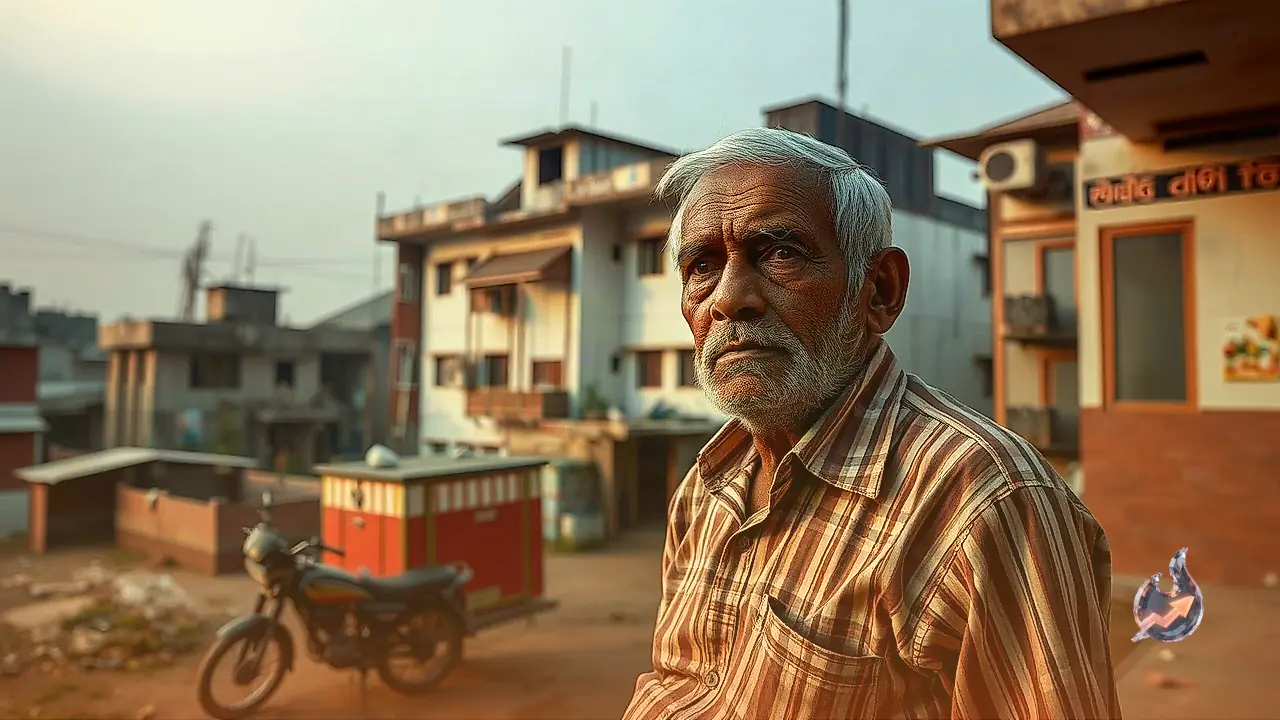
Today, the conditions prevailing in PoK are known to all. Local citizens have grown weary of the atrocities committed by the Pakistani administration and its military. Unaffordable electricity bills, severe shortages of basic commodities such as flour and rice, and widespread human rights violations have become routine occurrences in PoK.