





















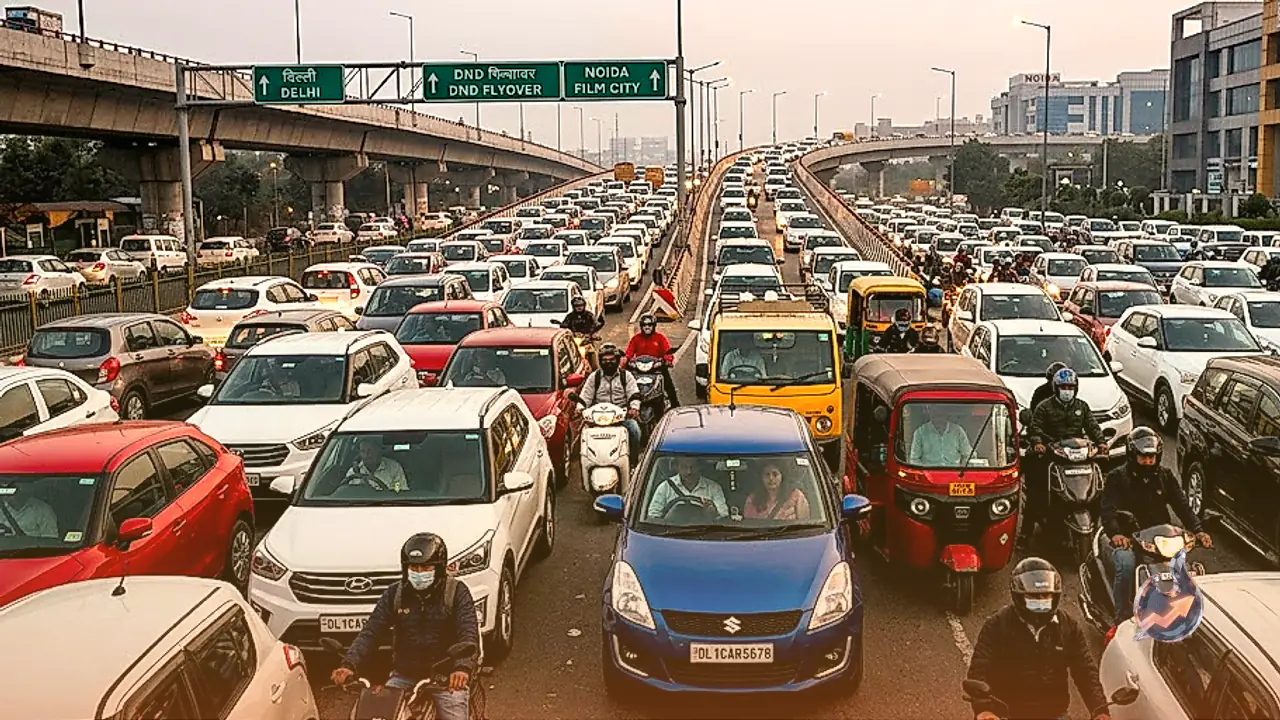

Commuters navigating the bustling corridor between Noida and the national capital continue to grapple with severe travel delays along what should be a high-speed arterial stretch. While the twin cities share an expansive network of roadways, a troublesome two-kilometer sector has turned into a persistent daily headache for hundreds of thousands of office-goers. Motorists moving at cruising speeds along broad stretches suddenly encounter an acute shrinkage of available tarmac, creating a ripple effect of brake lights and stalling movement during peak commuting hours.
Traffic Volumes Surpass Infrastructure Limits
When the foundational plan for this arterial link was first executed, its engineering was designed to accommodate an optimal volume of merely 1.50 lakh vehicles each day. In stark contrast, statistics monitored by the Noida traffic police indicate that nearly 4.50 lakh vehicles now cross this specific stretch every day. Pressure across adjacent entry gates is equally heavy, with approximately 3.50 lakh vehicles passing through the Chilla border and another 4 lakh traversing the DND Flyway corridor daily. Rapid urbanization across sectors 105, 108, 110, 128, 132, 134, 135, and 150 has added thousands of corporate shuttles, freight carriers, and private cars into this concentrated stream of movement.
Disappearing Lanes Create an Unforgiving Squeeze
For much of the suburban traversal, drivers experience steady progression thanks to a four-lane dual carriageway supported by service roads along either flank. As traffic pouring in from Sector 37 and Kalindi Kunj joins the primary spine, the roadway briefly broadens into a generous six-lane carriage. However, this spacious configuration collapses abruptly just ahead. Near Gate Number 2 of the Rashtriya Dalit Prerna Sthal, the road shrinks from six lanes down to four. Progressing slightly further toward the Film City flyover, the usable corridor contracts once more, funneling all traffic into merely three functioning lanes.
Merging Streams and Massive Tailbacks
The reduction to three lanes represents only part of the operational dilemma. Right at this narrowest juncture beside the Film City flyover, an additional three lanes of traffic descending from the Sector 62-18 elevated road merge directly into the main stream. This sudden convergence forces multiple heavy flows of traffic into a shared, confined space, completely exhausting road capacity. Consequently, massive tailbacks extending roughly four kilometers, all the way from the Film City flyover back to Amity University in Sector 126, have become an ordinary morning sight. During monsoons, water accumulation and breakdowns compound these difficulties, pushing slowdowns back by several extra kilometers.
Enforcement Limits and Behavioral Snags
To prevent absolute gridlock, traffic wardens and police personnel maintain active deployments on site, operating stop-and-go signal sequences to release congested streams in staggered intervals. Compounding the physical constriction, two lanes remain blocked due to barricades placed on the Film City flyover. Meanwhile, illicit parking near the Rashtriya Dalit Prerna Sthal ticketing counter and poor lane discipline among drivers exacerbate the mess. Authorities introduced automated and physical challans for lane violations beginning in February 2025, but such disciplinary measures offer only minor relief against severe structural deficits.
Pending Projects and the Horizon for Relief
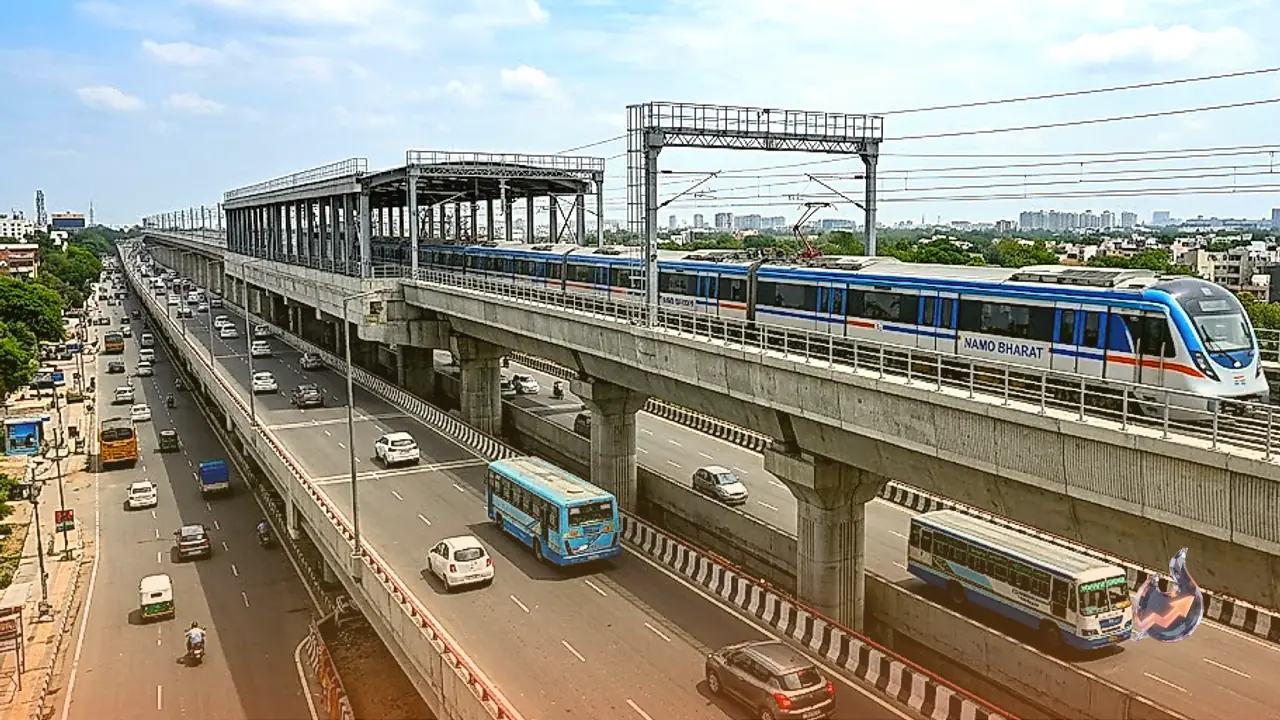
Finding a structural remedy for this pinch point has seen successive challenges. Back in June 2025, the Noida Authority drafted a blueprint to carve out a 600-meter bypass connector between Sector 95 and the DND, yet the initiative was ultimately shelved when mandatory clearances from the forest department could not be secured. Regional urban mobility experts maintain that real alleviation rests almost entirely on the six-lane Chilla elevated road. Originally initiated in 2019 at an estimated cost of 893 crore rupees, the project suffered protracted stalls linked to underground gas pipeline shifting and pandemic disruptions. With roughly 47 percent of construction completed so far, planners have established July 2027 as the targeted deadline to deliver the corridor and divert traffic away from the congested surface route.