



















Uttar Pradesh Chief Minister Yogi Adityanath recently addressed a sensitive topic that frequently sparks intense political friction, yet remains one that most leaders hesitate to discuss candidly. Speaking directly from Raebareli, the parliamentary constituency of Rahul Gandhi, Yogi delivered a sharp response regarding the ancient text Manusmriti. Earlier, Rahul had called upon women in Pune to shatter the supposed chains of slave mentality allegedly endorsed by the Manusmriti. Reacting to this, Yogi asserted that the text deserves an open and objective discussion where any genuine flaws should certainly be pointed out, but its positive values must not be willfully ignored or sidelined. Yogi further accused Rahul of attempting to dismantle the traditional family structure of India, claiming this is why the opposition leader deliberately misinterprets the text.
During his address in Pune, Rahul had quoted portions claiming that according to the Manusmriti, a woman must remain under the guardianship of her father during childhood, her husband during youth, and her sons following her husband is demise, thereby never enjoying absolute independence. Rahul had labeled these scripted provisions as deeply shameful. Responding to the criticism, Yogi explained that the text outlines specific duties for every individual within society. While certain social norms mentioned therein might appear outdated in the contemporary era, it remains an undeniable truth that a family cannot exist without a woman. Yogi posed a direct rhetorical question asking whether a son could ever exist without a mother, a daughter without a father, or a husband without a wife.
Experts note that Rahul is remarks concerning women are primarily drawn from the ninth chapter of the Manusmriti. One of its verses emphasizes the protection of women, suggesting they should remain under male guidance, while another verse reiterates that a woman spends her life under the protective custody of her father, husband, and sons respectively. However, scholars continue to debate whether these exact passages formed part of the original manuscript. Certain historians argue that a British scholar may have interpolated these lines during the colonial era. Nevertheless, critics maintain that if an ancient text contains flawed principles, openly debating or rejecting them poses no inherent problem.
Conversely, the critique offered by Rahul relied heavily on isolated excerpts. In reality, the Manusmriti comprises twelve comprehensive chapters containing 2,664 verses. It encompasses a complete judicial framework, outlines political systems, and details the respective duties of both rulers and citizens. Certain references regarding women and the caste stratification system do not align with modern egalitarian values, which led Yogi to emphasize that presenting a half-truth and weaponizing a historical text for political gains is entirely unwarranted. This argument holds weight given how frequently politicians invoke the text to portray it as an anti-women and anti-Dalit Brahmanical scripture, often weaponizing it to agitate communities. At the same time, traditional Hindu philosophy honors womanhood through the dictum that deities reside wherever women are revered.
Shifting focus to contemporary milestones, BJP leader Sudhanshu Trivedi pointed out that since Narendra Modi assumed office as Prime Minister, approximately three crore permanent houses have been registered in the names of women, 16 crore toilets have been constructed, the Ujjwala gas scheme has empowered female beneficiaries, and over 32 crore Jan Dhan bank accounts have been opened to facilitate direct digital transfers of welfare funds. If these official statistics are accurate, critics argue that it is incorrect to claim women have been denied their rights under the current administration. Furthermore, the historic passage of the 33 percent women is reservation bill in Parliament is a direct reflection of this progressive administrative vision.
The Growing Brokerage Racket in Bihar Healthcare Facilities
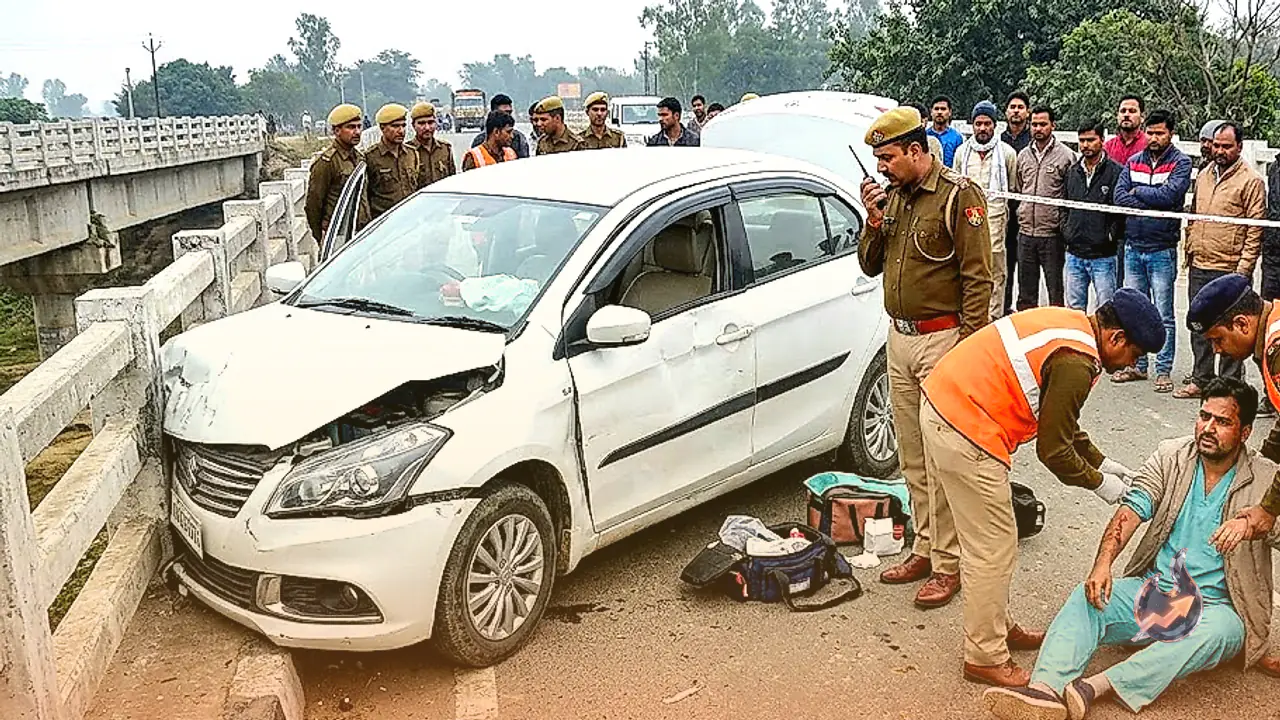
Meanwhile, alarming visuals emerged from the healthcare sector in Bihar. During an unannounced inspection of a government medical facility in Sitamarhi, Bihar Health Minister Nishant Kumar listened directly as patients and their relatives exposed how a network of middlemen operates within these institutions. They detailed how agents manipulate patients into abandoning public hospitals and redirecting them to private clinics, where exorbitant fees are extorted under the guise of medical treatment, with middlemen taking a fixed cut of the illegal profits. When the minister personally visited the Sadar Hospital in Sitamarhi, neither doctors nor nursing staff were present, and most personnel scheduled on duty were completely missing.
The hospital suffered from severe shortages of essential medicines and basic hygiene, leaving its 50 beds largely mismanaged despite having 22 government doctors officially assigned to the premises. To address the immediate crisis, Minister Nishant Kumar instructed officials to transfer a critical patient via ambulance to Muzaffarpur and provided his personal mobile number to the family, urging them to call him directly if they faced further obstacles. The deteriorating state of Bihar is healthcare infrastructure is hardly a secret. Official government data indicates that two out of every three deaths in the state occur due to improper medical treatment or a complete lack of medical access, claiming approximately five lakh lives annually.
A report released by the Comptroller and Auditor General in 2024 revealed that while massive hospital buildings have been constructed and expensive diagnostic machinery like X-ray and ultrasound units installed across government facilities, the complete absence of trained technicians has left these assets rotting and non-functional. Although doctors are routinely assigned to rural hospitals, many refuse to relocate to smaller towns. Numerous instances have surfaced where physicians operate private clinics in urban centers while merely marking attendance at rural outposts. In response, the Bihar government has increased its annual health budget to 21,270 crore rupees and aims to open 3,200 new health wellness centers by the end of the year, though administrators warn that without qualified doctors and technicians on the ground, such planning remains futile.
Maharashtra Auto and Taxi Drivers Strike Over Marathi Language Test
In Maharashtra, a fresh linguistic controversy has triggered a three-day strike by auto and taxi drivers across the state. Non-Marathi speaking drivers participating in the strike argue that spontaneous, on-the-spot tests regarding their proficiency in the Marathi language are causing widespread harassment, verbal altercations, and physical clashes on the streets. Many migrant workers from northern India who have spent the last four decades driving cabs and autos in Mumbai and other urban centers argue that acquiring fluency in a new language during their twilight years is an uphill task.
Some drivers raised practical concerns, asking how they could earn a livelihood and feed their families if they spent precious hours attending mandatory language coaching classes. They have formally requested the state government to grant them an extension of three to six months to comply with the language requirements. On the other hand, officials note that individuals residing across three generations in Maharashtra while earning their livelihood should ideally possess basic linguistic proficiency, making their lack of knowledge surprising. The state government had previously provided a 60-day grace period along with organized coaching arrangements.
Out of a total of 185,000 registered auto and taxi drivers in the state, approximately 165,000 have successfully learned Marathi, leaving a remaining 15 percent who are seeking additional time. Officials indicated readiness to accommodate reasonable requests, prompting questions as to why the impasse persists. Observers emphasize that the livelihood and sentiments of these drivers must be taken into account, as they are an integral part of the state is workforce and should not be alienated. For comprehensive coverage of these developments, viewers can tune into the full episode of Aaj Ki Baat.