




















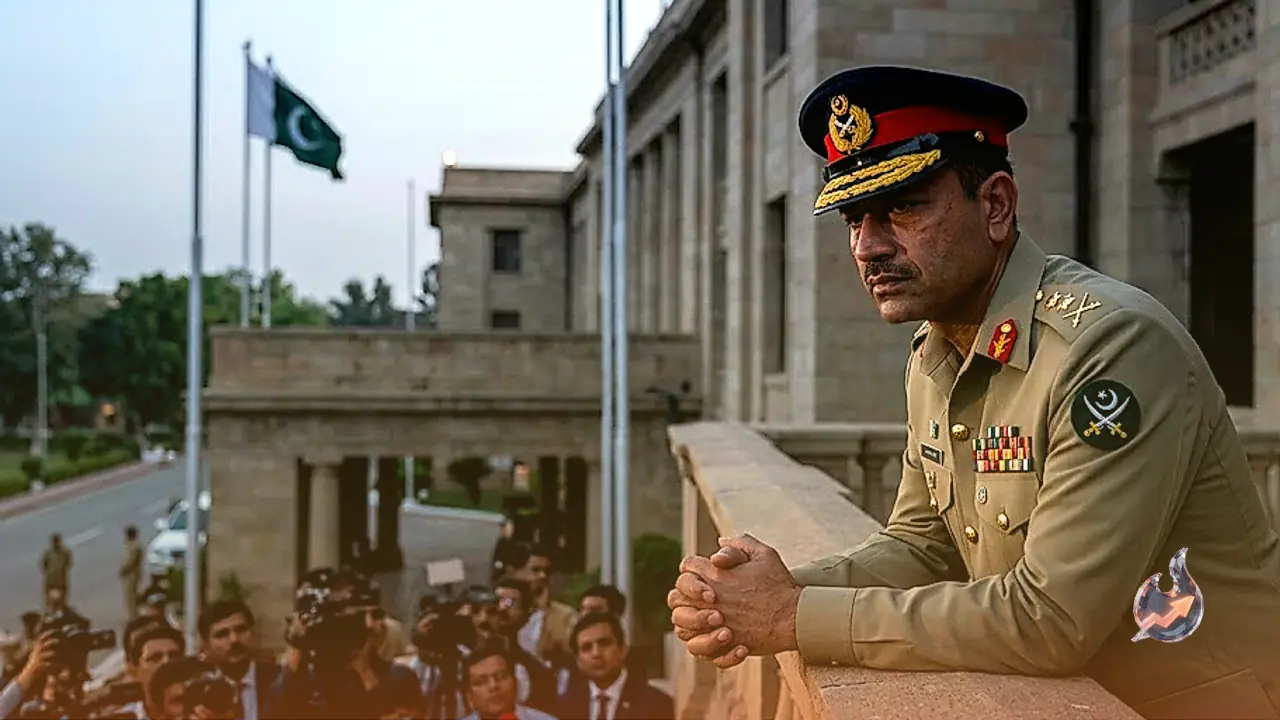

Pakistan's army chief Asim Munir is facing a political puzzle with no easy answer, one centered on jailed former Prime Minister Imran Khan. What was once treated as a set of court cases has now grown into a full-blown political crisis gripping the country. This is unfolding while Pakistan is already dealing with unrest in Balochistan, tension in tribal areas and Pakistan-occupied Kashmir, and a deepening economic crunch.
Imran Khan is facing several cases at once, including the Toshakhana case, the Al-Qadir Trust case, and cases tied to his third wife, Bushra Bibi. In the Al-Qadir Trust case, he is accused of serious irregularities in the handling of a large sum of money brought from the United Kingdom to Pakistan. Khan and his supporters have consistently described all these cases as politically motivated retaliation.
Social work cited by supporters, dismissed by rivals
Khan's supporters frequently point to his social work as a counterweight to the allegations. He has spent years running institutions such as the Shaukat Khanum Cancer Hospital, Namal University, and the Imran Khan Foundation across Pakistan. His political opponents reject that argument, insisting that charitable work cannot place anyone above the law.
Munir is boxed in from both sides
That is exactly where the dilemma bites. If Imran Khan is released, he could return to active politics backed by massive public support, posing a direct challenge to the army and the current power structure. But if he stays behind bars for a long stretch, resentment among his supporters could keep building. Keeping Khan jailed is a risk, and letting him out is a risk too, and Asim Munir appears trapped between the two.
The May 2023 unrest deepened the rift
Following Imran Khan's arrest, large-scale protests erupted across several Pakistani cities in May 2023. Protesters went beyond government buildings and targeted military installations directly. Demonstrators broke into the Lahore Corps Commander's residence, and attacks on sites linked to the military and the ISI angered Pakistan's army considerably. In the aftermath, action against Khan and his supporters intensified sharply, including terrorism and other serious charges, widening the gulf between the army and Khan even further.
An old rivalry between the army and political leaders
Confrontation between Pakistan's military and its political leadership is nothing new; it stretches back decades. But this round is more complicated than before. An economic crisis, growing instability along border regions, and rising public political frustration have combined to leave Asim Munir facing a problem with no safe, straightforward solution in sight.