



















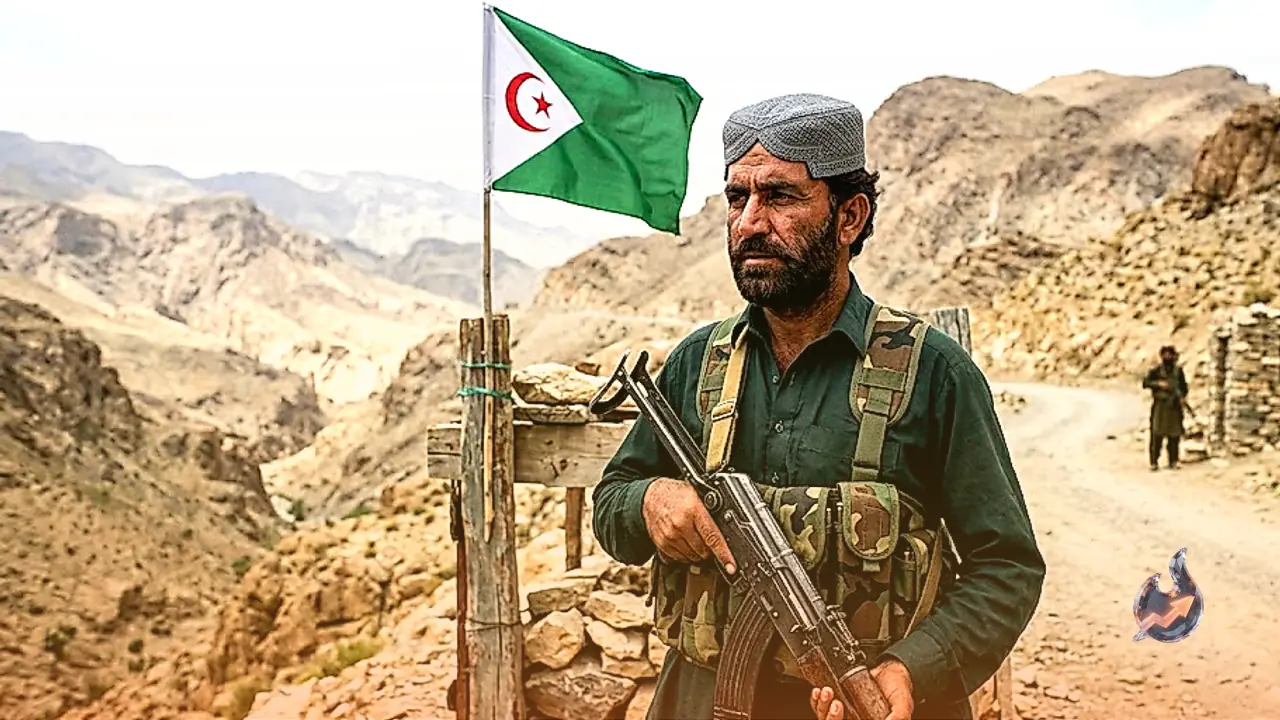

The Balochistan Liberation Army, or BLA, has made a striking claim that it now controls roughly 85 percent of Balochistan and commands a fighting force of nearly one lakh members. The separatist group has also claimed 22 attacks on Pakistani security forces in just eight days, killing 26 personnel, though none of these figures have been independently verified or confirmed by the Pakistani government.
A claim of mass support and a two-front war
According to the BLA, its strength comes from what it describes as widespread backing among ordinary Baloch people, and it says this support is what allows nearly a lakh fighters to wage battle on two fronts at once, guerrilla warfare in the hills and rural belts, and coordinated strikes inside cities. When Baloch leader Mir Yar Baloch was asked about the source of the group's weapons, his answer was blunt: he claimed the organisation repeatedly raids Pakistani military posts to seize arms from them. Still, there is no independent or reliable data confirming the BLA's actual membership numbers or the weapons stockpile it claims to hold, so these figures deserve to be treated with caution.
22 attacks in eight days, multiple towns targeted
The BLA says that in just eight days, it carried out 22 separate attacks on Pakistani security forces, killing a claimed 26 personnel. The group says explosive attacks in Kalat and Sohrab alone killed 20 security personnel. It has also claimed strikes on police posts and security installations in Chagai, Kharan and Panjgur. Coordinated attacks in Nushki, Turbat and the provincial capital Quetta have also been claimed by the outfit, along with an assault on commercial vehicles and damage to a railway track in Chagai. Together, these claims point to separatist violence spreading across a wide stretch of Balochistan's districts, none of which the Pakistani government has officially confirmed.
How much did violence climb in 2025
Data from the Pakistan Institute for Peace Studies shows at least 254 terror attacks recorded in Balochistan through 2025, leaving 1,026 people dead or injured, a figure roughly 26 percent higher than 2024. The BLA itself claimed to have carried out 521 attacks in 2025 and said a large number of Pakistani military personnel were killed in them, though independent counts put the death toll considerably lower. Attacks linked to the group during the year have ranged from suicide bombings and explosions to ambushes on security convoys and strikes on military installations, railway lines and communication infrastructure.
The violence hasn't slowed in 2026 either
The new year brought no relief to Balochistan. On January 30 and 31, the BLA claimed 12 simultaneous attacks across several districts, including the provincial capital Quetta. The targets reportedly included military posts, police stations, banks, a high-security jail, schools and marketplaces. Pakistani officials initially acknowledged around 50 people had been killed in the attacks. Security forces then ran an operation lasting roughly 40 hours and claimed to have killed 145 BLA fighters in the process.
A claim of 85 percent territorial control, plus its own flag and currency
The BLA has recently claimed that it controls close to 85 percent of Balochistan's territory. The group also says it has its own national anthem and flag, and even claims a currency of its own called the Baloch Faloos. It is worth noting that the BLA is a banned separatist organisation, so all of these claims should be read as part of its political and military messaging rather than as verified fact.
What's really driving the unrest in Balochistan
Balochistan is Pakistan's largest province by area and is widely regarded as rich in natural resources, but that wealth has long been a source of conflict rather than prosperity for its people. Disputes over resource rights, political marginalisation and the conduct of security operations have fuelled deep resentment among the local population for years. The BLA and other Baloch separatist groups demand full independence from Pakistan, while Islamabad brands them armed insurgents and terrorists. The rising tempo of attacks is no longer just a security problem for Pakistan's forces, repeated strikes on railway lines, roads and communication networks threaten to disrupt ordinary life and economic activity for the province's residents as well.