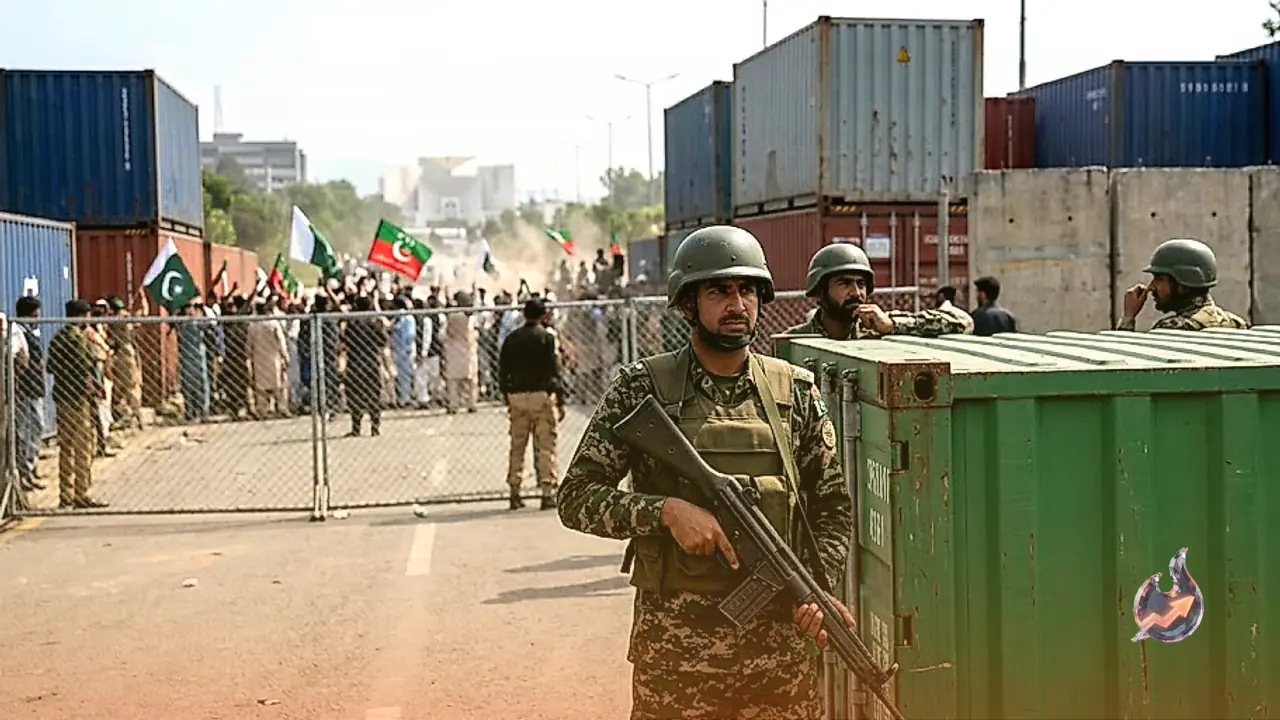


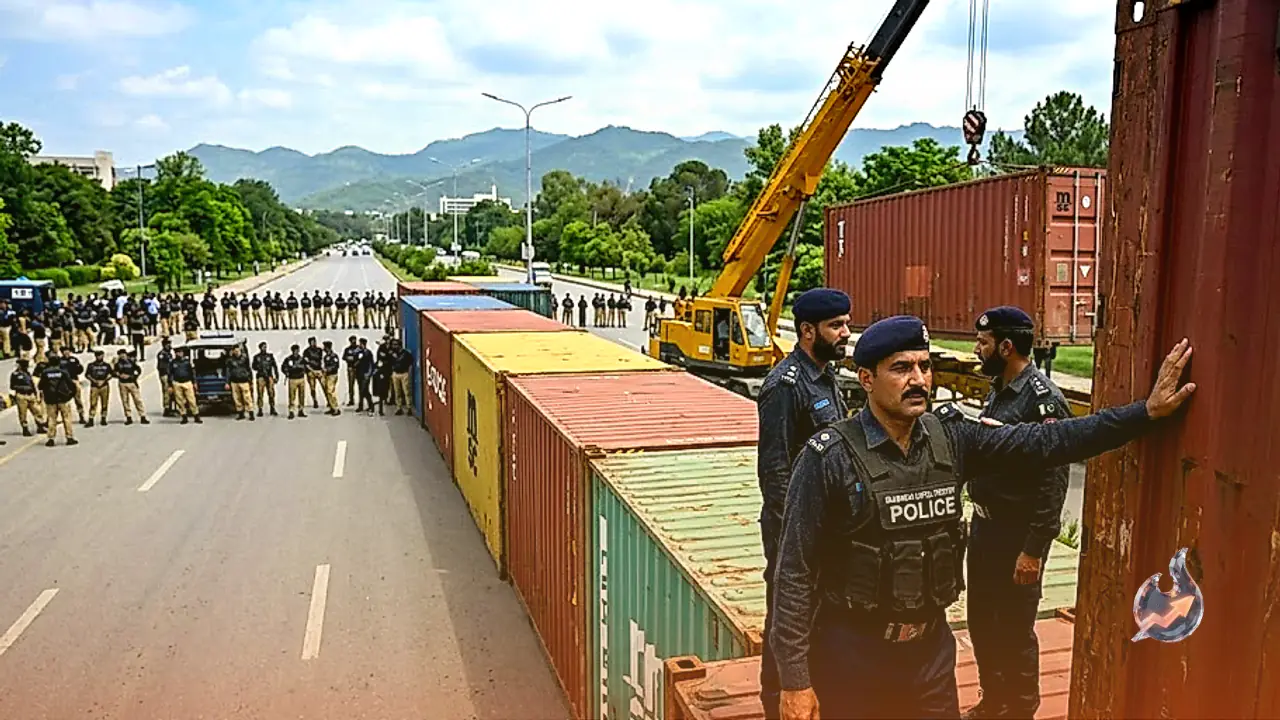
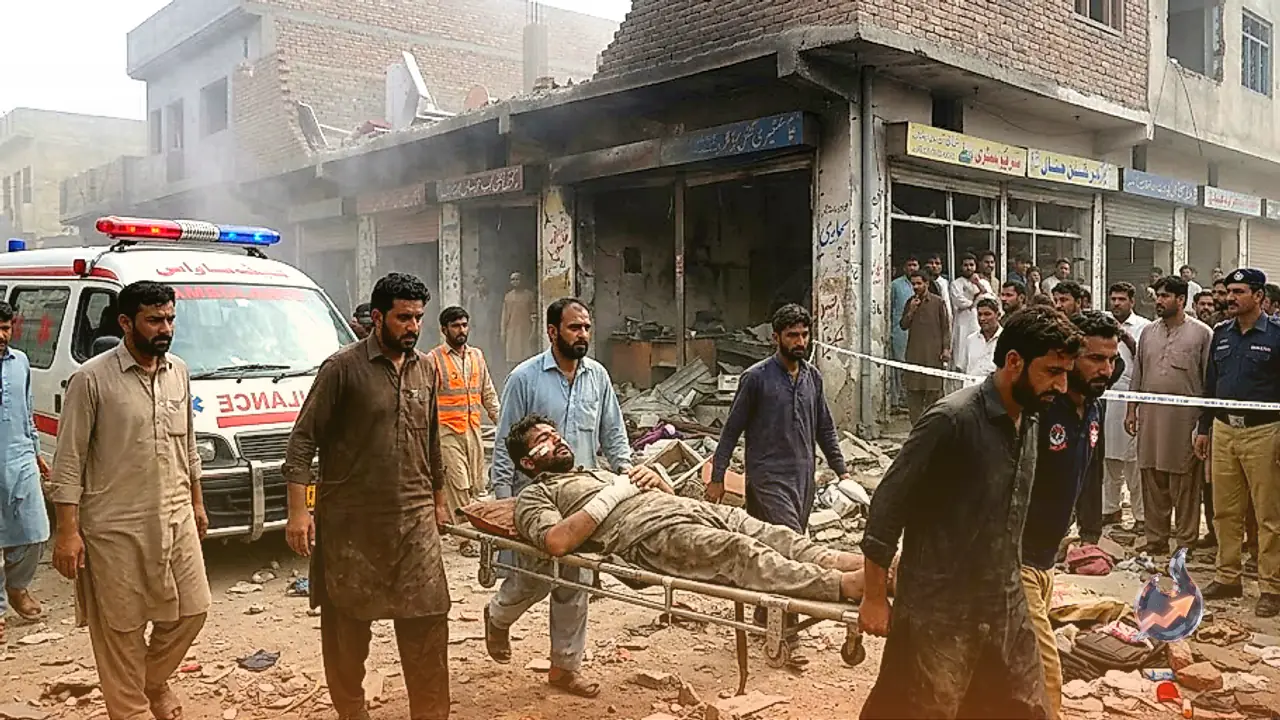

















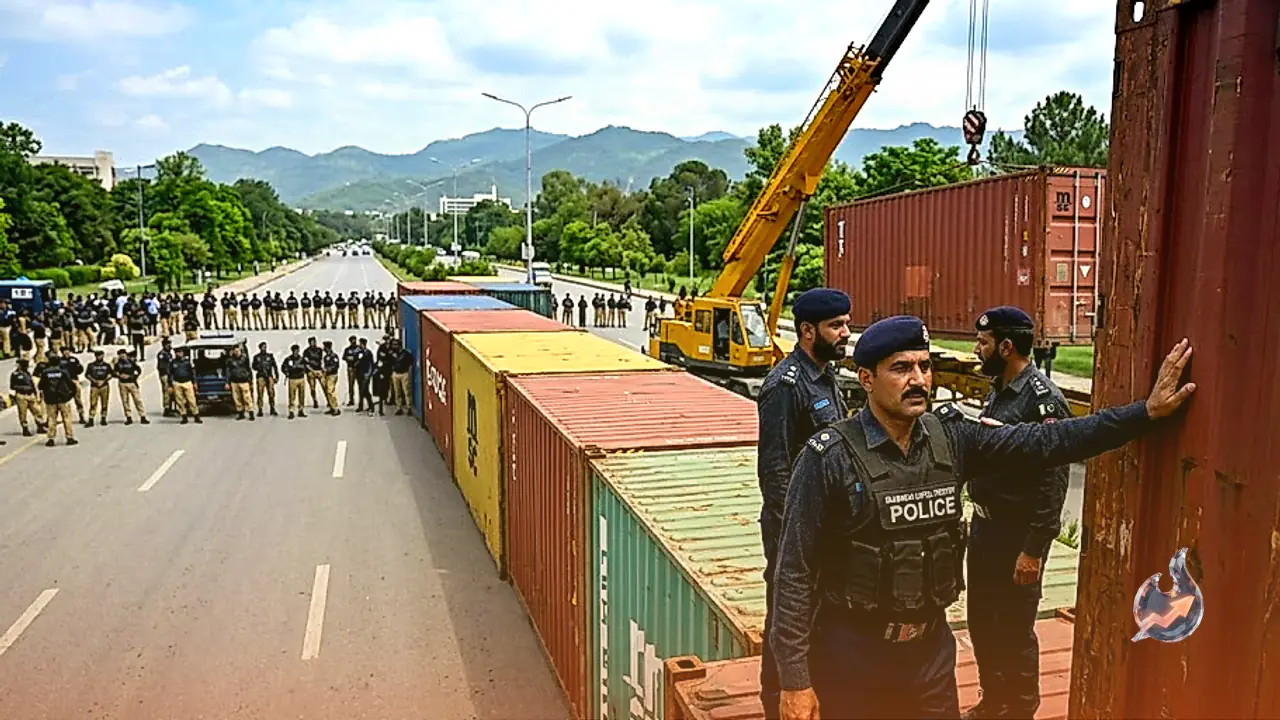

Security expenditures in Pakistan's capital have surged dramatically as authorities implement extensive measures to counter political demonstrations called by Imran Khan's party, Pakistan Tehreek-e-Insaf. Even though the political march was postponed by a week, the administrative preparations remain active, placing a severe financial strain on the national exchequer. The blockade of roads using shipping containers, coupled with the logistical requirements of housing and feeding thousands of deployed police personnel, has caused the total projected budget to climb past the 100 billion Pakistani rupees threshold, according to reports from Dawn.
The Continual Meter of Barricade Containers
The single largest expenditure in this vast security operation stems from the deployment of 1,550 large containers used to seal off city streets. According to All Pakistan Goods Alliance Chairman Nisar Hussain Jafri, after initial negotiations regarding various sizes, the daily rental rate for these heavy vehicles was fixed at 30,000 Pakistani rupees per container. Based on this rate, the daily rent for all 1,550 containers accumulates to approximately 4.65 million Pakistani rupees. With the protest delayed by about a week, this rental cost scales up to roughly 32.55 million rupees in a week and could touch 65.10 million rupees over a fortnight, all while the containers remain unmoved on the roadways.
Sustaining Thousands of Deployed Personnel
To reinforce security, approximately 2,000 police personnel from Sindh have arrived in Islamabad and require daily provisions. Records indicate that provisioning three daily meals for a single officer costs around 600 Pakistani rupees, bringing the total daily food expenditure for this contingent to roughly 1.2 million rupees. Meanwhile, about 16,000 additional personnel from Punjab were requisitioned for duty, though reports noted that none had arrived by the evening of 25 September. Despite their delayed arrival, the estimated daily food budget for these Punjab officers was calculated at nearly 9.6 million Pakistani rupees, demonstrating how financial allocations were being calculated even before active deployment.
Transport Rentals and Officer Accommodations
Logistical support to ferry security forces from their residential quarters to assigned duty posts has added further to the daily expenditure. The administration rented 70 coasters and 30 double-cabin vehicles for transportation, with the coasters alone costing around 1.05 million rupees daily and the double-cabins adding another 300,000 rupees, totaling approximately 1.35 million rupees every day for transit alone. Furthermore, 175 rooms across 13 hotels in various zones were booked to accommodate 246 inspectors and senior police officials. The daily tariff for 157 rooms utilized by officers ranging from inspectors to superintendents stands at approximately 754,000 rupees.
Impounded Freight and Driver Restrictions
Another contentious development involves the requisitioning of around 2,700 freight container vehicles along with their three-member crew teams by the Islamabad and Punjab police forces. Reports indicate that about 400 of these vehicles and their crews remain unaccounted for, while the rest are being detained inside police stations. Although formal arrests were avoided, drivers are barred from leaving the premises, and authorities have confiscated their mobile phones, vehicle documentation, and keys. Crucially, roughly 450 of these detained trucks were laden with essential commodities, including medicines, food supplies, and industrial chemicals. As security preparations persist despite the delayed march, the financial and operational toll continues to mount.