

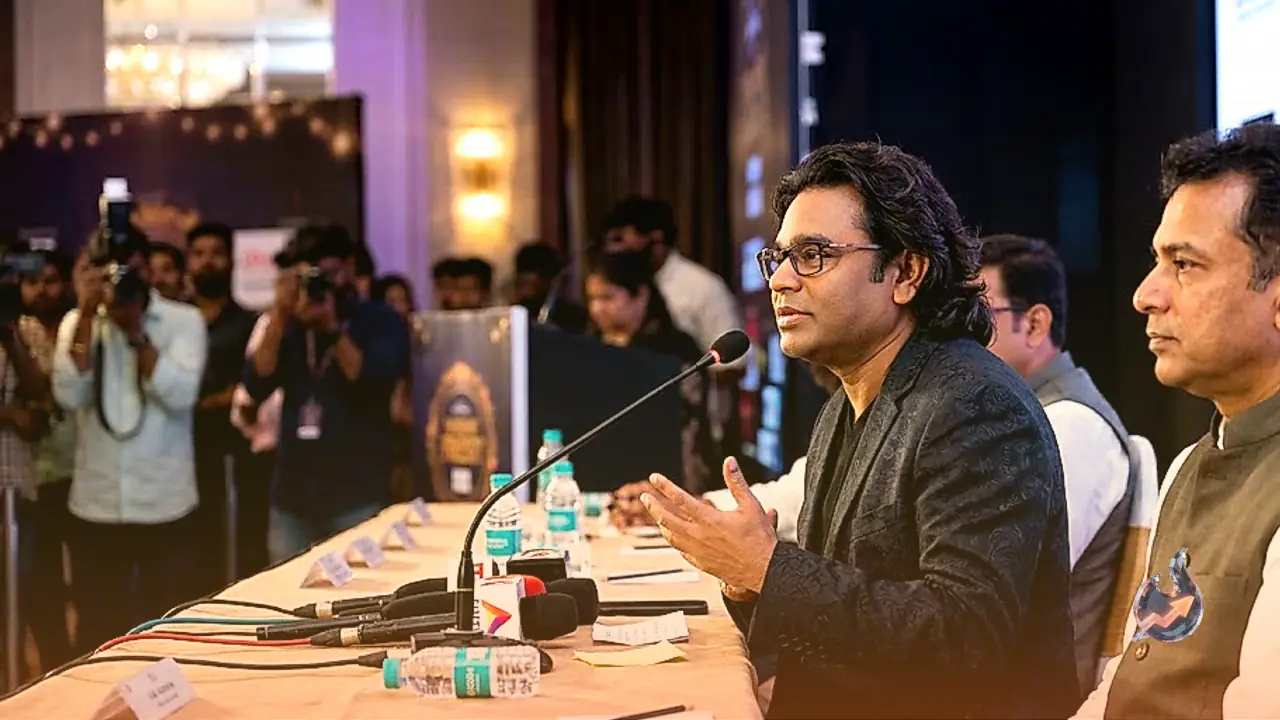



















While the 2027 Assembly elections in Uttar Pradesh are still some time away, the process of aligning strategic pieces on the political chessboard has begun in earnest. The ruling BJP has initiated major organizational changes to refine its cadre machinery across the state. In the latest appointments made by party president Nitin Nabin, elements of Western India's election management style are clearly visible. The party has restructured its Uttar Pradesh leadership by naming Vinod Tawde as the new state in-charge and senior Gujarat leader Jagdish Ishwarbhai Patel as co-in-charge. This fresh deployment signals an intent to drive booth-level management and war room operations through an aggressive and calibrated strategy.
Application of Gujarat's Organizational Framework in Uttar Pradesh
The Bharatiya Janata Party has long followed a strategy of deploying experienced organizational leaders and grassroots workers from one state to another during key election cycles. This operational methodology evolved during the era of Narendra Modi and Amit Shah in Gujarat, where electoral organization was transformed into a disciplined, data-driven system extending from local booths to the central war room. That very Gujarat framework is once again shaping preparations for the upcoming contests in Uttar Pradesh.
During the 2022 Uttar Pradesh Assembly elections, a dedicated team of around 165 experienced workers from Gujarat BJP was posted across the state. These workers were assigned specific responsibilities across assembly constituencies, organizational divisions, and polling booths. The goal was not merely to increase numerical strength on the ground, but to reactivate local organizational units, strengthen booth management, and gather accurate assessments of ground-level challenges. The current appointments of Vinod Tawde and Jagdish Patel ahead of the 2027 polls represent a direct continuation of this tested approach.
From Varanasi Management to Statewide Duty: Who Is Jagdish Patel?
The newly appointed co-in-charge for Uttar Pradesh, Jagdish Ishwarbhai Patel, brings prior operational familiarity with the state's political landscape. He is a former MLA from the Amraiwadi constituency and has also served as the Mayor of Surat, acquiring administrative and organizational expertise. During the 2024 Lok Sabha elections, he was drafted into the core campaign team managing the Varanasi constituency for Prime Minister Narendra Modi.
Organizational details indicate that Jagdish Patel was active in Varanasi nearly six months before the official election notification was issued for the 2024 polls. Within party circles at the time, his working style and responsibilities were linked to the organizational footprint previously overseen by the late Sunil Ojha. Building on his ground management experience in Varanasi, the central leadership has now entrusted him with statewide co-in-charge responsibilities for Uttar Pradesh. This practical experience is expected to assist in streamlining party operations across all districts.
Vinod Tawde's Proven Expertise in Electoral Strategy
Alongside Jagdish Patel, the appointment of Vinod Tawde as Uttar Pradesh in-charge highlights the party's focus on operational management over mere political messaging. Vinod Tawde has been consistently active in formulating national election strategies for the party. During the planning phases of the 2024 general elections, he was among the key strategists tasked with evaluating organizational requirements and seat-by-seat dynamics across multiple states.
Furthermore, Vinod Tawde's election management capabilities drew attention during the Bihar Assembly elections, where his coordination efforts were widely noted. By positioning an experienced manager in a large and socially complex state like Uttar Pradesh, the BJP is emphasizing structured election management rather than relying solely on high-profile political figures.
Formidable Challenges for BJP After the 2024 Electoral Setback
The political road to 2027 in Uttar Pradesh presents significant hurdles for the BJP. The party suffered a noticeable setback in the state during the 2024 Lok Sabha elections, securing only 33 out of the total 80 parliamentary seats. In contrast, the opposition Samajwadi Party won 37 seats, while the Congress secured 6 seats.
These outcomes established that the 2027 Assembly election is not simply a battle to retain power, but a rigorous test of organizational cohesion, caste balancing, booth-level execution, and rebuilding social coalitions. To address these vulnerabilities, party president Nitin Nabin has already held separate consultative meetings with around 20 UP Members of Parliament. These discussions focused on gathering direct feedback regarding local organizational health, social equations, and worker morale.
2027 Assembly Polls as the Launchpad for 2029 General Elections
The importance of Uttar Pradesh's electoral battlefield extends well beyond the state level. Housing 80 parliamentary seats, Uttar Pradesh remains the foundational pillar of the BJP's national strategy for the 2029 general elections. The 2024 results demonstrated that top-tier national campaigns require equally robust state-level organizational backup to convert support into electoral victories.
Consequently, the BJP views the 2027 Assembly polls as a vital rehearsal for the 2029 Lok Sabha contest. If the organizational duo of Vinod Tawde and Jagdish Patel succeeds in galvanizing booth workers, widening social outreach, and resolving local friction, the dividends will directly benefit the party in the subsequent national elections.
Tarun Chugh's Role in Gujarat and Balancing Dual State Strategy
Another crucial element of this organizational reshuffle is the appointment of Tarun Chugh as the new in-charge for Gujarat. While Gujarat-tested organizers have been dispatched to Uttar Pradesh, Tarun Chugh, who holds extensive national organizational experience across other states, has been given charge of Gujarat.
Both Gujarat and Uttar Pradesh are scheduled to hold Assembly elections in 2027. This presents the BJP with a dual objective: protecting its political stronghold in Gujarat while revitalizing its organizational machinery in Uttar Pradesh following the 2024 setback. The strategic balance struck by Nitin Nabin's new appointments underscores a clear focus on building a calibrated election machine rather than depending on rhetoric alone.