
















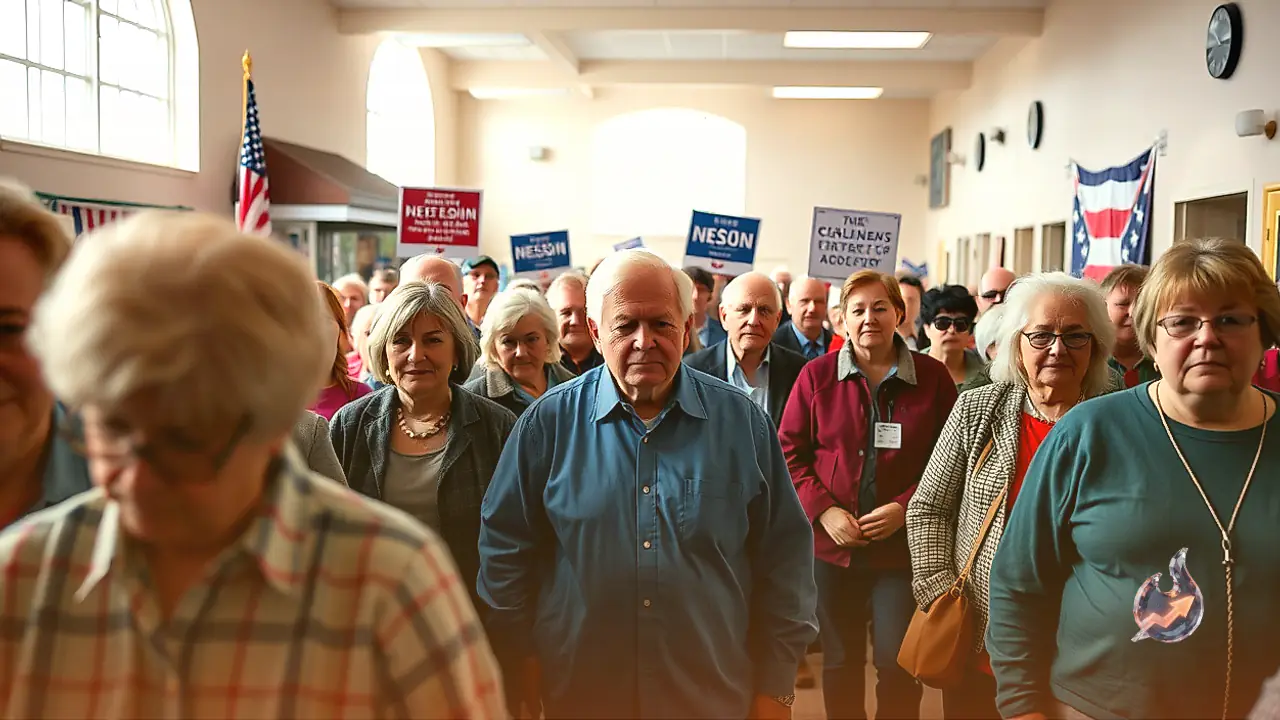

With only weeks remaining before the midterm elections, conservative advocacy groups across the United States have launched an aggressive campaign targeting nursing homes, assisted-living facilities, and residential care centers. Activists leading the charge allege that political opponents are carrying out systematic voter fraud by exploiting frail and elderly residents. The push involves mobilizing local volunteers to directly question staff at these facilities and scrutinize how absentee ballots are handled.
Mobilizing Activists Against Long-Term Care Centers
At the forefront of this initiative is the Election Integrity Network, founded by conservative lawyer Cleta Mitchell. During an appearance on Steve Bannon's War Room broadcast, Mitchell claimed that political operatives enter group homes to take advantage of vulnerable seniors by unlawfully casting their ballots. To substantiate her argument, she pointed to a 2020 inquiry in Wisconsin where a local sheriff accused facility workers of filling out ballots for eight residents. The Wisconsin Election Commission ultimately dismissed those allegations. Mitchell argued on the program that this incident altered the outcome of the 2020 presidential race for Donald Trump, despite official records showing Trump lost the state of Wisconsin by more than 20,000 votes.
The network is actively distributing an instructional toolkit from its website, directing followers to launch email and phone inquiries targeting care homes in their neighborhoods. The campaign is accompanied by coordinated social media messaging designed to amplify allegations of widespread manipulation within residential care institutions. In multiple public postings, the organization published maps identifying facilities situated inside highly contested congressional districts across Arizona, California, New Hampshire, Pennsylvania, and Virginia, framing the elderly residents as vulnerable targets for operatives seeking illicit access to ballots.
Federal Guidance Shifts and Congressional Backlash
The push by outside activists aligns with administrative shifts from federal regulators overseeing care facilities. In July, the Centers for Medicare and Medicaid Services (CMS) issued an administrative memorandum that withdrew longstanding instructions outlining how facility staff could legitimately assist residents with the voting process, such as arranging postal ballots or coordinating transport to polling stations. In place of supportive guidance, the agency emphasized the risk of criminal prosecution should employees commit improper coercion or infringe upon resident liberties.
While CMS justified the change by asserting it had received scattered complaints regarding voting improprieties, none of the specific examples cited resulted in substantiated findings of fraudulent voting. The revised stance prompted a strong reaction from lawmakers. In August, United States senators Elizabeth Warren and Alex Padilla led a group of colleagues in sending a formal letter challenging CMS administrator Mehmet Oz. The lawmakers warned that the administration's posture threatens to disenfranchise roughly two million nursing home residents nationwide, arguing that the threat of prosecution creates an atmosphere of intimidation that discourages workers from providing necessary logistical support to voters.
Widening Campaigns by Denial Organizations
Beyond Mitchell's coalition, other activist groups have devised separate monitoring schemes with similar objectives. Project Civica, an organization based in New York, inaugurated a project called 'Adopt a Care Facility' to encourage local oversight of senior residences. Kim Hermance, the group's cofounder and president, acknowledged that while needing assistance does not imply illicit conduct, reviewing New York voting records revealed individuals over age 85 registering and voting for the first time immediately prior to an election. While Hermance conceded that late registration is entirely lawful, she asserted it warrants inquiries into facility practices.
Advocates for senior citizens and voting rights contend that these organized campaigns form part of an escalating effort to erode public confidence in election administration. By singling out elderly individuals who often depend on logistical help to exercise their franchise, voting advocates warn that intimidation tactics could prevent countless eligible Americans from casting valid ballots during the upcoming midterm elections.