























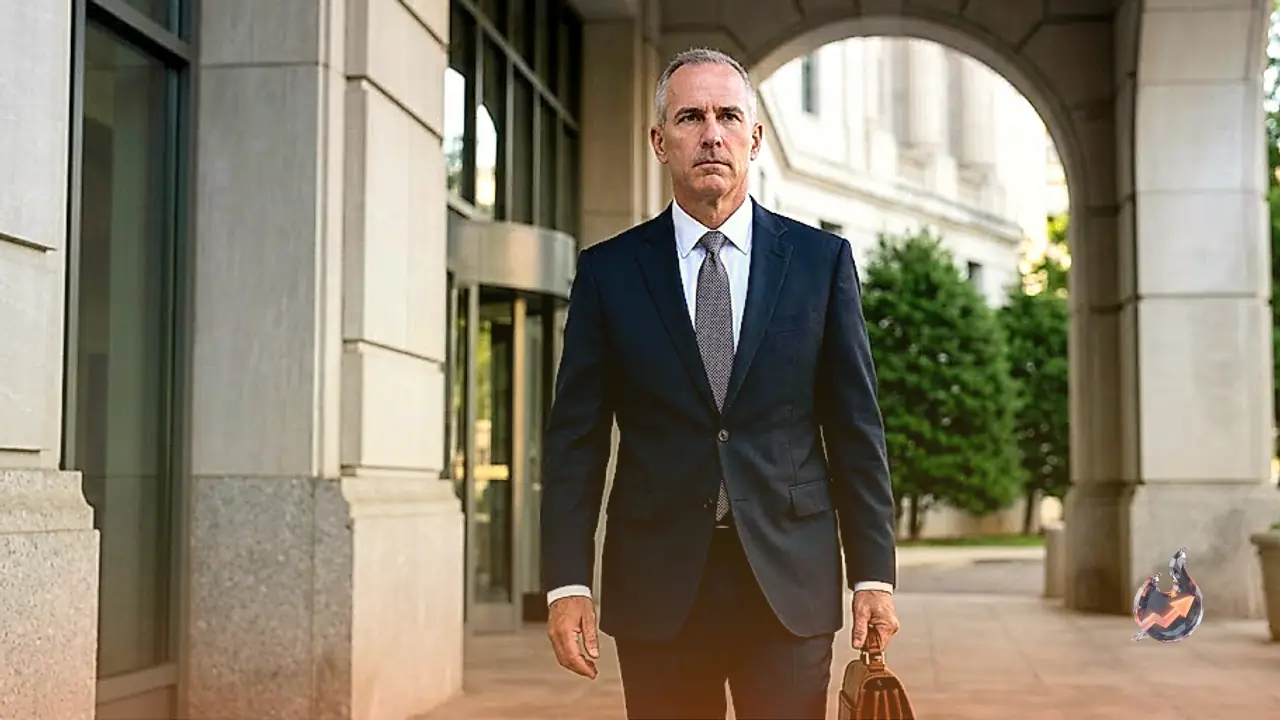

The Department of Homeland Security has remained a center of intense controversy ever since the second Trump term began. High-profile ICE raids across major American cities, heavy spending, a rapidly expanding network of detention facilities, and efforts to conceal data surrounding these operations have defined the period. Yet, remarkably few officials have chosen to step down while openly criticizing the path the agency has taken. Marc Rosenblum, who functioned as the executive director of the Office of Homeland Security Statistics and held the role of deputy assistant secretary at the department, stands out as one of the first to break ranks.
Voicing Concerns on Social Media
In a public post shared over the weekend on LinkedIn, Rosenblum announced his departure from the agency. He stated that he was glad to sever ties with the current administration. Pointing to what he described as a war on immigrants, a hostile stance toward federal employees, and the continuous suppression of facts, alongside foreign conflicts and systemic corruption, he concluded that he simply needed a change of pace.
Rosenblum brings a wealth of experience, having previously worked across both the first Trump administration and the Biden administration. He initially managed the DHS immigration statistics office before moving on to oversee data for the entire department, aggregating metrics on everything from cybersecurity breaches and human trafficking investigations to deportation numbers. During the Biden years, his team peaked at 45 personnel before seeing its numbers dwindle.
Consolidating Fragmented Agency Data
A former colleague described Rosenblum as having one of the most unique and challenging mandates within the department. With 22 distinct component agencies operating under the DHS umbrella, data collection methods had historically remained completely siloed. The core of Rosenblum's charge was to pull all this fragmented information together so that leadership at headquarters could gain a unified picture of enforcement actions, tracking everything from Coast Guard interdictions off the coast of Miami involving individuals from Cuba, Haiti, Nicaragua, and Venezuela, to the broader demographic data of those crossing the Southwest border.
While a domestic security agency is inherently opaque, Rosenblum had promised a high degree of openness when he stepped into his department-wide role in late 2023. As a long-standing immigration policy analyst and specialist who previously worked for the Congressional Research Service, he told a media outlet that November that the agency would begin releasing data with greater speed, enhanced granularity, and covering a much broader scope of departmental activities.
The Stalling of Public Data
That promised transparency stalled significantly under the second Trump administration. The Office of Homeland Security Statistics portal tracking ICE detentions, Border Patrol encounters, and repatriation figures has not received a single update since February 11, 2025, which fell just weeks into the new term. Whatever information researchers and analysts have managed to extract since then has largely come through Freedom of Information Act lawsuits, yielding spotty and inconsistent results.
David Bier, the director of immigration studies at the Cato Institute, noted that accountability has effectively vanished, leaving the public with no independent way to assess ongoing operations outside of agency-issued press releases. The department did not immediately respond to requests for comment regarding the resignation, and Rosenblum himself did not offer additional statements beyond his social media post, where he did acknowledge the immense pressure faced by his team. He praised his co-workers as dedicated career civil servants producing high-quality work within a hostile environment.
Luis Miranda, who served as a senior DHS spokesperson during the Biden administration, noted that Rosenblum embodied the ideal traits of an independent public servant. He argued that the current administration routinely suppresses or ignores facts that clash with its political rhetoric, creating an impossible working environment for officials whose primary mandate is transparency.
Rosenblum joins a growing list of departures that includes acting ICE director Todd Lyons and multiple acting leadership figures at the Federal Emergency Management Agency. However, unlike Rosenblum, most departing officials have remained publicly silent. The list also includes former DHS chief Kristi Noem and top aide Corey Lewandowski, both of whom exited amid controversy. ICE attorney Ryan Schwank stands out as another rare voice who previously testified before Congress regarding systemic flaws in training programs.
Before entering government service, Rosenblum had repeatedly cautioned lawmakers about the severe economic and social risks associated with mass deportation strategies. In a 2015 testimony before a Senate committee, he warned that attempting large-scale removals is inherently self-defeating, noting that more aggressive enforcement inevitably creates friction with established families and communities while placing heavy strains on the broader labor market.