




















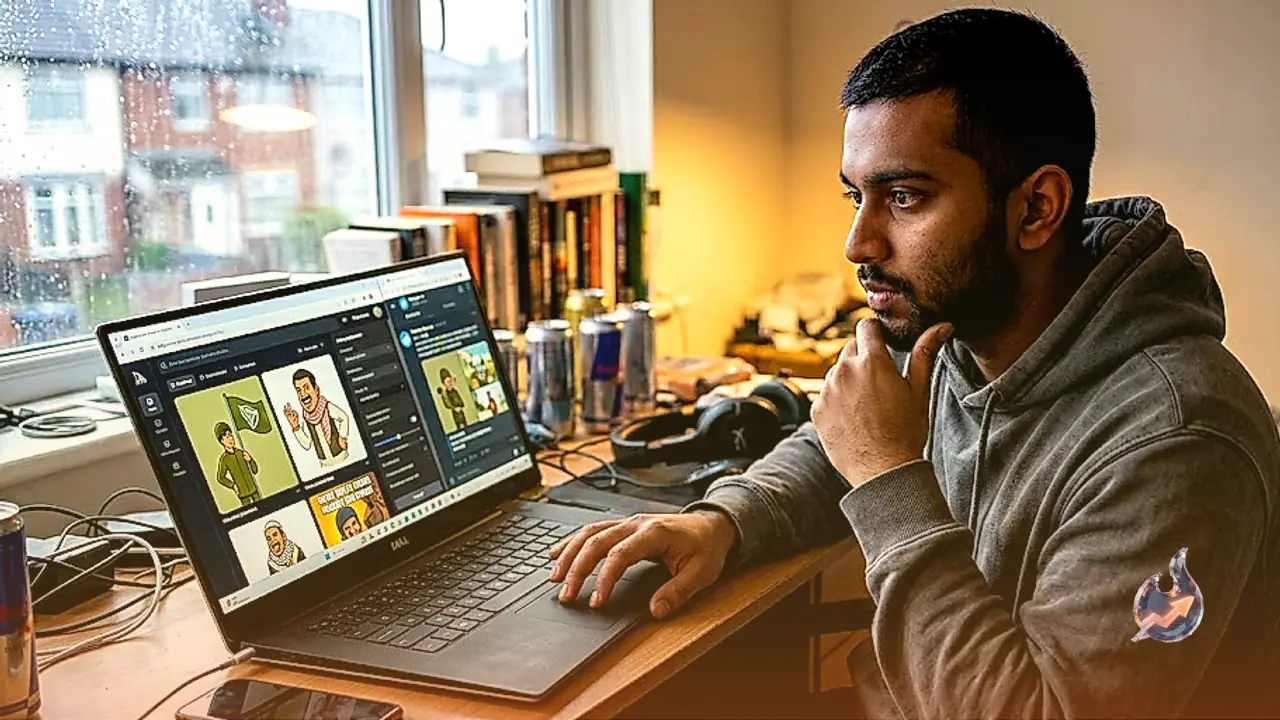

Over ten years ago, the terrorist group Islamic State published a brutal video showing men locked in a iron cage being lowered into a swimming pool to drown. Today, that exact horrific scene has been recreated on TikTok as a cartoon. In this modern digital recreation, fish dressed in orange jumpsuits sit inside the cage while the animated character SpongeBob SquarePants lowers it into the water as Squidward films the execution. This video illustrates a broader shift in how modern extremist propaganda is engineered for online platforms.
A study by the Institute of Strategic Dialogue (ISD) identifies this emerging phenomenon as 'Slop Jihad.' According to the findings, young sympathizers of extremist organizations including ISIS and al-Qaida are harnessing generative artificial intelligence tools to create memes, anime clips, and fan edits. These media formats are designed to appeal to younger social media users and subtly introduce them to extremist ideologies. Researchers note that this development marks a structural shift in the visual language of digital radicalization.
The Changing Landscape of Extremist Messaging
Adam Hadley, executive director of the UN-backed organization Tech Against Terrorism, pointed out that the expanding volume and stylistic variety of this material pose serious risks. Highly stylized media produced with generative tools allows violent extremist ideas to reach younger demographic groups while bypassing traditional terrorist branding. Users frequently encounter these videos in the form of entertainment content within their social media feeds. Once a user engages with these memes or cartoons, platform algorithms often begin recommending progressively more overt extremist material.
Terrorist groups have consistently adapted their communication tactics to leverage emerging internet technologies. During the early 2020s, the 'Alt Jihad' phenomenon saw extremist supporters co-opting aesthetic styles from Western online subcultures to distribute their message. Similarly, generative artificial intelligence has been deployed by these networks for several years. In 2024, an Islamic State-linked media entity named News Harvest began deploying AI-generated news anchors to stream propaganda videos efficiently at a fraction of traditional production costs.
Anime, Cartoons, and Ideological Tension
The visual style of current AI-generated material differs significantly from past efforts. Moustafa Ayad, research chair in global Islamism and counter-terrorism at ISD, explained that while amateur propaganda has always existed on fringes of the internet, the transformation of iconic children's cartoon figures like SpongeBob SquarePants into vehicles for Islamic State imagery is unprecedented. He emphasized that this trend remains in its growth phase.
Generative AI software allows official publications from these organizations to be converted almost instantaneously into animated videos. For instance, researchers identified a TikTok account that converted weekly ideological newsletters from ISIS, known as al-Naba, into Japanese anime style videos. However, this aesthetic evolution has caused disagreements within extremist communities. Traditionalist supporters have expressed disapproval of 'Slop Jihad' content, arguing that creators of animated memes lack genuine ideological commitment. Despite these internal debates, several established propaganda channels continue to share both traditional statements and these newer AI clips.
Algorithmic Distribution and Platform Engagement
Social media platforms, particularly TikTok, play a central role in distributing this content due to recommendation systems designed to maximize user engagement. A 2024 study conducted by the Organisation for Economic Co-operation and Development (OECD) identified TikTok as one of the top ten online platforms utilized for the dissemination of extremist content.
While examples of AI-generated extremist material were observed on platforms like Instagram and Facebook, the primary concentration was detected on TikTok. Researchers identified 150 'Slop Jihad' videos generated by 71 distinct accounts, accumulating over 5.4 million views. Experts attribute this reach to personalized recommendation algorithms like the 'For You Page,' which match niche content directly with user interaction patterns.
Platform Moderation Challenges and Evasion Tactics
In response to these findings, a spokesperson for TikTok contested the report's conclusions, characterizing its methodology as imprecise. The spokesperson stated that violent and hateful organizations are strictly prohibited on the platform, and that the company uses advanced moderation technology, specialized safety teams, and external partnerships to proactively remove violating material. TikTok confirmed that the specific videos identified in the research had been removed from the platform.
Aaron Zelin, a specialist in extremist movements at the Washington Institute for Near East Policy, noted that generative AI significantly lowers technical barriers, allowing decentralized networks of users to remix extremist imagery. Some creators are driven by ideological alignment, while others participate for notoriety, trolling, or online attention. Experts also highlighted that creators frequently establish backup accounts and utilize evasion techniques to bypass automated AI safety filters, enabling content to persist online despite removal efforts.