





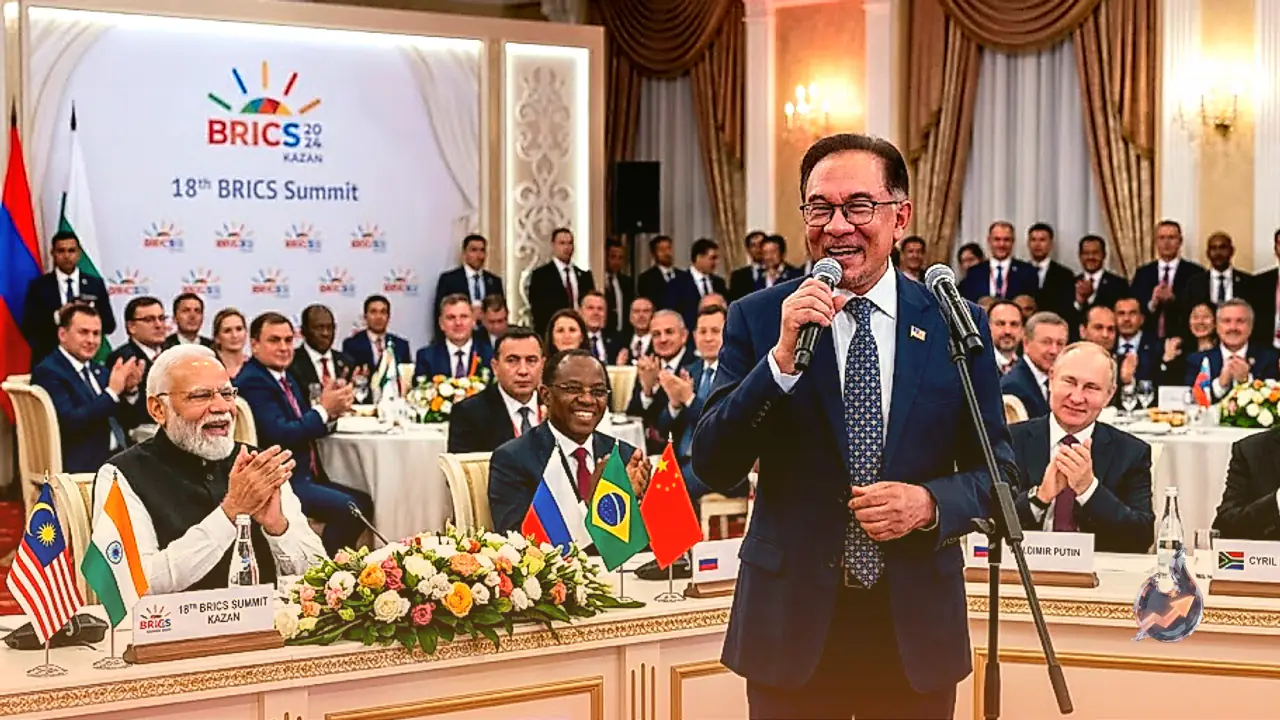















In the theater of international diplomacy, visual symbols often signal the tectonic shifts of global power dynamics. Critics and observers frequently dismiss international summits as mere photo opportunities where world leaders exchange handshakes without delivering concrete policy outcomes. However, in high-stakes diplomacy, messaging and imagery carry profound weight. Recognizing this strategic reality, Russian President Vladimir Putin and Chinese President Xi Jinping gathered in New Delhi, leaving behind their pressing domestic commitments. Notably, Xi Jinping’s visit to India after a gap of seven years amplified the geopolitical sensitivity of the meeting. This summit took place at a crucial juncture when the world is grappling with two major military conflicts and deep diplomatic divisions. Against this backdrop, India successfully utilized the BRICS platform to assert its global influence and send a clear, unified message to the established superpowers.
Unity at Bharat Mandapam: High-Value Political Imagery
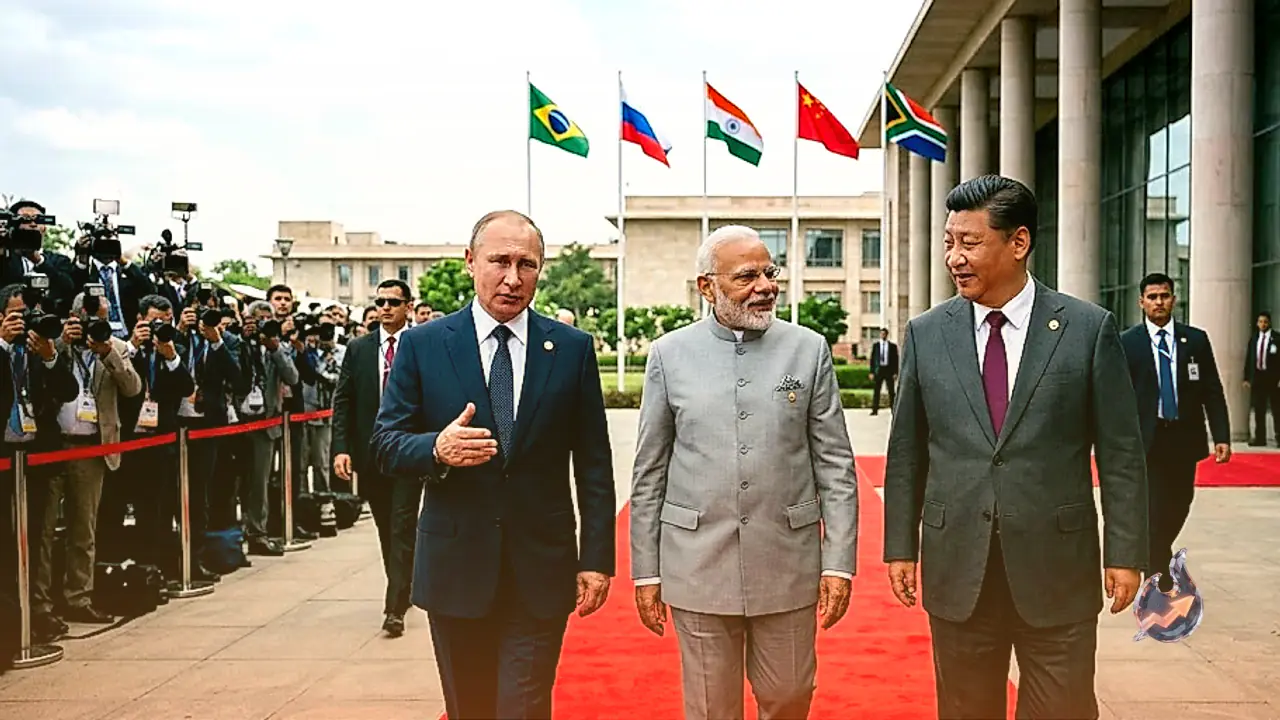
Among the most striking visuals of this landmark event were those captured at Bharat Mandapam. During a symbolic tree-planting ceremony representing the leaders' shared commitment to global welfare, an extraordinary political portrait emerged. Prime Minister Narendra Modi stood in the center, flanked by Russian President Vladimir Putin on one side and Chinese President Xi Jinping on the other. This arrangement was not just a diplomatic protocol but a vivid demonstration of New Delhi's central position in modern geopolitics. As the three leaders walked side-by-side through the halls of Bharat Mandapam, Modi exuded confidence, appearing to lead the group with poise. In the realm of international relations, such visual narratives hold immense symbolic capital, especially at a time when political transitions are underway in the United States and leaders like Donald Trump continue to advocate for unilateral global dominance. Recalling the SCO Summit of the previous year, where a similar meeting prompted Trump to lament that the US was losing India to China, this latest display of camaraderie has once again triggered anxiety in Western and regional capitals, from Washington to Islamabad.
Advocating a Multipolar World and Shared Rights
During his address to the summit, Prime Minister Narendra Modi sent a clear signal that the existing structures of global governance have become obsolete and require deep, systemic overhaul. He asserted that the responsibility of shaping the future must be distributed equitably among nations rather than concentrated in the hands of a select few. Highlighting this vision, Modi declared that if our future is shared, then the right to shape it must also be shared. This statement serves as a robust declaration that India will no longer remain a passive observer on the world stage but will actively participate as a key rule-maker. Invoking the resolution of BRICS @ 20, he called for transitioning from an era of exclusive privileges to one of genuine, collaborative partnership. Modi's opening remarks established that the future trajectory of global decision-making must align with the aspirations of the Global South, emphasizing that no sustainable world order can exist by ignoring developing nations.
Overhauling Global Governance: Turning Rule-Takers into Rule-Shapers
The Indian Prime Minister expressed deep dissatisfaction with how developing nations are systematically marginalized in the formulation of crucial international policies. Highlighting a stark reality, Modi remarked that the Global South today is in the front row of global crises but in the back row of decision-making. He stressed the urgent need to dismantle this hierarchical model, calling for the conversion of the pyramid of privilege into a platform of partnership where every nation's voice carries equal weight. India's objective is to empower developing countries so they transition from being mere rule-takers to active rule-shapers on the global stage. To facilitate this transition, Modi proposed a practical initiative: utilizing BRICS to equip young diplomats and policymakers from the Global South with advanced negotiation skills, legal expertise, and practical training. Furthermore, he took the opportunity to clarify that BRICS does not function as an anti-Western bloc or an antagonistic alliance, but rather operates as a constructive platform dedicated to mutual cooperation and inclusive development.
Urgent Call for Reforming the UNSC, IMF, and World Bank
Beyond geopolitical governance, Prime Minister Narendra Modi addressed the structural imbalances within global financial institutions, including the IMF and the World Bank. He argued that the voting power, leadership positions, and policy priorities within these institutions fail to reflect contemporary economic realities. Nations driving global economic growth must receive proportionate representation in these decision-making bodies. Turning his attention to the United Nations Security Council (UNSC), the Prime Minister warned that delaying reforms any further would severely undermine global security and stability. He demanded that text-based negotiations for UNSC reforms be initiated immediately, bound by a strict timeframe and clear targets. This demand found strong resonance in the New Delhi Declaration issued at the conclusion of the summit. The joint declaration explicitly noted that two permanent members of the Security Council, Russia and China, fully endorse a larger, more active role for India and Brazil within the UN, marking a major diplomatic milestone for India's foreign policy.
Unifying Against Unilateral Tariffs and Economic Protectionism
Another crucial dimension of the summit centered on global economic policies and trade. Against the backdrop of a potential return of Donald Trump in the United States and his proposed aggressive tariff regimes, the BRICS nations adopted a firm stance in their joint communique. Without explicitly naming any specific country, the New Delhi Declaration voiced strong opposition to unilateral tariffs and non-tariff trade barriers. The declaration highlighted that such unilateral restrictive measures and trade obstacles hamper global economic expansion and run contrary to the established rules of the World Trade Organization (WTO). This statement serves as a direct message to nations that undermine the multilateral free-trade architecture to serve domestic political agendas. By presenting a unified front, India, Russia, China, Brazil, and South Africa have demonstrated that they will not compromise on their economic sovereignty and are prepared to collectively resist coercive, unilateral economic measures.


