























The political landscape of West Bengal has reached a critical juncture as the internal rift within the Trinamool Congress, unfolding over its 28-year history, has escalated to the full bench of the Election Commission of India in New Delhi. Following the 2026 West Bengal Assembly elections, rebel leader Ritabrata Banerjee, who secured the support of a majority of party lawmakers to become the Leader of the Opposition in the state assembly, has formally submitted a petition claiming the official party name and its signature 'Jora Phool' (grass and flower) symbol. With key Assembly bypolls looming, the electoral body’s impending verdict could alter the governance dynamics and party ownership in the eastern state.
Ritabrata Banerjee Meets Election Commission, Asserts Backing of Over 60 Lawmakers
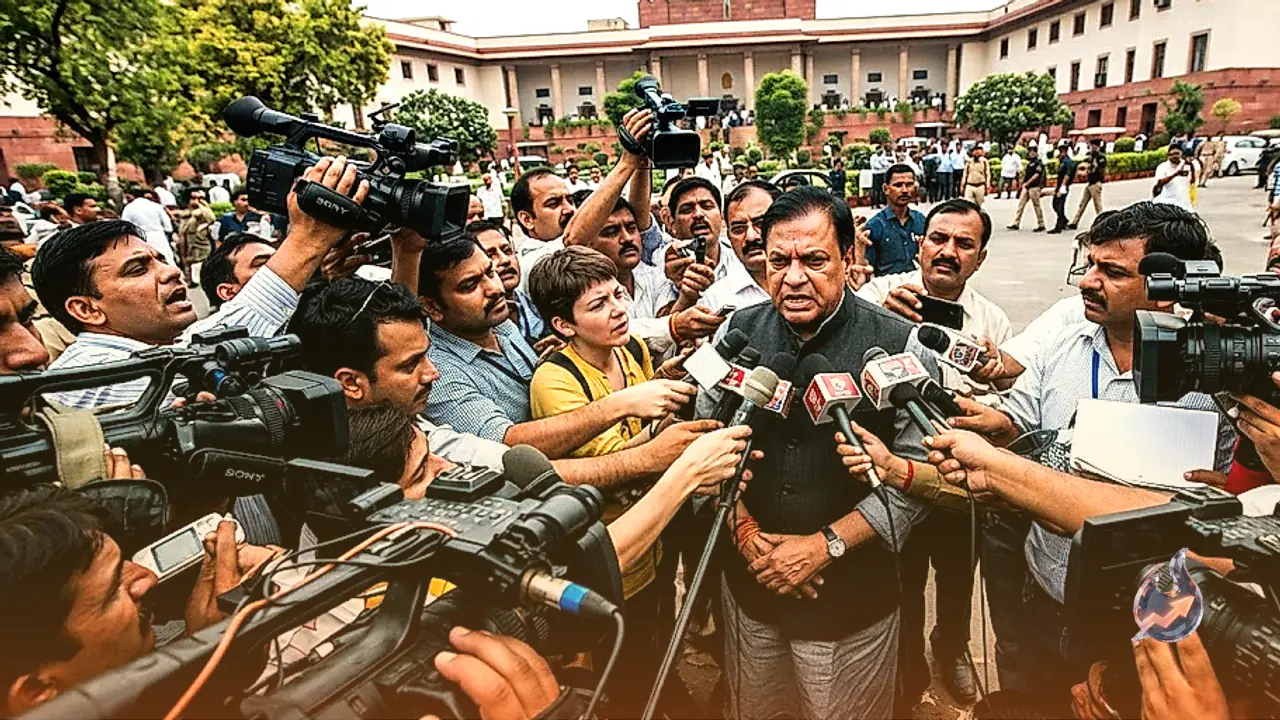
Addressing the media in New Delhi following a detailed session with top officials of the Election Commission of India, Leader of the Opposition Ritabrata Banerjee expressed firm confidence in his group’s standing as the legitimate Trinamool Congress. He revealed that his faction has submitted written declarations of support from over 60 elected members of the West Bengal Legislative Assembly. Grounding their petition on this demonstrated legislative majority, Banerjee asserted that all statutory requirements and documentary evidence requested by the commission had been thoroughly addressed. He noted in a message posted on X that the deliberations with election authorities were highly constructive, adding that any supplementary documentation required by the panel would be furnished promptly before the deadline.
Scrutiny Over Leadership Style and the 28-Year Institutional Legacy
Highlighting internal administrative grievances, Ritabrata Banerjee mounted a sharp critique against the operational methods of former Chief Minister Mamata Banerjee. He cited a popular adage in West Bengal political circles—that there was no ledger or accounting book, and whatever Mamata Banerjee declared was treated as absolute law. Banerjee contended that the party had long been directed by individual discretion rather than democratic norms. He emphasized that an organization established in 1998 must function in strict compliance with formal rules, democratic procedures, and documented governance. Conversely, representatives aligned with Mamata Banerjee operating from the Kalighat party headquarters maintain that as the founding leader of the party, her authority over the organizational structure remains supreme.
Strategic Moves Surrounding Upcoming Bypolls in Nandigram and Rejinagar
The tussle between the rival camps has assumed urgent importance due to upcoming Assembly by-elections in the constituencies of Nandigram and Rejinagar. The voting is scheduled for October 6, with the final date for filing nomination papers set for September 16. Analyzing Mamata Banerjee's past electoral performances, Ritabrata Banerjee remarked that the former chief minister traditionally sought entry into the assembly through by-elections rather than standard general elections. He pointed out that she suffered a loss in Nandigram during the 2021 Assembly elections before gaining a seat through a subsequent by-election, and experienced setbacks in the 2026 general elections where voters in her own Bhabanipur ward and neighborhood did not support her. In a calculated political gesture, Ritabrata Banerjee announced that while his faction has finalized its candidate for Nandigram, they would willingly withdraw their nominee if Mamata Banerjee decides to contest the seat as an independent candidate out of deference to her legislative standing.
1972 Sadiq Ali Precedent and the Risk of Temporary Symbol Freezing
The legal determination of party legitimacy and symbol ownership before the Election Commission is governed by established judicial principles. Under the benchmark precedents set by the Supreme Court of India in the landmark 1972 Sadiq Ali case, the commission evaluates the relative numerical strength of competing factions across both legislative representatives and organizational office-bearers. Should the commission prove unable to issue a final resolution prior to the September 16 nomination cutoff for the Nandigram by-election, the 'Jora Phool' (grass and flower) symbol could be temporarily frozen. In such an eventuality, election authorities would allocate new distinct interim party names and alternative electoral symbols to both contesting factions, leaving the upcoming electoral battle in Nandigram to serve as a pivotal test of political legitimacy.