






















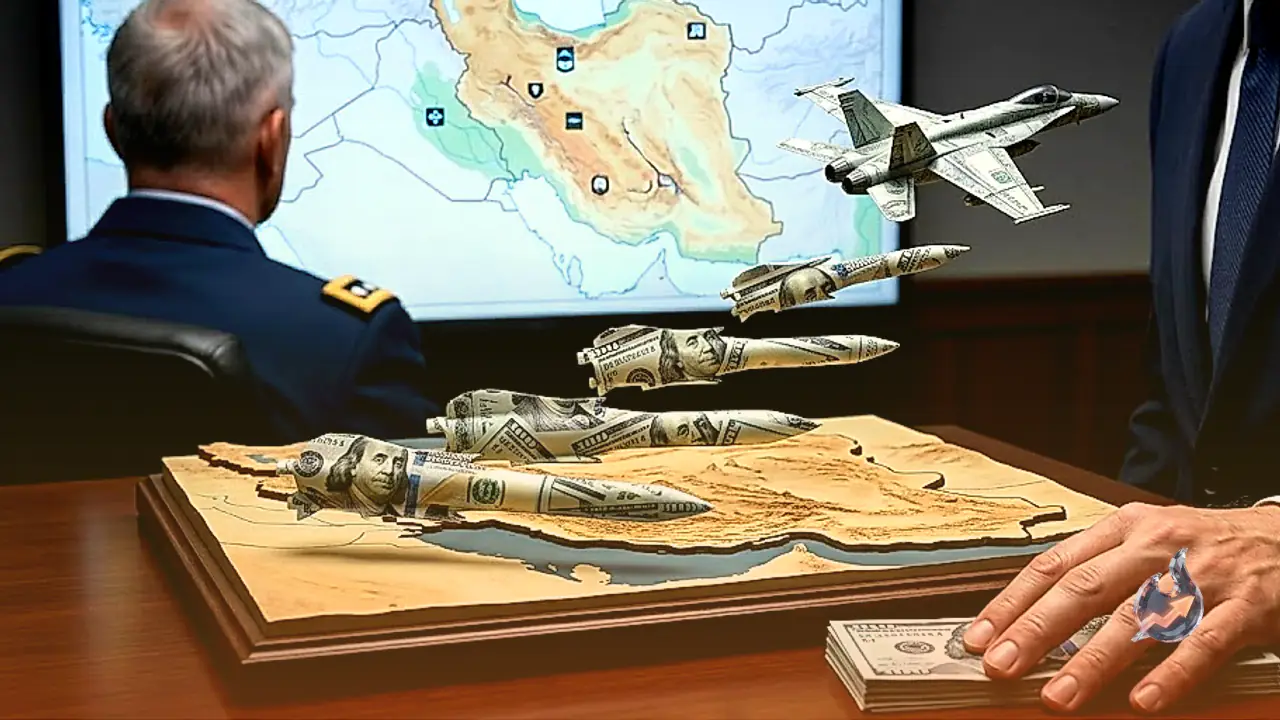

President Donald Trump reignited the conflict with Iran through several days of missile strikes, and the eventual military price tag is now shaping up to be enormous. According to officials directly familiar with the internal accounting, US intelligence officials estimate that the Pentagon's total cost for the war could climb past $100 billion.
By the end of May, those officials were tracking the running total of Operation Epic Fury somewhere between $50 billion and $100 billion. That range lines up with confidential estimates circulating in Congress, which put the bill up to that point at roughly $80 billion.
Why there is still no final number
The Trump administration has not released its own cost figures for the Iran war. In June the White House asked for $88 billion to cover a portion of the expenses, yet even that request understates the true total.
One reason a firm figure remains elusive is that the Pentagon has not yet decided whether to replace every aircraft that was destroyed or damaged beyond repair during the fighting. Defense officials have told lawmakers that if they choose not to replace certain aircraft, they will not seek funding for them, and those losses will simply never show up in the war's official cost. That means whatever bill eventually surfaces will still be incomplete.
Presented with a detailed breakdown of these findings, a War Department official offered only: "We have nothing further to announce at the moment."
Aircraft and drone losses are piling up
A May 20 report from the nonpartisan Congressional Research Service, built entirely from publicly available information, found that the US had lost at least 17 manned aircraft and 25 drones since the conflict began.
The same report showed drone losses climbing steadily, and drones are far from cheap to replace. One of the 25 drones brought down was an MQ-4C Triton, a high-altitude Navy surveillance aircraft that carries a price of more than $600 million per airframe. The loss of hardware that expensive can drive up the tab on its own.
Damaged bases could push the bill higher
Repairing US bases across the region will also be costly. Several took heavy damage after Iran answered American strikes with retaliatory missiles and one-way attack drones.
Behind closed doors, defense officials have told lawmakers that they have not yet accounted for those repair costs and may never do so, since the US could ultimately close some of the bases entirely if they prove too exposed to Iranian attacks.
Iran has managed to strike several important bases in the Middle East more than once, including the headquarters of the US Navy's Fifth Fleet at Naval Support Activity, Bahrain, a hit the Pentagon has not publicly acknowledged.
The only public figure so far
The lone official cost figure to come from a senior defense leader belongs to then acting Pentagon comptroller Jay Hurst, who told an oversight hearing in May that spending on the war had reached roughly $29 billion.
On Tuesday, appearing at his nomination hearing to take the comptroller job permanently, Hurst would not offer an updated number. He explained that the $29 billion mainly covered munitions along with expenses such as the fuel needed to keep two US aircraft carriers operating around the Middle East.
A new cyber effort called "Gold Eagle"
On that same Tuesday, the Trump administration stood up a clearinghouse designed to find and fix software vulnerabilities before hostile actors can exploit them using the most powerful AI models available.
The clearinghouse, named "Gold Eagle," will be operated by the Cybersecurity and Infrastructure Security Agency, which plans to use AI models that are not publicly available to hunt down those weaknesses.
Gold Eagle is the first significant step taken under Trump's June 2 executive order, which sets out to build a framework for overseeing the fast-rising danger posed by advanced AI systems.
The harder challenge ahead
The tougher assignment still lies in front of the administration. The same executive order directs officials to create a classified benchmarking process to measure what AI models can do before they are released, and to decide whether those models should face restrictions.
That step matters because, so far, the administration has policed the AI industry by pressing companies such as Anthropic to limit the abilities of their most powerful models, including one called Mythos, when offered to the public.
Industry experts believe that within the next six to 12 months China will close the gap in the AI race and begin publicly releasing models that are just as capable but answer to no one in the US government. How the administration plans to keep bad actors from using those models to break into sensitive systems remains an open question.