




















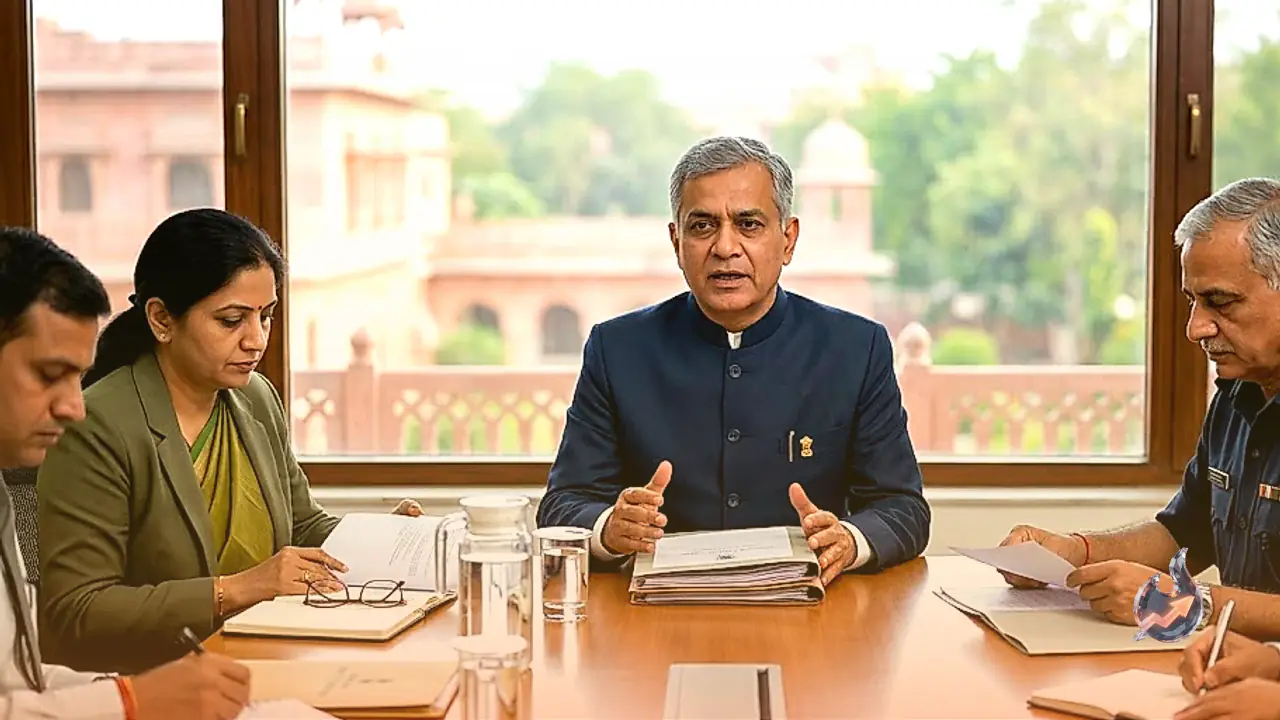

The state of Rajasthan is gearing up for massive local elections, covering both Panchayati Raj institutions and urban local bodies. To guarantee that the upcoming democratic exercise remains completely fair and transparent, a sweeping administrative reshuffle is on the horizon. The State Election Commission has stepped in with stringent directives to overhaul the bureaucracy before the voting begins. Officials who are currently posted in their home districts or home regions will be relocated, and a strict deadline of August 15, 2026, has been set to complete this massive exercise. State Election Commissioner Rajeshwar Singh has made it crystal clear that officers will not be allowed to serve in their home turfs, effectively neutralizing any local influence or bias that could taint the electoral process.
Excise and UIT Officials Included in Transfer Scope
Taking a historic departure from standard procedures, the electoral body has expanded the scope of these mandatory transfers. Usually, only police and revenue officials face such scrutiny ahead of elections. However, this time, personnel from the Excise Department, Urban Improvement Trusts, and various development authorities have been brought under the scanner. The commission recognizes that these specific departments hold significant sway over the public. Since they handle crucial matters like liquor regulation and land development, the risk of them being used to woo or intimidate voters is considerably high. Removing these officials from their home districts ensures a level playing field for all political candidates and prevents the misuse of official machinery.
Top District Bureaucrats to Vacate Home Turfs
The transfer mandate will heavily affect the topmost tiers of district administration. A long list of senior bureaucrats and police officers will have to pack their bags if they are stationed in their home districts. This includes prominent positions such as Divisional Commissioners, District Collectors, and District Election Officers. The police department will see the relocation of Superintendents of Police, Additional Superintendents of Police, Deputy Superintendents of Police, Police Commissioners, Additional Police Commissioners, and Deputy Commissioners. Administrative and revenue officers like ADMs, SDMs, Assistant Collectors, Tehsildars, and District Excise Officers are also explicitly barred from operating in their home territories. This top-down approach guarantees that the ultimate decision-makers at the district level remain completely impartial.
Grassroots Officials Face Stricter Scrutiny
The administrative scrutiny extends deep into the grassroots level, affecting officials who interact with the general public on a daily basis. Those serving in their home municipal areas or home panchayat committee regions will be transferred immediately. This sweeps up Commissioners and Deputy Commissioners of Municipal Corporations, Municipal Councils, and Municipalities. Executive Officers, senior officials of UITs and development authorities, Block Development Officers, and Station House Officers will also be moved to new locations. The exhaustive list further includes Excise Inspectors, Naib Tehsildars, and Police Sub-Inspectors. Because these officers act as the immediate face of the government at the local level, maintaining their neutrality is absolutely essential for a free and fair election.
Mandatory Relocation for Three-Year Tenures
Beyond the home district rule, the duration of an officer's tenure is also under the microscope. The State Election Commission has established November 30, 2026, as the cutoff date to calculate tenures. Any official who has completed three or more years of service in a single district, municipal body, or panchayat committee area over the last four years will face a mandatory transfer. Long, uninterrupted tenures often lead to entrenched relationships between bureaucrats and local politicians, which can easily compromise the integrity of the elections. This specific three-year rule is carefully designed to break any such cozy equations and bring in fresh perspectives.
Zero Tolerance for Past Offenders
The commission is also taking a very hard line against officers with a tainted past. Any official or staff member who has previously faced disciplinary action or instructions from the Election Commission of India or the State Election Commission for negligence, rigging, or indiscipline during past elections will be kept completely away from election duties. This zero-tolerance policy ensures that the upcoming polls are managed only by officers with clean track records, leaving no room for administrative manipulation.
All relevant government departments have been instructed to finalize these widespread transfers by the August 15, 2026, deadline. Once the official notification for the panchayat and municipal elections is publicly released, an absolute freeze on transfers will take effect. From that moment onward, no officer or employee connected to the election process can be moved without the prior explicit permission of the Election Commission. This final measure is intended to maintain complete administrative stability and prevent any political controversies while the state goes to the polls.