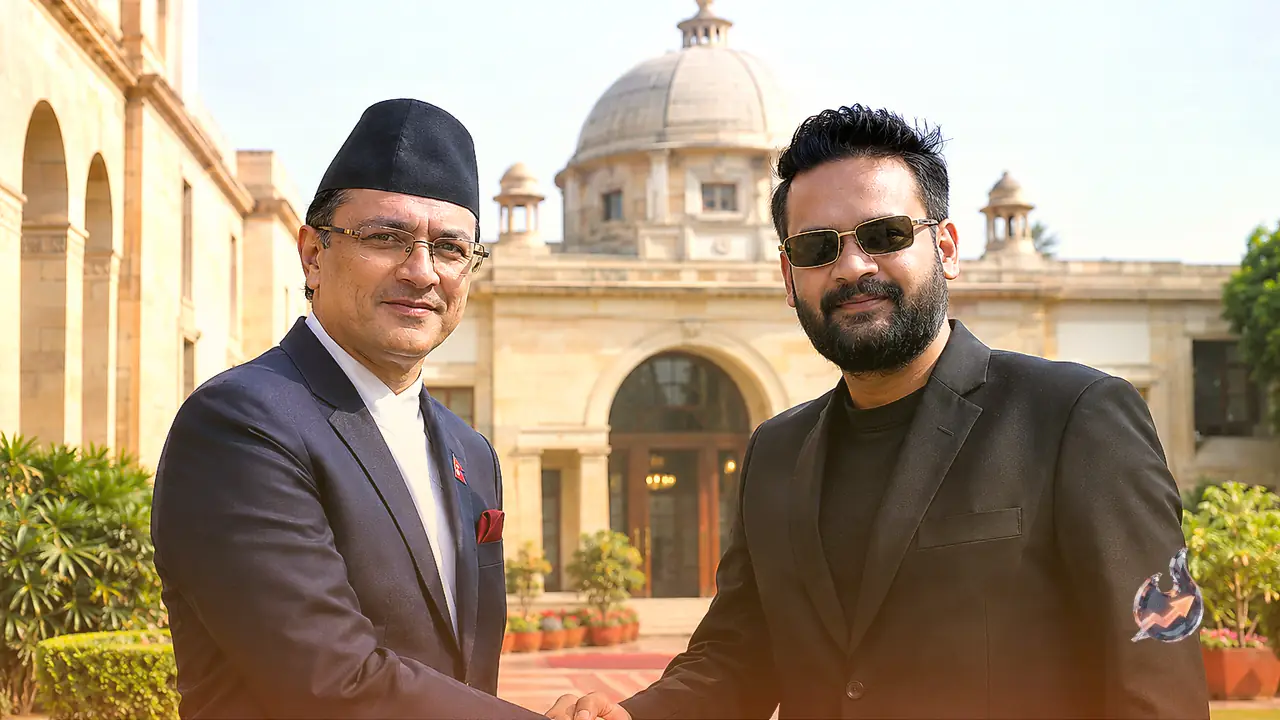

The two-day official visit of Nepal Prime Minister Balen Shah to India has proven to be a defining moment for the longstanding diplomatic and bilateral relations between the two neighbouring nations. Nepalese Foreign Minister Shishir Khanal addressed a press conference on Monday and officially hailed the high-profile visit as a monumental milestone in bilateral ties. He emphasised that this crucial diplomatic journey has injected fresh momentum into the centuries-old relationship, successfully guiding India-Nepal ties back onto a positive and constructive path after a prolonged period of stagnation. It is worth noting that Balen Shah undertook an official state visit to India on November 22 and 23, wrapping up his engagements and returning to Kathmandu on Monday evening.
First Bilateral Visit by Head of New Nepalese Government
Addressing mediapersons in Kathmandu, Foreign Minister Shishir Khanal revealed that Balen Shah travelled to India following a formal invitation extended by Prime Minister Narendra Modi. This marked the very first bilateral visit to India by any head of the newly formed government in Nepal, which came into power following recent political transitions and general elections. Khanal stated that the primary objective of this high-level tour was to comprehensively strengthen the multi-dimensional ties uniting the two countries and ensure that ordinary citizens reap direct, tangible benefits from this partnership. During his stay in New Delhi, Prime Balen Shah formally invited Prime Minister Narendra Modi to visit Nepal at his earliest convenience. Foreign Secretary Vikram Misri elaborated that the Nepalese premier urged PM Modi to choose dates suiting his schedule, adding that the final itinerary for the Indian Prime Minister's visit will be finalized smoothly through established diplomatic channels between both nations.
Unveiling of the 'Developed India, Prosperous Nepal' Vision Document
On November 23, a high-level delegation-level discussion took place between Prime Minister Narendra Modi and Balen Shah at the iconic Hyderabad House in New Delhi. The extensive talks encompassed a wide array of vital subjects, including cross-border connectivity, energy partnership, bilateral trade, robust economic cooperation, people-to-people exchanges, and sports collaboration. Both leaders also exchanged comprehensive perspectives regarding pressing regional and international issues of mutual concern. Following this productive meeting, the two nations jointly unveiled a strategic vision document titled 'Developed India, Prosperous Nepal'. The core purpose of this visionary document is to transform the existing partnership between India and Nepal into a result-oriented alliance. According to Foreign Minister Khanal, this vital framework was meticulously crafted keeping in mind the earnest aspirations and expectations of the citizens of both countries, with a special focus on the younger generation.
Broad Agreement to Expand Cooperation Across Novel Sectors
Under the broad umbrella of this newly minted vision document, both nations have placed immense emphasis on cementing economic and development partnerships, expanding road networks and digital connectivity, boosting energy cooperation, and deepening interpersonal contact. Furthermore, consensus was successfully reached to enhance collaboration across an array of new domains, including combatting climate change, disaster management, sports promotion, agricultural development, educational exchanges, modern healthcare, startup ecosystems, digital public services, space technology, innovation, cultural preservation, and tourism. The two governments also laid down a concrete framework to comprehensively review legacy pacts and treaties, including the historic 1950 Treaty of Peace and Friendship. The underlying objective is to unlock fresh avenues of cooperation and propel bilateral relations forward in alignment with contemporary demands.
Nepal Granted Access to Two Additional Indian Ports
For a considerable duration, Nepal has persistently sought enhanced facilities regarding international trade and the unhindered movement of commercial cargo. During this landmark visit, both administrations reached mutual consensus on simplifying trading procedures, improving transit mechanisms, and scaling up cross-border connectivity. In a significant breakthrough, India agreed to grant Nepal access to two additional ports for its transit trade requirements. These newly included facilities comprise the Deendayal Port located at Kandla in Gujarat and the prominent Paradip Port situated in Odisha. Previously, Nepal relied almost exclusively on the ports of Kolkata and Visakhapatnam for its maritime trade operations. Foreign Minister Khanal hailed this development as a monumental achievement, noting that it will significantly stimulate Nepal's international commerce and open up lucrative new horizons for Nepalese traders.
Janakpur-Ayodhya Passenger Train Flagged Off to Boost Religious Tourism
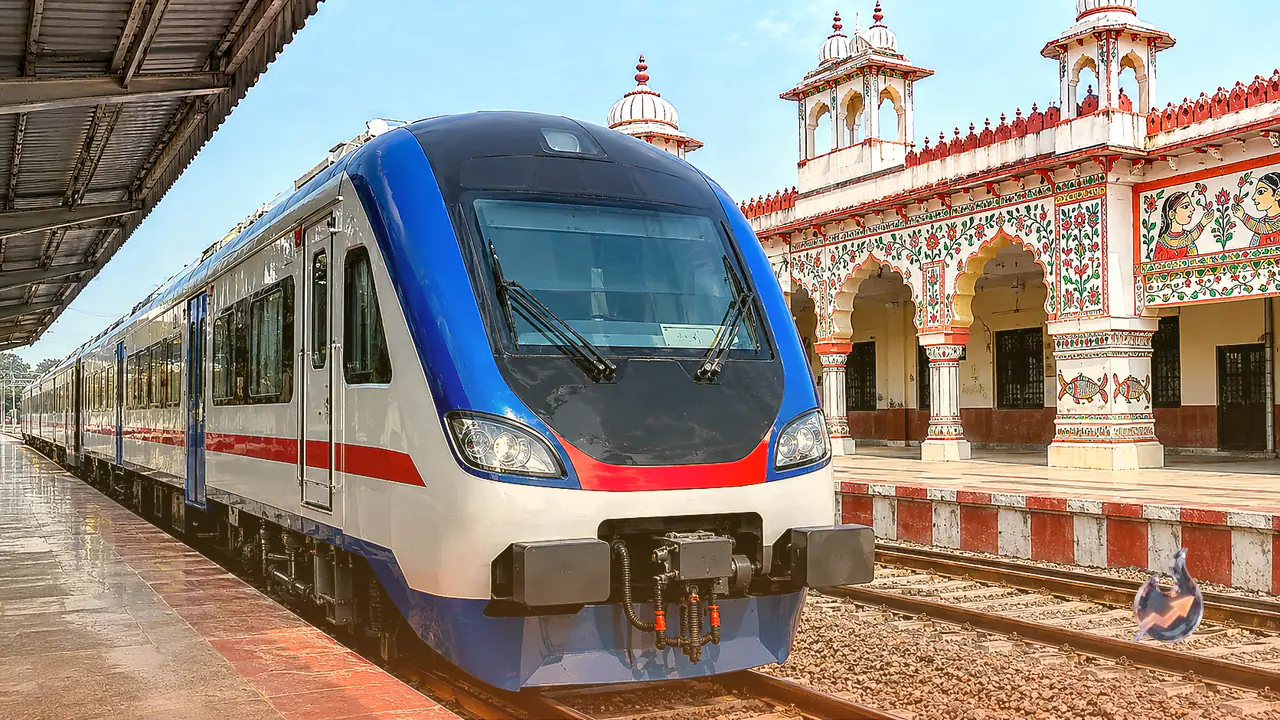
To further reinforce deep-rooted religious, spiritual, and tourism ties connecting the two nations, a direct passenger train service operating between Janakpur and Ayodhya was jointly inaugurated by the leaders. Foreign Minister Khanal underscored that this rail link will substantially solidify the social and religious fabric shared by both populations while simultaneously giving a powerful impetus to tourism and grassroots connectivity. In order to streamline aviation links, mutual agreement was also secured to convert the existing unidirectional B345 air route connecting Kathmandu, Bhairahawa, and Lucknow into a bidirectional corridor. This modification is anticipated to make cross-border air travel remarkably seamless for commuters.
India Announces Massive Financial Assistance Package of Rs 15,000 Crore for Nepal
The Nepalese Foreign Minister shared vital details revealing that the Indian government has made a firm commitment to extend a massive financial assistance package amounting to Rs 15,000 crore dedicated to the reconstruction and comprehensive development of Nepal. This substantial financial allocation equates to roughly 240 billion Nepalese rupees. Khanal described this commitment as the largest financial aid package ever extended by India to Nepal to date. Out of this total amount, Rs 3,500 crore, translating to approximately 56 billion Nepalese rupees, will be disbursed entirely in the form of direct grants. This grant funding will be channelled towards post-disaster reconstruction efforts and the creation of modern public infrastructure. Meanwhile, the remaining sum of Rs 11,500 crore, equivalent to about 184 billion Nepalese rupees, will be extended as a concessional credit facility specifically designated for major energy sector projects.
New Motorable Bridge and Integrated Check Post Established at Border
During the course of the visit, the two Prime Ministers jointly inaugurated a newly constructed motor vehicle bridge connecting Darchula in India with Darchula in Nepal. Additionally, the foundation stone was officially laid for a modern Integrated Check Post (ICP) to be developed at Banbasa. These vital infrastructural additions will greatly facilitate cross-border movement and optimize bilateral trade flows. Discussions were also held regarding pending legacy boundary disputes. According to Foreign Minister Khanal, following positive progress achieved in joint inspections and the ongoing maintenance of boundary pillars along the India-Nepal border, both leaders instructed their respective Foreign Secretaries to expedite the resolution of all remaining matters through diplomatic dialogue.
Major Energy and Power Infrastructure Projects Given Green Light
India and Nepal agreed to advance their robust energy cooperation by laying down several new power transmission lines. The newly planned infrastructure includes transmission links connecting Inruwa in Nepal to New Purnia in India, as well as Dodhara in Nepal to Bareilly in India. These transmission networks are slated for construction under a joint venture framework. Both leaders also ceremoniously laid the foundation stone for the Lower Arun Hydroelectric Project. Furthermore, the second phase of the Motihari-Amlekhgunj petroleum pipeline, successfully constructed with Indian assistance, was officially operationalized. The foundation stone for the Jhapa-Siliguri petroleum pipeline was likewise laid during the visit. The Foreign Minister confirmed that necessary directives were issued to finalize the detailed project report (DPR) for the long-delayed Pancheshwar Multipurpose Project.
Offshore Campus of Indian Institute of Technology to Open in Nepal
In a historic stride within the educational domain, India and Nepal resolved to establish an offshore campus of the prestigious Indian Institute of Technology (IIT) on Nepalese soil. Foreign Minister Khanal stressed that this initiative will greatly foster higher education, advanced research capabilities, and cutting-edge technology adoption within Nepal. This landmark academic venture aims to cultivate highly skilled professionals and generate exceptional opportunities for Nepalese students. Both administrations share a firm conviction that forging closer cooperation in education and technological innovation will provide an enduring foundation for future bilateral relations.
Eight Agreements Signed to Institutionalize Bilateral Cooperation
During the official visit, India and Nepal formally signed a total of eight distinct Memorandums of Understanding (MoUs) covering diverse sectors. The encompassed areas include forensic science, police training, administrative capacity building, traditional systems of medicine, satellite communication technology, sustainable urban development, public health services, livestock management, and fisheries. Foreign Minister Khanal pointed out that these structural agreements will establish a robust institutional framework designed to deepen cooperation across multiple domains, thereby providing renewed vigour to ongoing bilateral initiatives.
Balen Shah Recalls Civilisational Ties Linked to Lord Rama and Mata Janki
Following high-level deliberations with Prime Minister Narendra Modi, Nepalese Prime Minister Balen Shah fondly invoked the ancient and unbreakable civilisational bonds uniting the two nations. He stated that the relationship connecting India and Nepal dates back historically to the era of Lord Rama and Mata Janki. He also highlighted the newly established railway connectivity as a testimony to growing ties. In his official statement, Balen Shah remarked, "With the sacred blessings of Lord Pashupatinath, Mata Janki, and the compassionate Matsyendranath, I bring along the immense affection, warmth, and profound goodwill of the people of Nepal towards India and its citizens. I express my heartfelt gratitude to Prime Minister Narendra Modi for this warm invitation and exceptional hospitality."
Joint Press Statement Issued After Long Hiatus, Setting Future Course
Concluding his press briefing, Foreign Minister Shishir Khanal highlighted that India and Nepal released a comprehensive joint press statement encapsulating the discussions and agreements finalized during this high-level visit. He noted that such a detailed joint communiqué has not been issued during prime ministerial visits between the two countries for a remarkably long period, marking it as a notable achievement of the tour. Overall, Balen Shah's India tour successfully forged widespread consensus across crucial pillars including trade, energy, education, transport connectivity, border management, and financial assistance. The government in Nepal views this visit as a fresh and promising chapter in bilateral affairs, with the ultimate success depending on the effective ground-level execution of these landmark announcements.