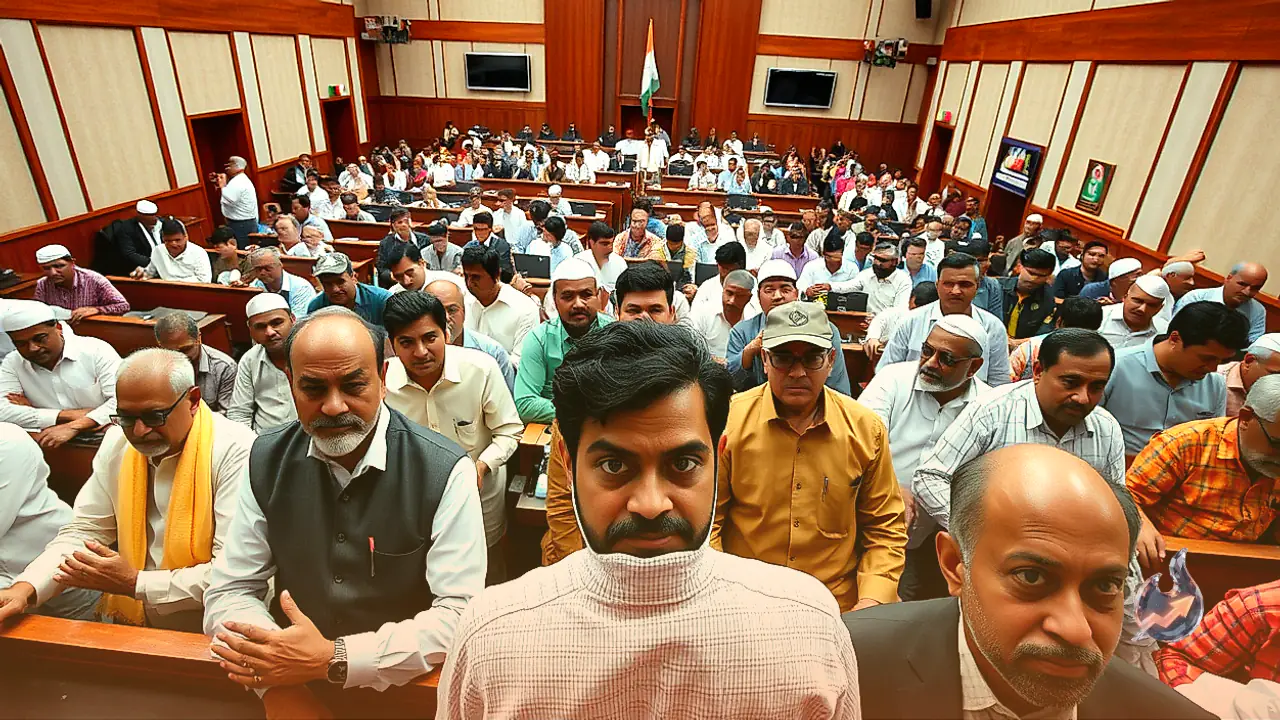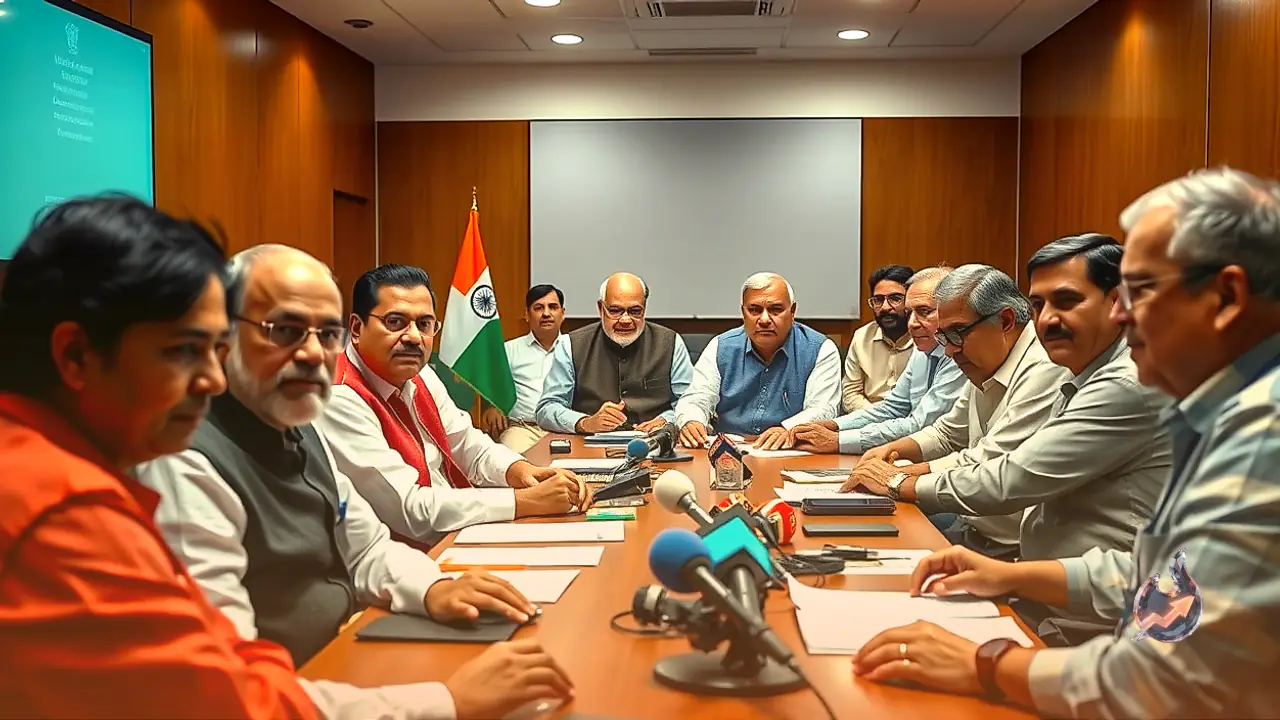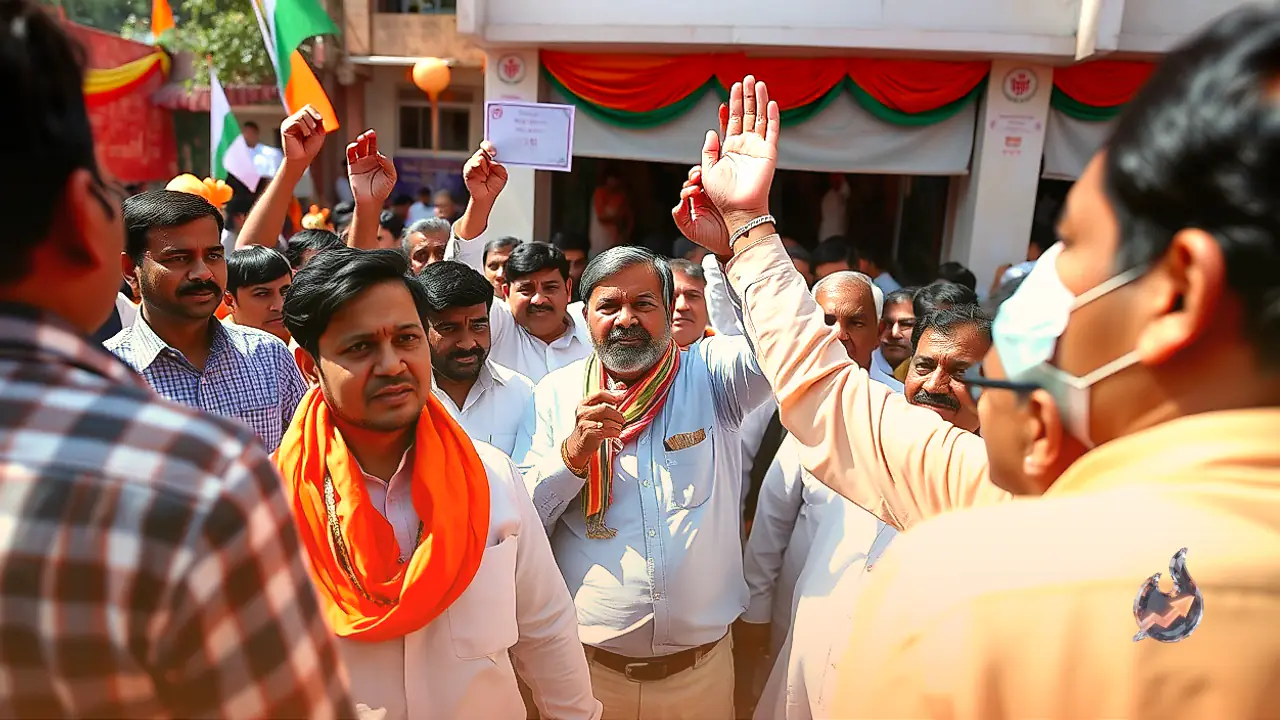















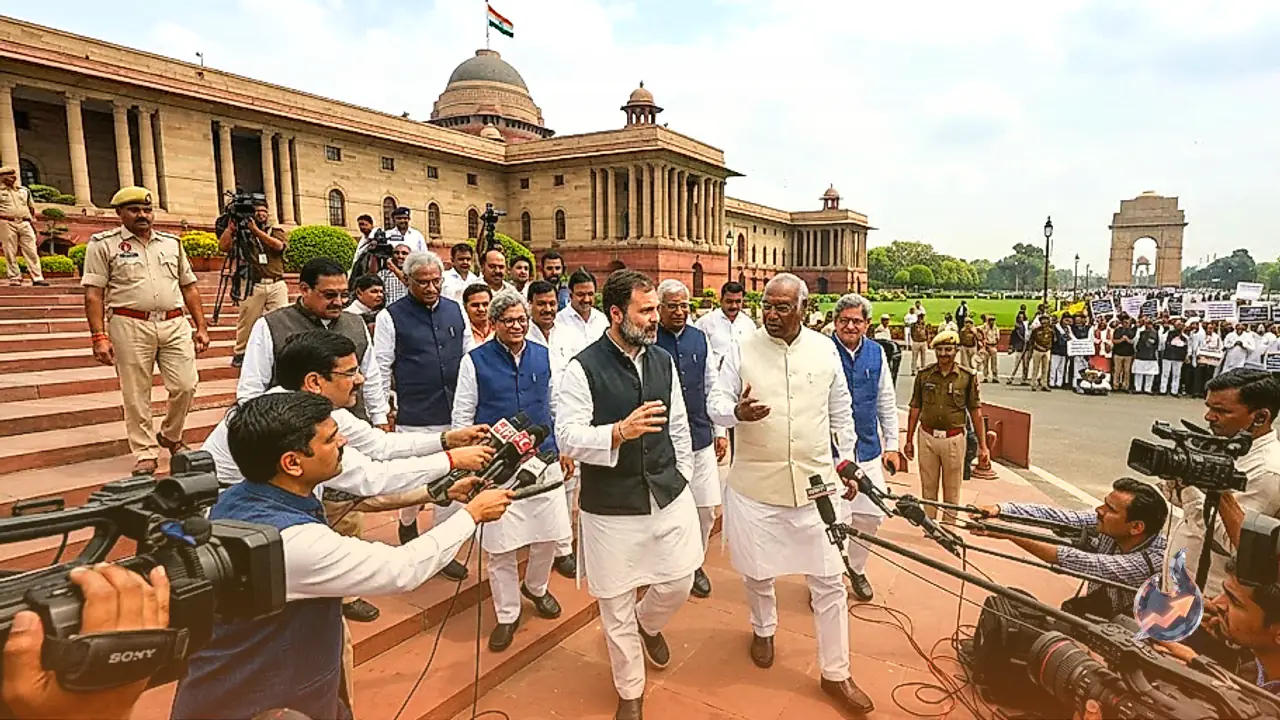

A high-profile delegation of opposition leaders, headed by the Leader of Opposition in the Lok Sabha Rahul Gandhi, marched to Rashtrapati Bhavan on Friday to meet President Droupadi Murmu. While the core team walked out from the Parliament Central Hall for the scheduled meeting, numerous opposition parliamentarians gathered right outside at Vijay Chowk to stage an organized sit-in protest. The central agenda driving the demonstration was the demand for the removal of Chief Election Commissioner (CEC) Gyanesh Kumar.
Ten Leaders Inside Rashtrapati Bhavan as Colleagues Gather at Vijay Chowk
The delegation permitted to present their memorandum to President Droupadi Murmu featured prominent leaders from across the INDIA alliance. Alongside Rahul Gandhi, the group included Congress President Mallikarjun Kharge, Supriya Sule, West Bengal Chief Minister Mamata Banerjee, Rajiv Rai, Manoj Jha, MA Baby, D. Raja, and Omar Abdullah. While these ten representatives entered the presidential residence to present their case, the remaining parliamentarians maintained a sit-in demonstration at Vijay Chowk to keep public attention focused on their demands.
Criticizing the administration during the protest, Mallikarjun Kharge stated that the central government appears anxious and reluctant to address genuine parliamentary concerns. Kharge pointed out that the authorities have taken no corrective steps regarding Gyanesh Kumar, emphasizing that Kumar ought to step down from the post of Chief Election Commissioner.
Calls for Paper Ballots and Defense of Democratic Norms
The agitation also brought forward broader issues surrounding national electoral transparency. Karnataka Deputy Chief Minister DK Shivakumar stated that the opposition seeks a return to ballot paper voting alongside the immediate removal of CEC Gyanesh Kumar from his constitutional position.
Congress MP Gaurav Gogoi expressed solidarity with citizens and political representatives engaged in the demonstrations across the capital. Gogoi stated that all patriots are actively working to preserve and strengthen democratic institutions in India, regardless of whether they belong to a formal political outfit or stand independently. He praised the individuals who took to the public streets to make their voices heard.
Limited Entry Permissions and Public Transit Curbs Questioned
Explaining why lawmakers decided to hold the outdoor march toward Vijay Chowk, Congress MP Rajiv Shukla noted that the entire body of MPs was not granted an audience with the President. Because only ten representatives from the alliance received meeting slots, the other parliamentarians opted to organize the protest march just outside Parliament.
Shukla also highlighted the widespread civic disruptions caused by extensive police barricades and security measures across New Delhi. He pointed out that ordinary commuters faced severe travel distress, noting that even the Supreme Court had to inquire why comprehensive restrictions were enforced across urban transport networks, including the suspension of metro routes, trains, buses, and border entry points into the capital city.