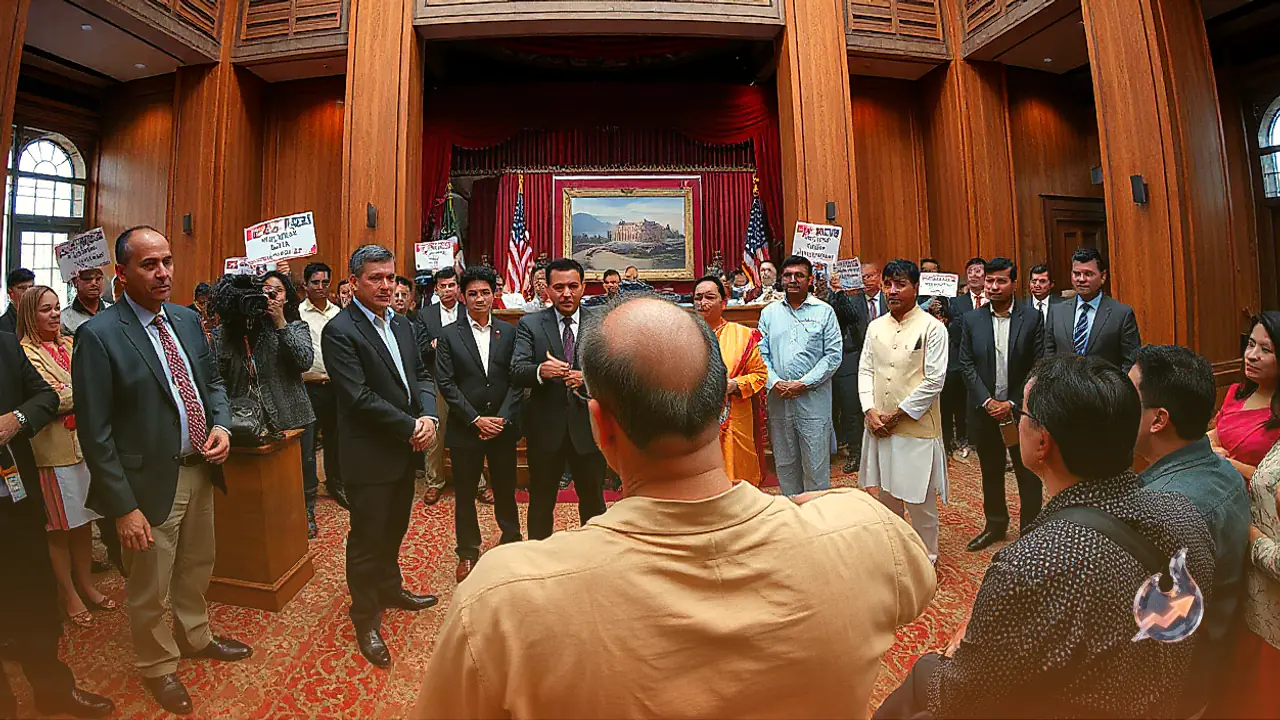















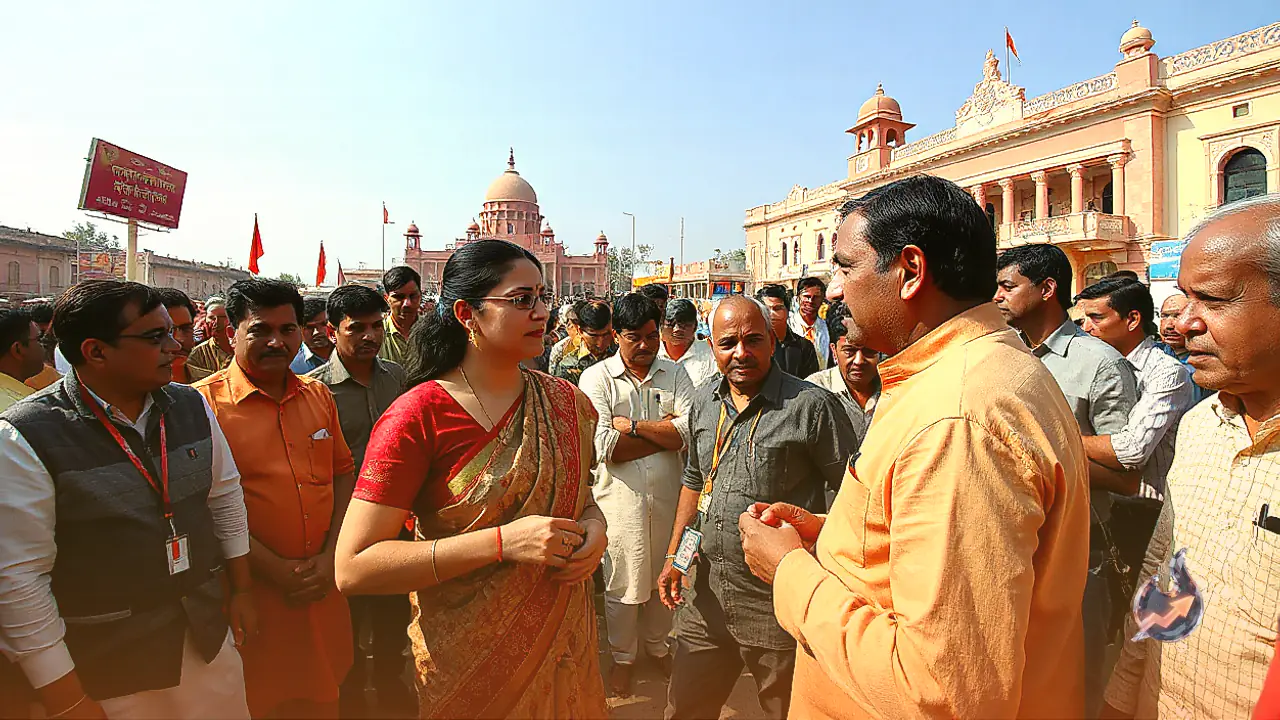

Memories of the Babri Masjid demolition have resurfaced at the center of the nation's political discourse. The trigger this time is an interview given by senior Congress leader Sonia Gandhi. In an interview with the British newspaper The Guardian, Sonia Gandhi revealed that she watched the demolition of the Babri Masjid on television on December 6, 1992. Seeing that fateful sight made her weep. Sonia noted that she realized right at that moment that a long struggle lay ahead to safeguard the secular India envisioned by Mahatma Gandhi and Jawaharlal Nehru. Her remarks have ignited a fresh political debate. Ahead of the upcoming Uttar Pradesh assembly elections, the BJP has seized a brand new opportunity to corner the Congress. BJP leader Pradeep Bhandari launched a sharp and direct attack on Sonia Gandhi and the Gandhi family over her comments.
Acknowledging past political missteps of the Congress
In her interview, Sonia Gandhi did not limit herself to sharing her reaction to the Babri Masjid demolition alone; she also openly acknowledged the political missteps of the Congress. She admitted that certain shortcomings and laxity within her party played a role in the rise of the BJP and its Hindutva politics. According to Sonia, the Congress remained overly complacent on numerous matters and maintained a casual attitude. Following her remarks, the BJP tied these admissions directly to the political mindset and historical stance of the Congress. Pradeep Bhandari took to social media to accuse Sonia Gandhi of indulging in vote bank politics, while also referencing Batla House. This exchange of words has once again thrust the old political controversies surrounding the Babri Masjid and Ayodhya back into the limelight.
Assessing the broader opposition dynamics
The interview also touched upon broader questions regarding the role of opposition figures and the evolving political landscape. As parties prepare for crucial regional electoral battles, statements from veteran leaders continue to shape campaign narratives. While opposition groups work to consolidate their alliance frameworks, ruling party critics use historical reflections to question ideological foundations. The ongoing debate highlights how deeply emotional historical touchstones continue to influence contemporary political messaging and voter mobilization efforts across different states.
Sonia Gandhi recalls watching the mosque fall
Sharing her immediate reaction during the interview with The Guardian, Sonia Gandhi recounted the day the Babri Masjid was brought down. She stated that watching the structure crumble on television brought her to tears. Sonia explained that she understood immediately that a protracted battle would be necessary to protect the concept of a secular nation. She credited leaders like Mahatma Gandhi and Jawaharlal Nehru, alongside others who fought for the creation of such a nation, for laying those foundational ideals.
Admitting party vulnerabilities and complacency
Sonia Gandhi also addressed the role of the Congress in the rise of the BJP during the interview. She conceded that specific failures within her party provided an opening for the BJP and its hardline Hindutva politics to advance. She stated that in many ways the party was overly complacent, adopting a relaxed attitude that assumed things would simply continue to run on their own accord without active intervention.
Pradeep Bhandari brings up the Batla House encounter
BJP leader Pradeep Bhandari reacted sharply to Sonia Gandhi's remarks on the social media platform X. He wrote that Sonia Gandhi wept for Babri, wept for Batla House, and would do anything for vote banks, adding that the Congress harbors a deep aversion toward Hindus.
Criticism extends to historical events and the Gandhi family
Continuing his attack on the Gandhi family, Bhandari also brought up the Emergency and the 1984 anti-Sikh riots. He alleged that through her statements, Sonia Gandhi was attempting to cast Indira Gandhi in the role of a victim. He also referenced a statement by Rajiv Gandhi that is frequently cited in the context of the 1984 riots, asserting that the nation will never forgive the Gandhi-Vadra family.
Reflecting on her reluctant entry into politics
Sonia Gandhi also discussed her personal political journey and the decision to assume the role of Congress president during the interview. She mentioned harboring an inherent distrust of politics throughout her life, describing the field as one driven by ambition, greed, and hypocrisy. According to Sonia, the Congress was navigating a difficult period in 1998, and she ultimately decided to take over the presidency following intense persuasion by party leaders, describing the move as a duty-bound decision dedicated to her late husband, Rajiv Gandhi.
Refusal of the prime ministerial post in 2004
Sonia Gandhi further disclosed that despite the Congress emerging as the largest party in the 2004 Lok Sabha elections, she chose to decline the position of prime minister. She stated that she was completely clear in her mind that she would not take the top post because it simply did not align with her personal disposition and character.