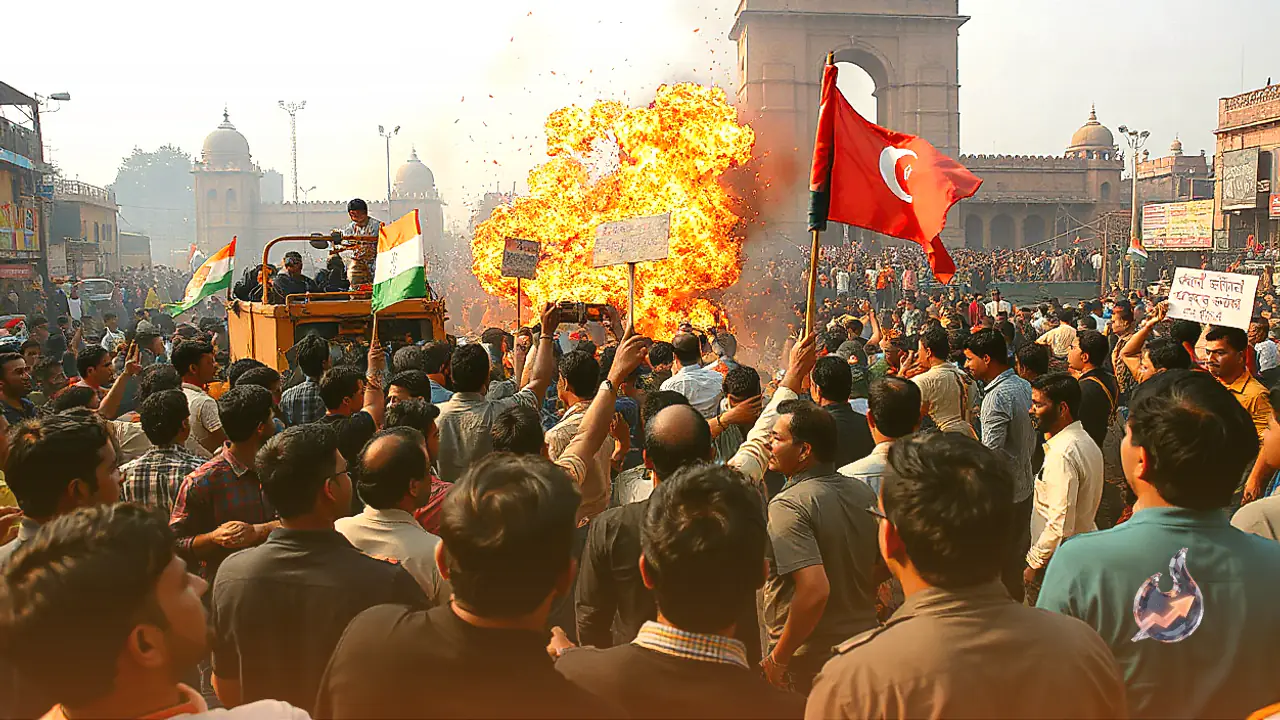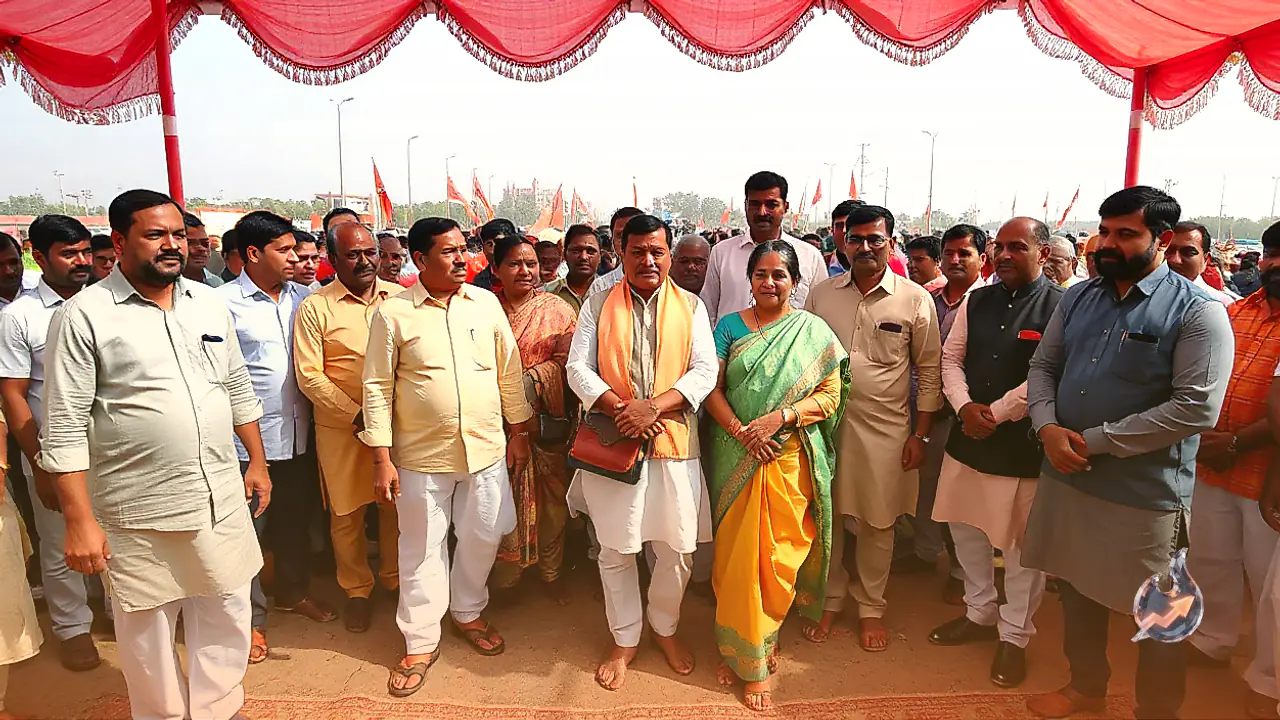





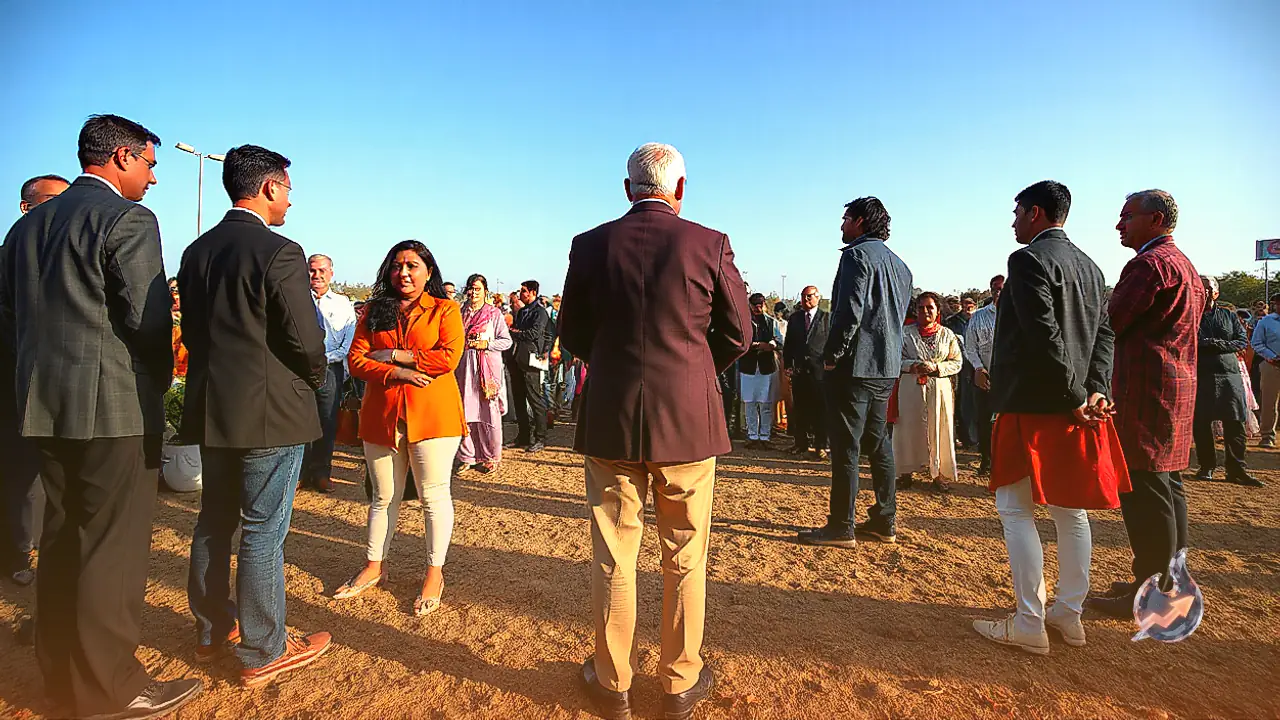















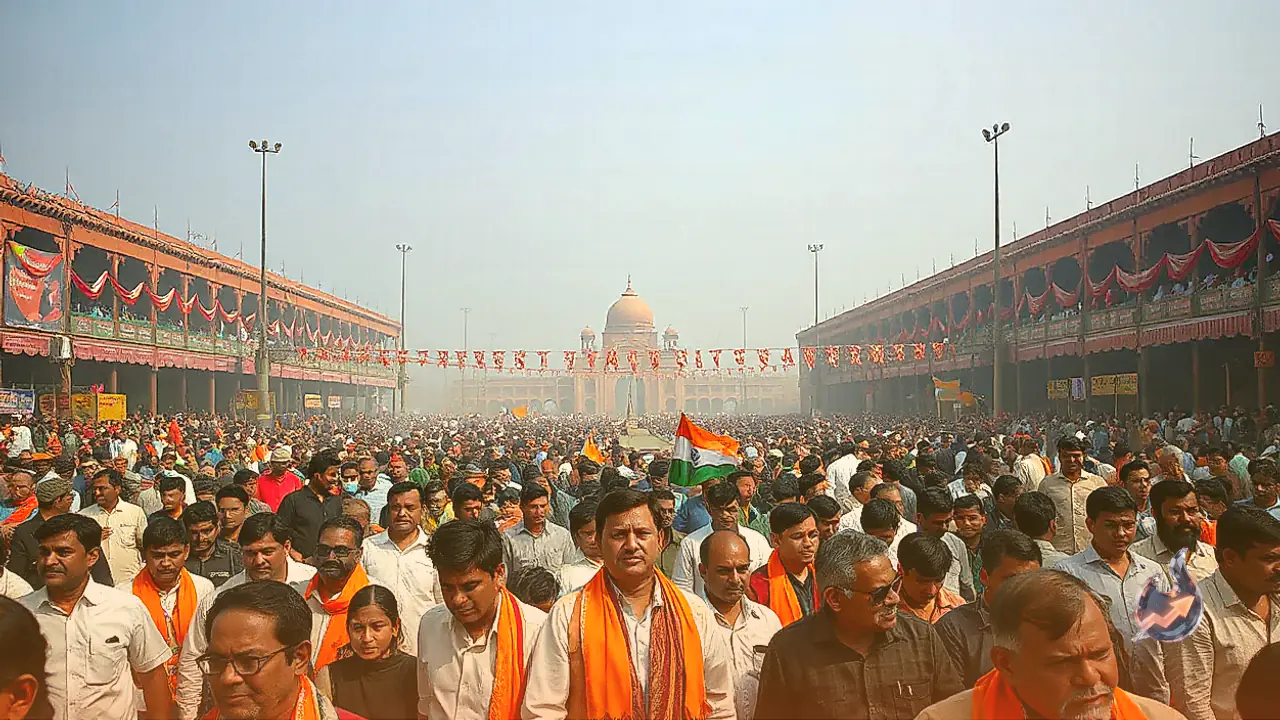

The dynamics of contemporary Indian electoral politics are increasingly being shaped by corporate-style consultants rather than rigid ideological convictions. This structural evolution was laid bare once again during the opposition gathering held at Delhi's historic Ramlila Maidan on November 1. Convened following an appeal by Congress leader Rahul, the rally saw INDIA bloc constituents rally around the demand for the Chief Election Commissioner's resignation. Yet, beneath this apparent unity, the distinct positioning of key players drew intense scrutiny across the political spectrum. Most notably, the fledgling Cockroach Janta Party (CJP) chose to extend its support without physically sharing the stage, while the Aam Aadmi Party (AAP) completely stayed away from the proceedings. The deliberate absence of both organizations from the main dais has triggered intense speculation over whether their calculated distance stems from pure consulting detachment or points toward an intricate, long-term strategic game.
The Dual Narratives Surrounding Cockroach Janta Party
From the moment the Cockroach Janta Party surfaced on the political scene, two sharply contrasting narratives dominated corridor discussions. One vocal faction argued that the Bharatiya Janata Party (BJP) was the true ideological architect and parent behind the party's formation. Conversely, a parallel line of reasoning claimed that the organization was nothing more than a modified, expanded iteration of the Aam Aadmi Party. Proponents on both sides marshaled extensive arguments to validate their viewpoints. Leaders opposed to the BJP harbored serious doubts that the ruling party possessed the organizational imagination required to pull off such an unconventional experiment. On the flip side, those pointing out that key CJP figures including Abhijeet Dipke, Saurav Das, and Ashutosh Ranka had previously worked on Arvind Kejriwal's payroll maintained that they could never be aligned with the BJP. That counter-argument seemed nearly impossible to refute at the time, though the underlying political reality is now progressively unraveling between these two competing theories.
Consultants for Hire and the Precedent of Party-Hopping
The transition of election consultants across rival political formations is neither novel nor unexpected in modern campaign management. The foundational truth remains that professionals who took up bases abroad while pursuing employment opportunities previously worked for Arvind Kejriwal's political machinery. Self-styled champions of Gen Z, these three figures executed political consulting assignments primarily for monetary compensation. A prominent pioneer of this mercenary model in Indian elections is Jan Suraaj Party (JSP) founder Prashant Kishor. He has openly claimed responsibility for orchestrating the comprehensive campaign blueprint that propelled the BJP to a sweeping electoral victory in 2014. Furthermore, he crafted the winning strategy that secured Mamata Banerjee her third consecutive tenure in West Bengal in 2021, and earlier designed the overarching electoral plan that formed the JD(U)-led Mahagathbandhan government in Bihar in 2015. Although he executed advisory roles for numerous other outfits, including the Congress in Uttar Pradesh, those assignments did not produce identical electoral dividends.
The Zenith of Advisory Clout and the Subsequent Bihar Fallout
A political strategist's influence can occasionally challenge core party hierarchies, as demonstrated during Prashant Kishor's tenure in Bihar governance. Acknowledging his sharp strategic intellect, then Chief Minister Nitish Kumar rapidly appointed him as JD(U) general secretary and conferred upon him the protocol and stature of a cabinet minister. Insiders and observers went so far as to assert that the Chief Minister rarely took significant policy or organizational steps without his personal counsel. Operating with the direct ear and backing of the state's top executive naturally afforded him extraordinary leverage over traditional party workers. Nevertheless, political craftiness could not permanently shield him from administrative friction, and he ultimately fell out of favor with Nitish Kumar. Their relationship deteriorated so thoroughly that from 2022 onwards, Kishor embarked on extensive rural tours across Bihar, predicting the political eclipse of his former mentor and routinely referring to him in blunt terms as mentally unwell or insane.
Commercial Realities and the Shifting Ethics of Modern Politics
Even after launching his independent political venture, Prashant Kishor continued seeking consulting assignments across various states, including Maharashtra and Punjab. Such professional mobility is entirely ordinary in modern consulting practice. He has publicly acknowledged that election advisory contracts constitute his primary source of livelihood, noting that he channels substantial portions of these corporate earnings directly into funding his own political outfit. This transactional mindset reflects broader generational traits often associated with Gen Z careerism, where established doctrines, legacy party loyalties, and traditional ethics take a back seat to professional viability and monetary returns. A pragmatic willingness to alter courses depending on remuneration has become standard operational procedure for campaign architects who treat political consulting as a specialized service industry.
Three Decades of Telecom Growth and Evolving Social Trends
This rapid shift in professional ethics mirrors the dramatic transformations witnessed across consumer technology sectors over the past three decades. When mobile calling services first launched across India in 1995, personal wireless devices were an exclusive luxury accessible only to an elite few. The vast majority of households relied on scarce landline telephone connections, and mobile ownership carried an aura of aristocratic privilege. That landscape has undergone an extraordinary overhaul. According to regulatory data published by the Telecom Regulatory Authority of India (TRI) for August 2026, the country's mobile subscriber count crossed an unprecedented milestone of 1.29 billion users. A single-month expansion in August 2026 added 5.5 million new mobile connections, fueling a massive aggregate expansion.
Across an estimated total population of around 1.4 billion people, only 1 to 1.1 million individuals remain outside the mobile fold due to personal disinterest or lack of affordability, meaning virtually every household now contains at least one active subscriber. Handsets have similarly evolved from rudimentary voice-and-text contraptions into multifunctional multimedia powerhouses equipped with instant messaging, advanced camera sensors, beauty filters, and generative AI features that radically transform visual captures. Consumers routinely endure overnight queues to secure newly launched flagship smartphones priced well in excess of one lakh rupees, demonstrating how quickly consumer appetites and allegiances adjust to the latest offerings.
Strategic Ambiguity at Ramlila Ground and the Road Ahead
This fast-moving consumer dynamism closely parallels the unpredictable loyalties seen among modern election technicians. Strategists who once managed digital and ground campaigns on the payroll of AAP could just as easily align with the BJP tomorrow if political or commercial incentives dictate. Detached consultants operate without personal allegiance, driven principally by pragmatic outcomes and commercial compensation. The scramble to achieve rapid career breakthroughs within compressed timeframes carries distinct political uncertainties for traditional parties that rely on their expertise.
These evolving cross-currents culminated visibly at the Ramlila Maidan gathering in Delhi on November 1. While opposition attendees rallied against the Chief Election Commissioner, the Cockroach Janta Party maintained distance by offering vocal support without physical attendance, even as the Aam Aadmi Party opted out altogether. A large segment of the gathered crowd consisted of regional party loyalists brought into the capital under varied organizational pretexts. This curious alignment leaves observers questioning whether an unacknowledged backchannel links CJP and AAP, or whether their parallel conduct merely illustrates the transactional maneuverings typical of professional political strategists.