





















Amid ongoing political turbulence in Telangana, Chief Minister Revanth Reddy has executed a strategic maneuver. Following the removal of Konda Surekha from the cabinet, the administration has adopted a calculated approach to manage the fallout. While enforcing strict party discipline, leadership has simultaneously taken steps to neutralize any potential opposition backlash. The entire exercise was designed to ensure that the decision does not trigger widespread discontent among key voter segments.
Three Women Elevated to Prominent Roles
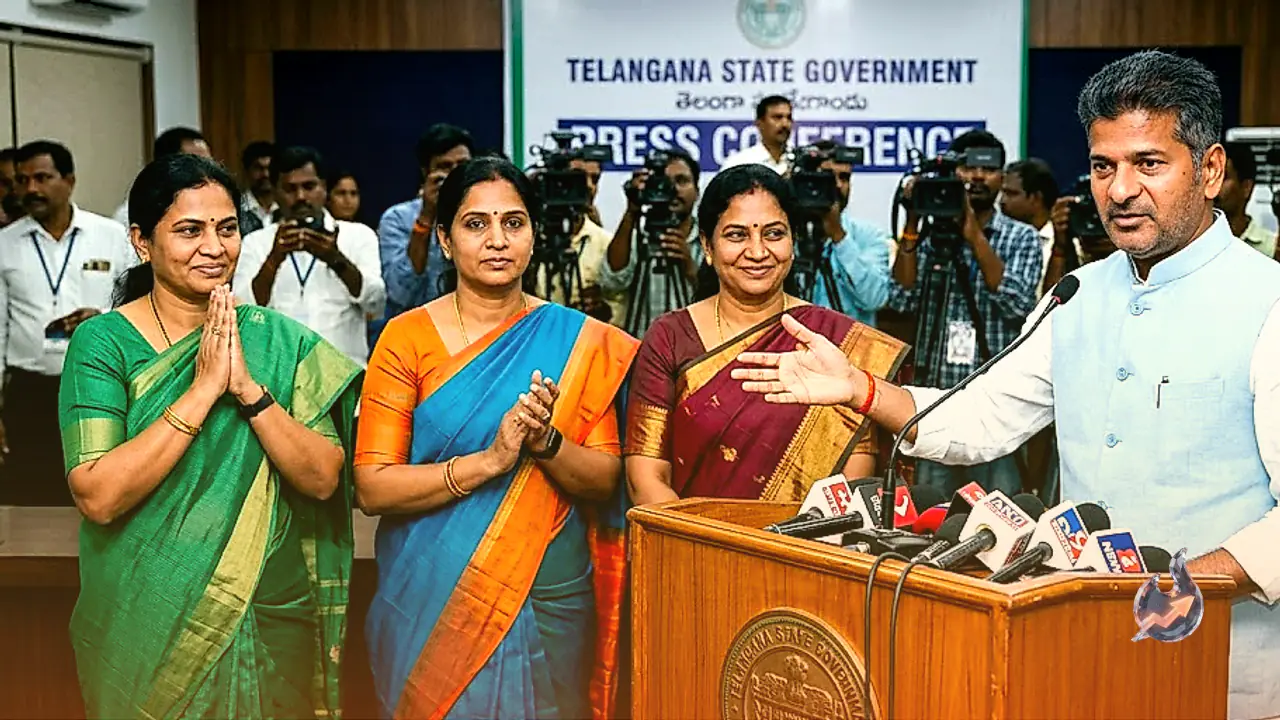
Immediately after removing Surekha, the administration assigned major responsibilities to three prominent women to restore equilibrium. Gadwal Vijayalakshmi has been appointed as the vice chairperson of the Telangana Planning Board. Additionally, Narela Sharada has been given the charge of chairperson of the Telangana State Commission for Women, while former Rajya Sabha MP G. Sudharani has been named chairperson of the Kakatiya Urban Development Authority, known as KUDA. These appointments came precisely when stabilizing the political narrative was paramount.
Neutralizing the Backward Class and Women Card
Konda Surekha has long positioned herself as a prominent backward class woman leader. She hails from the Padmashali community, while her husband Konda Murali belongs to the Munnuru Kapu community. When reports of impending action against her surfaced, political circles anticipated potential resentment from backward class organizations. Surekha herself invoked her background ahead of the action, warning that it could impact the party negatively. However, by placing three other women from backward communities into crucial offices, the administration effectively blunted this narrative.
The Catalyst in Parkal
The entire controversy intensified following the Chief Minister's visit to Parkal in August. During the tour, the Chief Minister urged support for sitting Congress MLA Revuri Prakash Reddy to ensure his victory in the next election. Shortly after, Surekha’s daughter Konda Sushmitha Patel issued sharp remarks against the Chief Minister. Sushmitha had previously expressed her desire to contest from the Parkal constituency. What began as a familial dispute swiftly escalated into an internal party conflict.
Viewing the situation as a breach of conduct, the Pradesh Congress disciplinary committee issued a show-cause notice to Surekha. In her reply, Surekha maintained that her daughter's statements were entirely personal and had no connection to her. Despite this defense, the disciplinary committee recommended action. Ultimately, with the approval of central party leadership, Revanth Reddy decided to strip her of her cabinet portfolio.
Action Against G. Chinna Reddy
The broader restructuring also involved G. Chinna Reddy, who was removed from his post as vice chairman of the Telangana Planning Board, making way for Gadwal Vijayalakshmi. According to political analyst Dr. Survajula Ramu, had action been taken solely against Surekha while sparing Chinna Reddy, the Chief Minister could have faced allegations of ethnic bias. Consequently, observers view both decisions as interconnected steps aimed at preserving political harmony.
Analysts note that party leadership deliberated extensively before finalizing the outcome. By empowering other women from the exact same social demographic, the administration ensured that critics could no longer claim a lack of representation for backward class women. Nevertheless, Surekha has openly questioned her dismissal and demanded an explanation from the leadership regarding the rationale behind the move.
Pending Cabinet Expansion and Future Outlook
With Surekha's departure, three cabinet berths currently remain vacant, fueling intense speculation regarding an impending cabinet expansion and reshuffle within Congress. TPCC President Mahesh Kumar Garu had previously indicated the possibility of a cabinet reorganization in September. The central question now is which regional and social equations will dictate the selection of upcoming ministers.
The developments demonstrate that overlooking women and backward communities remains a delicate task for the administration. By combining strict disciplinary action with strategic appointments, the leadership has signaled that maintaining social balance remains as crucial as upholding internal order.