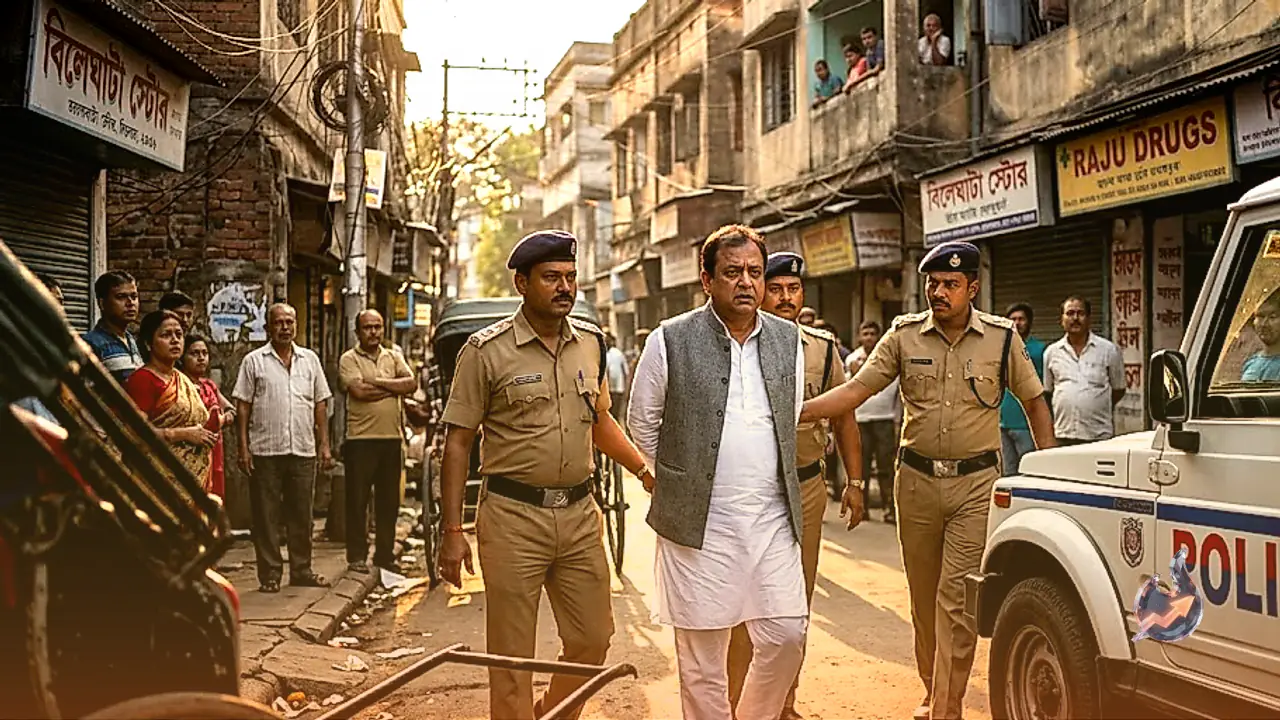
























Photographs and videos depicting brutal police lathicharges during public demonstrations and rallies frequently surface across various parts of the country. This recurring phenomenon consistently sparks a vital question: can junior police personnel who shower lathis purely on the instructions of their senior officers escape legal action? According to Indian law and jurisprudence, the answer is a definitive no. If police officers or personnel execute illegal, excessive, or brutal lathicharges, they can be held personally accountable and subjected to punishment, regardless of whether they initiated the order themselves.
The legal framework in India does not allow personnel to entirely evade criminal or civil liability by merely citing superior orders. When the force deployed by law enforcement infringes upon Article 21 of the Constitution, which guarantees the right to life and personal liberty, the guilty officers face departmental inquiries alongside criminal prosecutions. Following unlawful commands does not grant immunity from the fundamental duty to uphold constitutional rights and the rule of law.
The Legal Framework and Supreme Court Directives
In landmark judgments such as the Ramlila Maidan Incident versus Home Secretary (2012), the Supreme Court clarified that the use of force by law enforcement must remain strictly preventive, minimal, and proportional. Police action can never degenerate into punitive measures or politically motivated violence disguised as crowd control.
Furthermore, junior-level officials hold a legal obligation to refuse orders that are manifestly unlawful, such as directing lethal assaults against entirely peaceful crowds of protesters. Recently, a bench led by Justice Surya Kant observed that merely staging a protest does not justify a police lathicharge.
Established Rules and Protocols for Crowd Dispersion
Under Sections 129 and 130 of the Bharatiya Nagarik Suraksha Sanhita, law enforcement agencies must follow a mandatory protocol before resorting to physical force
Authorities must issue a clear warning declaring the assembly unlawful and commanding them to disperse. Before initiating a lathicharge, personnel must exhaust less harmful options such as water cannons or tear gas. Strict regulations govern baton usage, dictating that a lathicharge must serve strictly as a last resort, with strikes restricted solely below the waist onto the legs. Striking the head, neck, or other vulnerable parts of the human body constitutes a severe violation of the police manual.