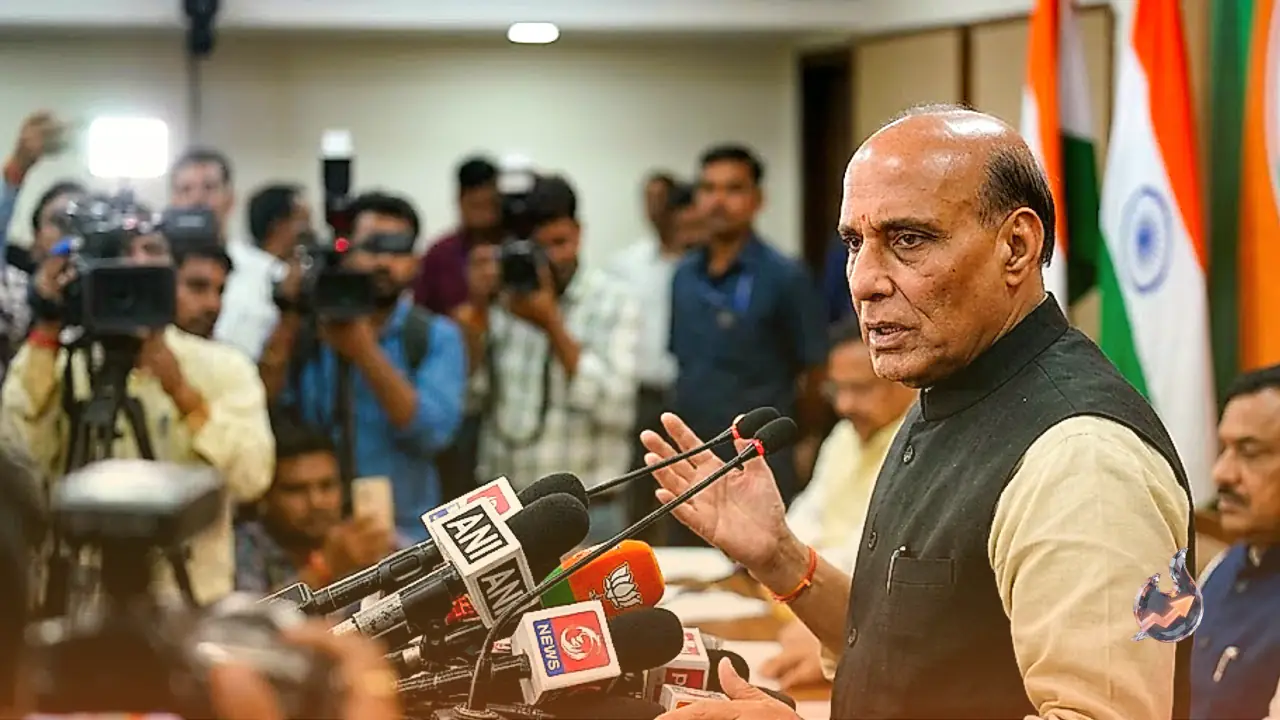

















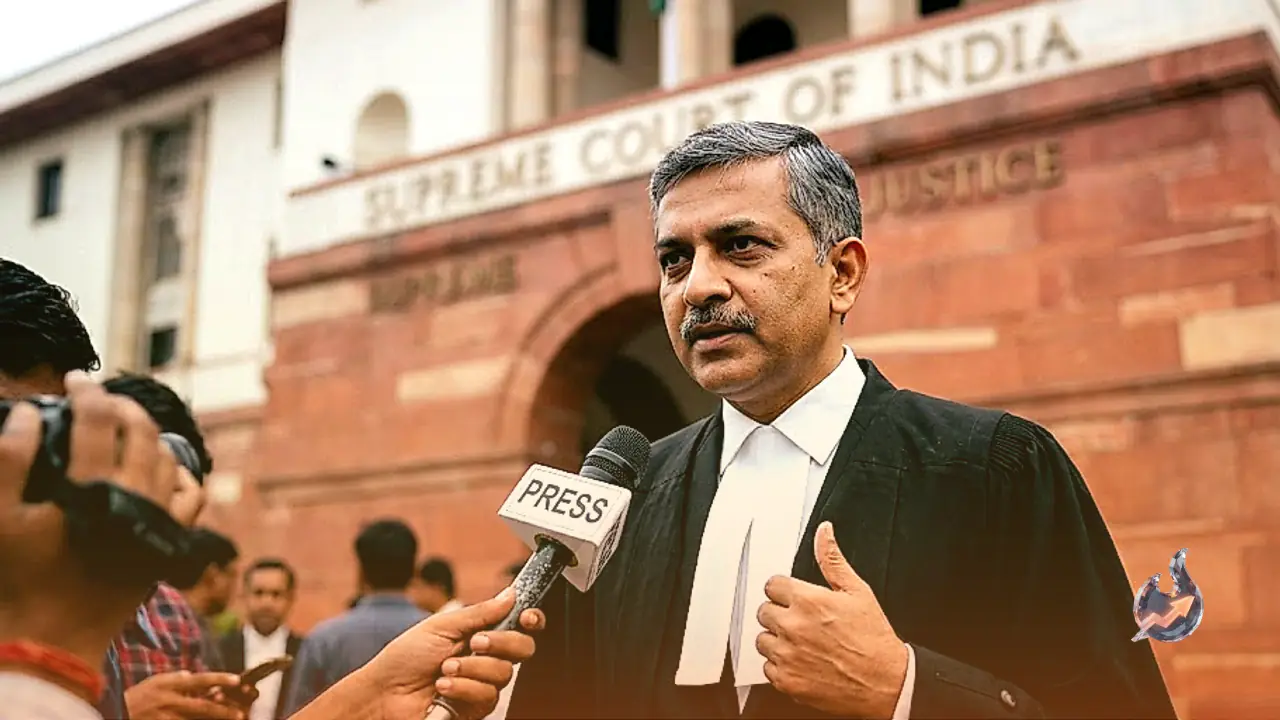

The Supreme Court of India delivered a firm procedural directive during the hearing of a criminal defamation matter involving Congress leader Rahul Gandhi. A three-judge bench headed by Chief Justice of India CJI Surya Kant declined an oral request for out-of-turn listing, explicitly reiterating that the judicial system holds all litigants in equal measure. The top court instructed the counsel representing the complainant that if an expedited hearing is sought, the party must follow established court protocols by filing a formal application rather than making informal oral submissions in the courtroom.
Supreme Court Bench Proceedings and Legal Submissions
The matter came up before a three-judge bench comprising CJI Surya Kant, Justice Joymalya Bagchi, and Justice V. Mohana. Senior Advocate Gaurav Bhatia appeared on behalf of the complainant to push for an early hearing date. Bhatia informed the bench that the appeal filed by Rahul Gandhi, which challenges the judicial magistrate order taking cognizance of the defamation complaint, had remained unlisted for hearing over the past five months. He urged the bench to accord priority to the case to avoid further institutional delay.
Advancing his arguments before the bench, Senior Advocate Gaurav Bhatia submitted that Rahul Gandhi does not hold any VVIP status that would justify procedural deferment or special scheduling. He remarked that allowing a case to sit unlisted for five consecutive months does not reflect well on the efficiency of the judicial institution. Responding to these submissions, Chief Justice CJI Surya Kant maintained a strict emphasis on procedural decorum. The Chief Justice stated that for the court, every litigant stands on equal footing without exception. He advised the counsel to submit a proper application seeking early listing, assuring that the court would consider the matter once the standard formal application is officially filed.
Origins of the Defamation Dispute and Alleged Remarks
The legal controversy stems from public statements made by Rahul Gandhi in December 2022 concerning military developments along the Line of Actual Control (LAC) in Arunachal Pradesh. Speaking at a political event on 16 December 2022, Gandhi criticized the central government's foreign policy and border handling. During his address, he alleged that Chinese soldiers were beating up Indian army personnel in the border region of Arunachal Pradesh following a military face-off that occurred on 9 December 2022.
These public remarks drew strong condemnation and led to immediate legal action. Uday Shankar Srivastava, a former Director of the Border Roads Organisation who held a military rank equivalent to a Colonel in the Indian Army, took severe exception to the statements. Represented by advocate Vivek Tiwari, Srivastava filed a criminal defamation complaint in a Lucknow court. The complaint asserted that Gandhi's remarks disparaged the brave soldiers serving on the frontlines, insulted the integrity of the Indian armed forces, and caused profound mental anguish to serving and veteran military personnel.
Magistrate Summons and High Court Judgment Analysis
Taking cognizance of the criminal defamation complaint, Additional Chief Judicial Magistrate Alok Verma issued a formal summons directing Rahul Gandhi to appear in person before the Lucknow court on 24 March. Challenging the legality of the magistrate order, Gandhi filed a petition in the Allahabad High Court seeking to quash the proceedings. However, the High Court rejected his petition, affirming that the magistrate had acted within the scope of the law in issuing the summons.
In its detailed judgment, the Allahabad High Court interpreted the locus standi provisions under Section 199(1) of the Code of Criminal Procedure (CrPC). The High Court ruled that the term "aggrieved person" under Section 199 CrPC is not confined exclusively to the individual directly named or targeted in a defamatory statement. The court clarified that any person who suffers genuine reputational damage, personal distress, or harm to their standing as a result of an offense qualifies as an aggrieved party. Considering that complainant Uday Shankar Srivastava had served the nation alongside the military and held immense respect for the armed forces, the court concluded that he possessed valid standing to lodge the defamation complaint.
Prior Supreme Court Directives and Legal Status
Following the dismissal of his petition by the Allahabad High Court, Rahul Gandhi filed a special leave petition in the Supreme Court. In earlier hearings, a two-judge bench comprising Justice Dipankar Datta and Justice Augustine George Masih granted an interim stay on the trial court proceedings in Lucknow. While granting interim relief, that bench raised pertinent questions regarding the appropriate forum for discussing national security matters.
Justice Dipankar Datta and Justice Augustine George Masih had questioned why critical issues concerning border security were being aired on social media platforms and public rallies instead of being raised inside Parliament. The bench also inquired whether Gandhi had access to verifiable, authentic documentation or credible information before making public statements about clashes along the LAC. With the stay order remaining active, the recent plea by Senior Advocate Gaurav Bhatia sought to resume active hearings. However, with CJI Surya Kant insisting on a formal application for urgent listing, the case awaits procedural filing before further judicial steps are taken.