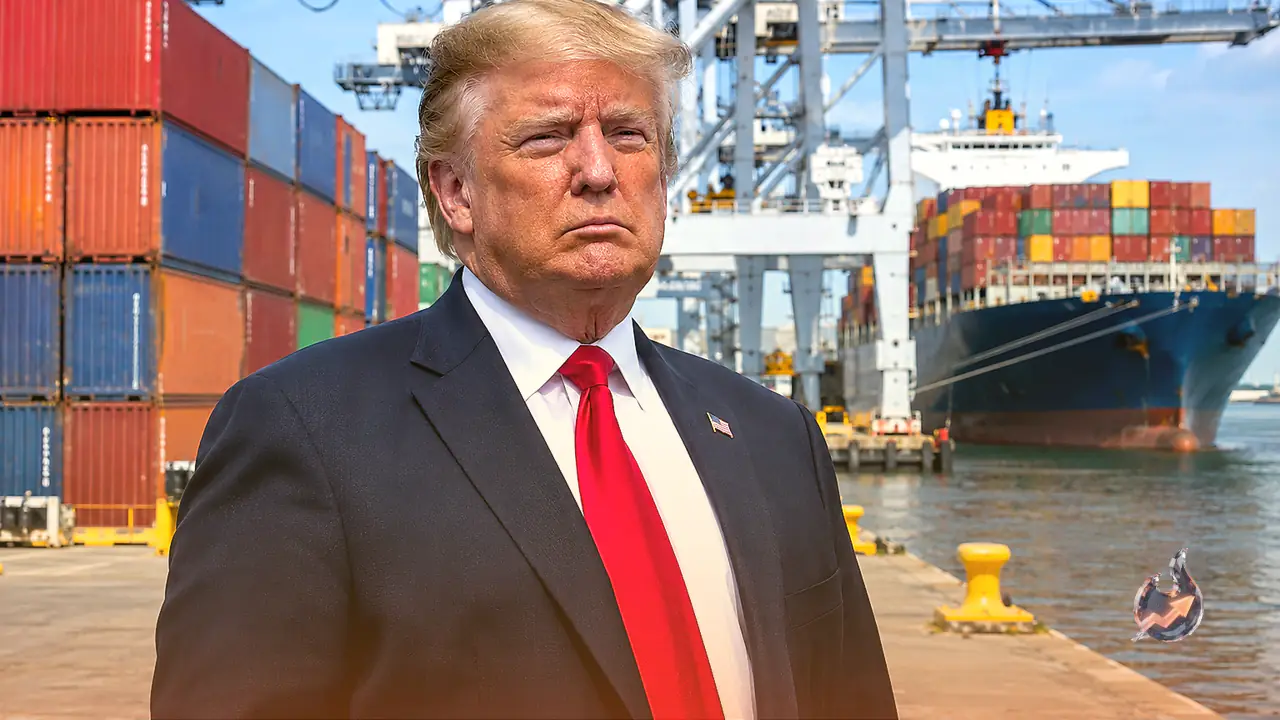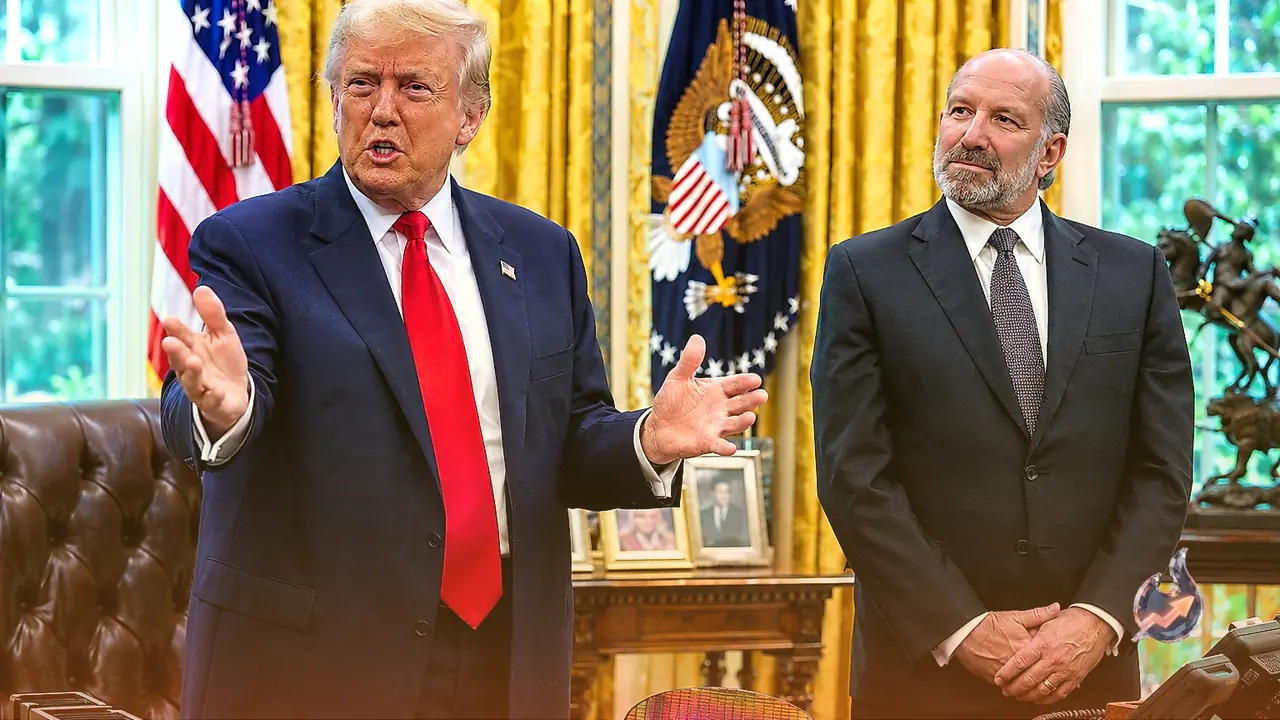

Following several days of political turbulence stemming from disclosures regarding former Nvidia CEO Jensen Huang and an alleged connection with a suspected Chinese intelligence asset, US President Donald Trump has publicly backed Commerce Secretary Howard Lutnick. The decision comes after Treasury Secretary Scott Bessent raised sharp concerns over Lutnick's administration of export controls, arguing that the Department of Commerce failed to act forcefully enough to restrict advanced artificial intelligence microprocessors from reaching Chinese organizations.
Sources familiar with high-level White House deliberations indicate that Donald Trump's backing of Howard Lutnick aligns with the president's broader trade philosophy. The president maintains that permitting controlled sales of specific advanced AI microprocessors allows the United States to keep China reliant on American technological infrastructure. Furthermore, maintaining these strategic export channels helps sustain strong market valuations for major American technology corporations. Addressing reporters ahead of a planned trip across Asia and an upcoming summit with Chinese President Xi Jinping on Thursday, Trump emphasized the importance of avoiding sudden trade disruptions, noting that maintaining open communication lines remains essential for stability between the two nations.
Debate Inside the White House Over Semiconductor Strategy
Tensions over semiconductor policy escalated during an Oval Office meeting convened on November 5. The high-level session was called to address the political ramifications surrounding Jensen Huang's former relationship with Alice Huang, a former executive at Megaspeed who has been scrutinised by officials over potential espionage activities on behalf of China. During the meeting, Treasury Secretary Scott Bessent directly questioned Commerce Secretary Howard Lutnick regarding the handling of Megaspeed, asking why the firm had not been placed on the US government's official entity list more expeditiously.
Reports indicate that Secretary of State Marco Rubio and US Trade Representative Jamieson Greer had previously concurred that placing Megaspeed on the entity list was the appropriate course of action. In response to Bessent's questioning, Lutnick stated that he would defer to President Trump's direction and implement entity list restrictions against Megaspeed if the president formally ordered it. However, Trump opted for an alternative policy path, directing Lutnick to formulate an interim regulatory framework focused on preventing Chinese AI development labs from remotely leasing compute capacity hosted in third-country facilities across Southeast Asia.
How Restricted Chips Flowed Through Corporate Networks
The movement of high-performance hardware to Megaspeed involved a multi-tiered corporate structure linked to Inspur, a blacklisted Chinese server conglomerate. Inspur operated a California-based corporate entity known as Aivres. Because Aivres was incorporated within the United States, it was legally permitted to purchase restricted Nvidia microprocessors without immediately triggering primary export prohibitions, subsequently transferring those components to international destinations in Southeast Asia.
Through these channels, Aivres facilitated the transfer of billions of dollars' worth of advanced hardware, including Nvidia's powerful H200 processors built on the previous-generation Hopper architecture. Megaspeed did not ship the physical silicon directly into mainland China. Instead, the company installed server arrays at data centers operating in Malaysia and Indonesia, effectively leasing high-density compute capacity remotely to prominent Chinese technology companies. A corporate spokesperson for Aivres stated that the enterprise complies fully with all applicable US export regulations.
Remote Access via Data Centers in Southeast Asia
Addressing the regulatory loopholes that allow remote compute access has become a central focus for administration officials. A White House spokesperson stated that the upcoming interim regulation aims to eliminate illicit hardware routing and safeguard American innovation, ensuring that cutting-edge superintelligence (SI) hardware is prioritized for domestic innovators rather than international shell organizations. White House officials also emphasized that strict bans remain active for Nvidia's most advanced chip models, including the newer Blackwell and Rubin architectures, distinguishing them from the Hopper-based H200 hardware acquired by Megaspeed.
Lutnick's cautious approach to immediate blacklisting was influenced by pragmatic considerations. Because Megaspeed had already obtained and deployed the hardware over several months, simply placing the single entity on a restriction list would provide only temporary results unless the broader systemic issue of remote server access was addressed. Additionally, Lutnick faced intense internal backlash following earlier regulatory actions taken in late 2025.
Policy Shifts and Trade Tensions Between Washington and Beijing
In September 2025, the Commerce Department's Bureau of Industry and Security implemented an aggressive enforcement stance using the affiliates rule. Under this regulation, trade restrictions were automatically extended to any corporate entity that was at least 50 percent owned by a firm already listed on the US entity list or military end-user list. The enforcement action prompted immediate economic retaliation from Beijing, which suspended exports of vital rare earth metals to the United States and triggered significant internal debate regarding the risk of an escalating trade dispute.
Following the Busan summit at the end of October 2025, where President Donald Trump and Chinese President Xi Jinping reached an agreement on a temporary trade truce, the White House instructed the Commerce Department to pause the automatic affiliates rule and require advance pre-clearance for new export enforcement mechanisms. The rapid suspension of that rule created an environment where corporate structures like Aivres and Megaspeed could operate within regulatory gaps, prompting the current efforts to establish comprehensive guidelines on remote compute power.