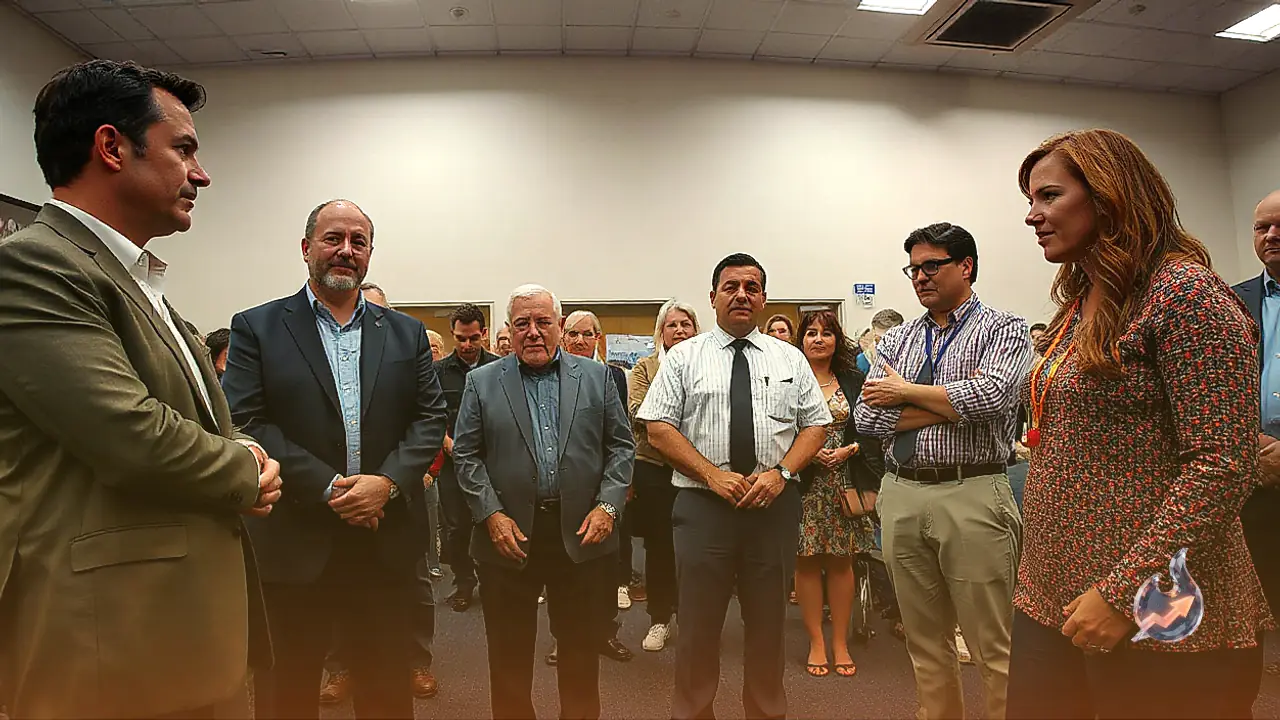
























Online influence and algorithmic recommendation feeds are aggressively reshaping the framework of American political discourse. Following major Democratic electoral victories in both congressional chambers, political strategists gathered at an ideas forum in Miami to dissect how digital creators and recommendation engines are reshaping public engagement. The discussion brought together Kat Abughazaleh, a former Media Matters reporter who ran for an Illinois House seat as a Democrat earlier this year, alongside Republican strategist CJ Pearson, examining the deeper implications of digital engagement strategies across emerging generations.
The White House Shift Toward Creator Briefings
Creator outreach has become a central component of government messaging under the Trump administration, which has actively incorporated right-wing online figures into formal Washington channels. Former Press Secretary Karoline Leavitt formally welcomed digital influencers into official press briefings last year, along with organizing briefings tailored exclusively for creator communities. That development drew extensive criticism from observers who noted that traditional media access was simultaneously being curtailed while digital guests offered non-adversarial coverage. Pearson, who previously worked with the RNC Youth Advisory Council, played an active part in these efforts and noted that multiple federal agencies are now adopting the exact same playbook to secure public attention.
Attention Economics and Controversial Tactics
Addressing the reality of digital outreach, Pearson observed that modern administrations must operate as chronically online organizations because shrinking audience attention spans require compelling presentation. At the same time, Pearson acknowledged that certain tactical decisions caused friction even among political allies, pointing out that distributing sensitive portions of the Epstein files to 15 conservative creators last year represented a distinct misstep.
Abughazaleh presented a far more critical assessment of this digital operational shift, arguing that it represents a calculated attempt to degrade civic comprehension. She pointed to instances such as the Department of Education circulating the Malfoid meme, which she described as appealing directly to an online base of incels. Furthermore, Abughazaleh highlighted government advertisements featuring ICE operations, arguing that relying on violent imagery and synthetic content turns government enforcement into entertainment rather than genuine public information, ultimately deteriorating citizens' cognitive focus.
Ideological Clashes and Algorithmic Realities
Sharp philosophical differences surfaced during the panel, including debates regarding the language applied to immigration enforcement. The exchange grew tense over whether ICE facilities should be described as concentration camps, a term insisted upon by Abughazaleh, who was arrested during a protest outside an ICE installation last year before grand jury proceedings saw charges dropped following prosecutorial misconduct allegations. Contrasting positions also emerged over Elon Musk, whom Pearson defended as having transformed X into a stronghold for uncensored political speech.
Despite stark ideological divisions, both commentators found consensus on the isolating impact of platform algorithms. With the underlying metric rising to 77 percent among Gen Z demographics, both speakers recognized that modern distribution models enclose young voters inside separate cultural environments. Pearson explained that recommendation engines reinforce existing preferences, leaving users blind to basic opposing viewpoints and raising fundamental questions about democratic health. Abughazaleh echoed that sentiment directly, concluding that modern society currently operates with no shared factual reality.